William Thorup

Illustrator, Motion Graphics Designer, Animator, and VFX Artist

Category: VFX

  • Charged Vanity | Bolt Construction Logo

    Charged Vanity | Bolt Construction Logo

    Neil Bryce of Bryce Media has been keeping me busy the past while with jobs here and there. Bryce is an awesome person to work with, and is always concerned with getting things right, if you are in the Salt Lake City area, I highly suggest getting in touch with him, definitely someone you want to know if you are involved with video in the Salt Lake area.

    This vanity logo for Bolt Construction had a really quick turn around (about a day) and the creative is simple but effective. This video features a stone wall background with wood shingles in the upper third, but a few more versions were rendered out without the background, with a blue background, and one without movement.

    The background assets used were from a website that hosts public domain photography, vectors, and other graphics, called Pixabay. Definitely a site you want to add to your bookmarks in case you need some quick assets on a budget. There is no guarantee that all the content is public domain, as there are no actor/actress release forms. But images without people should be fairly safe.


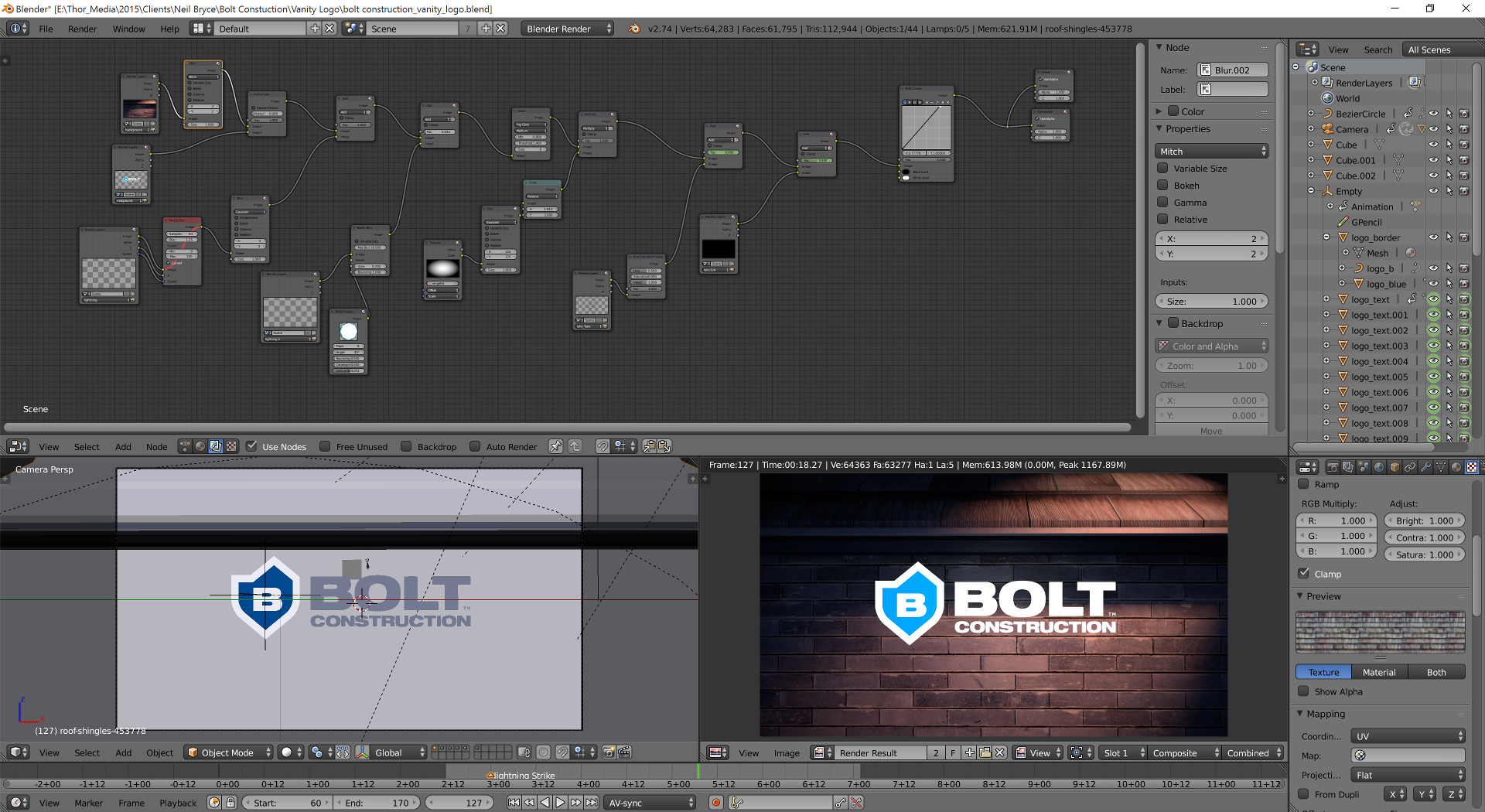
    For those who are interested, here is a screen capture of the my Blender compositor. A fairly easy setup. Background, logo, a couple of particle effects, and lighting.

    vBC_vanity_logo_blend_composite

  • Exploding Polygons | Certified Educators Conference Intro Video

    Exploding Polygons | Certified Educators Conference Intro Video

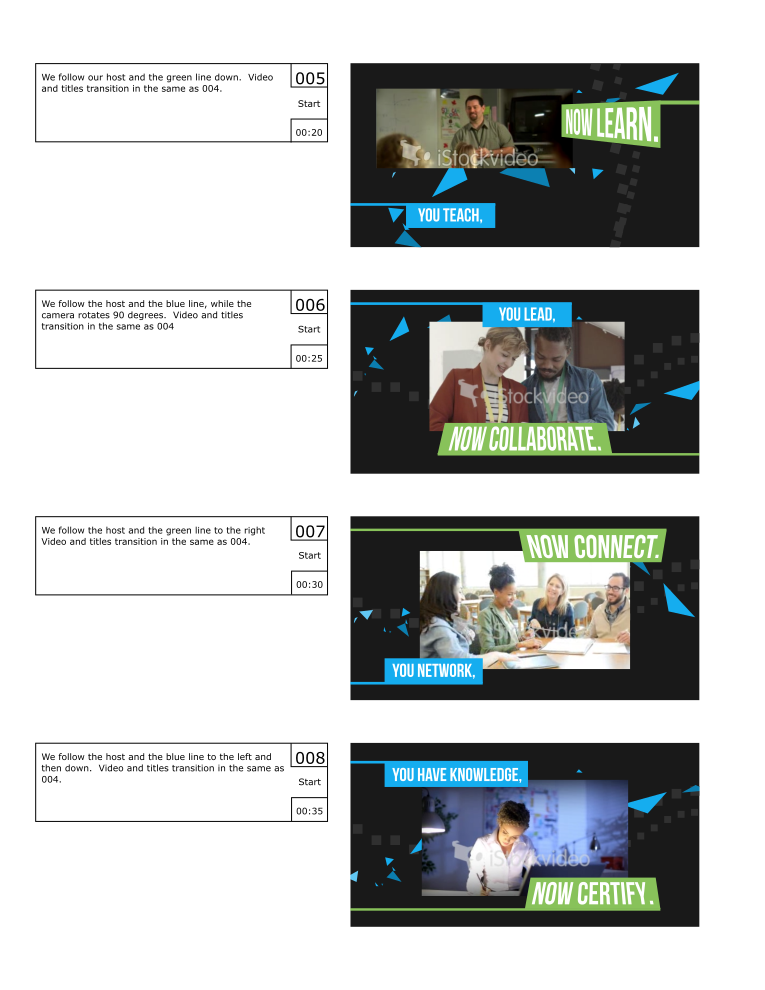
    With only about a week and half, Neil Bryce asked me to get a creative together based solely based on a website and a few suggestions on what it should feel like. Not much to go on. With this in mind, and with that much freedom, I decided to put a bit more effort in this one by prepping a storyboard. Allowing the client to get a clear picture of what I had in mind, in order to make the most out of the coming week. (If you have 4k, be sure to change the YouTube settings.)

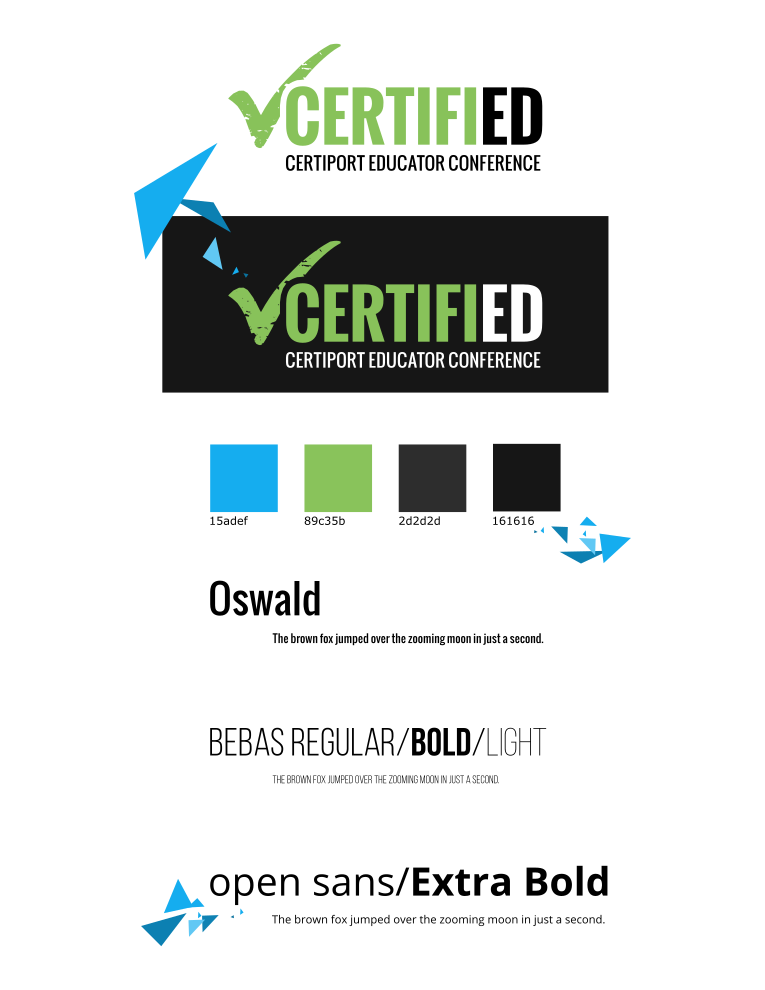
    Very simple creative based primarily off the website for the conference. The first day I put a simple style guide together along with a storyboard for the video. The storyboard was quickly accepted by the client, and I was able to move into picking out music that I could mock something up to.

    The music was the first and only bump in the road during the week long production. They had chosen one song, and I had begun to mock something up, and about 3 days into production, we all decided that the song needed to change. This forced us to have to re-time things, and make some other small adjustments to movement. Other than that though, the video flew together, and result that everyone was happy with was born. I am not sure if the 4k version was actually used at the conference, but it is still pretty awesome to see it playing on a 4k monitor.

    Putting together a storyboard was the best part of the project. Because the creative was wide open for whatever, I had allot of freedom in what the final result would look like. It is an awesome feeling when people just trust you as an artist to make something cool.

    CED_stylesheetCED_storyboard_1CED_storyboard_2CED_storyboard_3

    The storyboards and style guide below were assembled in Inkscape for the sake of speed and clarity.

    I used Blender to put the entire video together, and final encoding with FFMpeg. Because of the simplicity of the content, editing in 4k and rendering out previews was smooth. Compositing was simple, with everything essentially on one layer. But there was a final glow added to the music drop on the end, this was done in the Blender Video Sequence Editor before the final render.

    The blue polygon, or what I like to call the “host”, was a simple particle system, with a blend texture applied to the particle size to make the particles come in and out of existence smoothly. The host was added to help create a consistency to the video, or a thread that binds it all together, but to also add energy and urgency to the video with the seemingly erratic movement and the natural corners of the polygon.

  • Atari Jaguar | Flappy Mcfur Pre-Release Box & CD Art

    Atari Jaguar | Flappy Mcfur Pre-Release Box & CD Art

    My brother and I have been working hard on the Atari Jaguar stuff, and new ideas, art, writting, and code, trickles into each and every project everyday. Flappy Mcfur is the first fruits of our efforts.


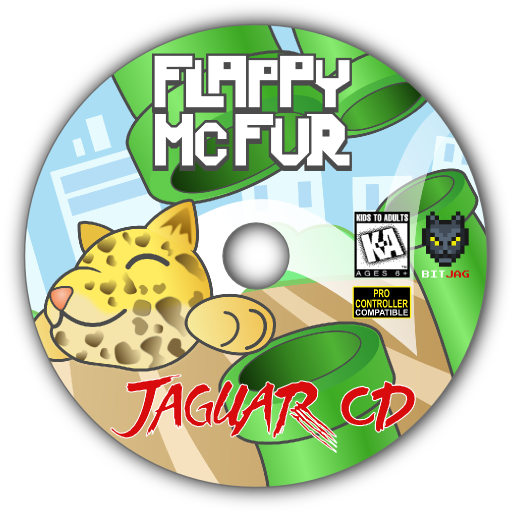
    flappy_mcfur_cd_lable_web

    Obviously a Flappy Bird clone for the Atari Jaguar, this program really was just a training ground for me in C programming. It was fun getting the basic assets together, and code the various aspects of game. From menus, to score keeping, and movement of Flappy McFur. Speaking of movement, it is very rudementary, and the next version will have movement more akin to Flappy Bird.

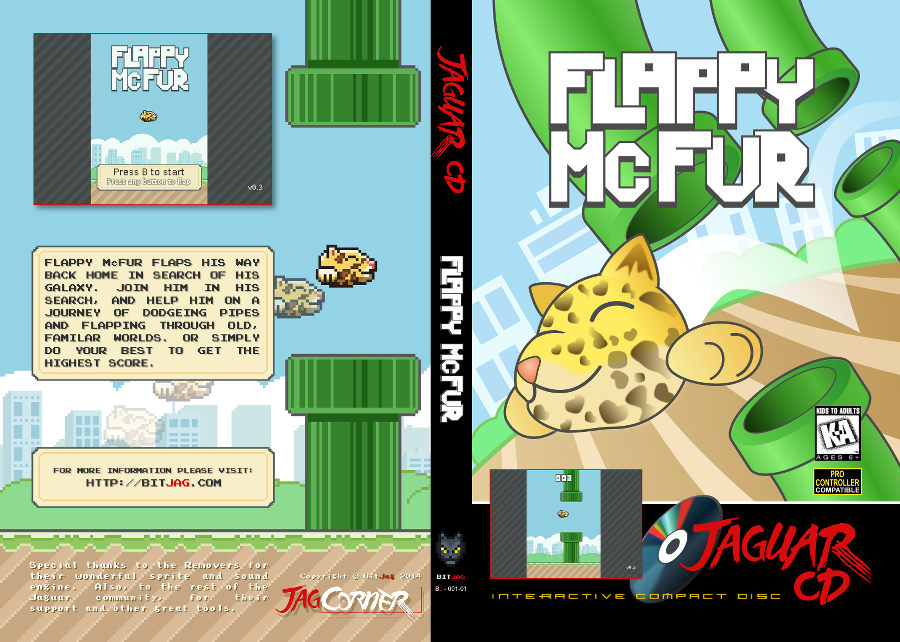
    flappy_mcfur_dvdcase_insert_front_web
    flappy_mcfur_dvdcase_insert_back_web

    The box art and CD art were both put together in Inkscape, with screenshots from the actual game. Currently we are not sure if we will actually be making and selling physical versions of the game, but I though it might be nice to give people who download it, the opportunity to put together something nice for it if they wish.

    The Pre-Release trailer was a blast to put together. I wanted something that would build up, and then let the viewer drop, realizing it isn’t anything too amazing. I really like the way the fly around with the console came out. I haven’t used lattices in 3D animation for a long time, and they poved really effective for bending the flowing text around the various contours of the Jaguar console and controller. The footage of gameplay was captured using the Virtual Jagauar emulator, and it plays almost exactly how it does on the actual Jaguar hardware. It’s such a simple game, why wouldn’t it? Also, this video, and the next one, were both completely done in Blender, with 2D assets in the Gimp.


    On another small note, Bryce noticed that out YouTube subscription counter, on the JagCorner channel, was almost to 64, and he came up with the idea for a little video to celebrate the 64th subscriber and the 64-bit glory of the Atari Jaguar. Check it out, and subscribe to our channel to keep up with other video content we will be producing in the future.


  • Atari Jaguar | JagCorner Review | Iron Soldier

    Atari Jaguar | JagCorner Review | Iron Soldier

    Another JagCorner video to talk about. We have kind of been all over the place with the kind of YouTube videos we would like to do. We know we will continue to do the BitJag Development Journals, and we are pretty sure we are going to keep doing the JagVirgin episodes as well.


    I guess the reason why we are jumping all over the place is because we are trying to counteract all the negative coverage of the Atari Jaguar. Lets just say, this console doesn’t get the highest score on most gamer’s Hi-Score lists, but it’s unfortunate that there is so much negative for a system that has so much positive. I guess one of my personal goals with doing these JagCorner videos is to promote the great things about the system.

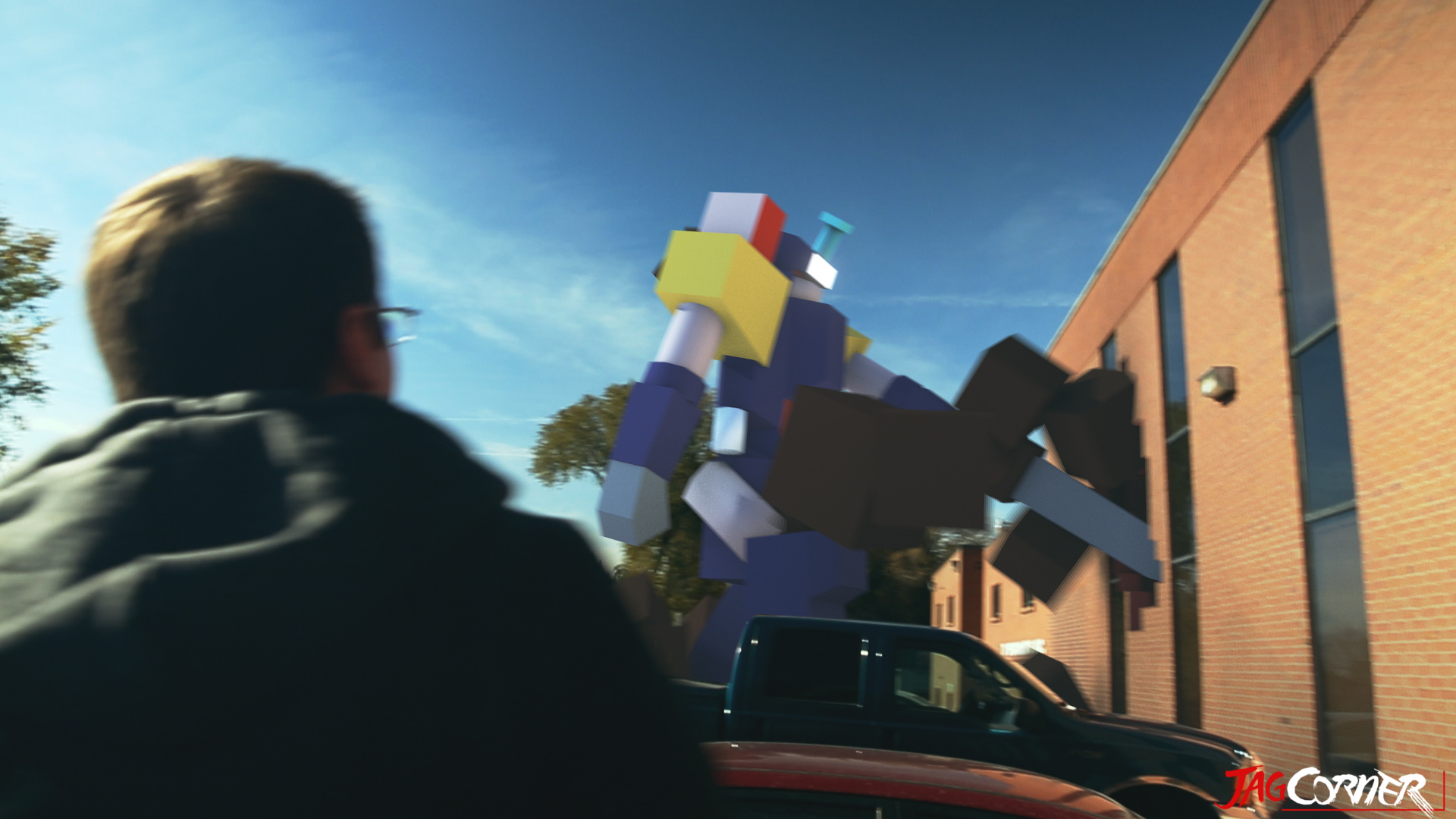
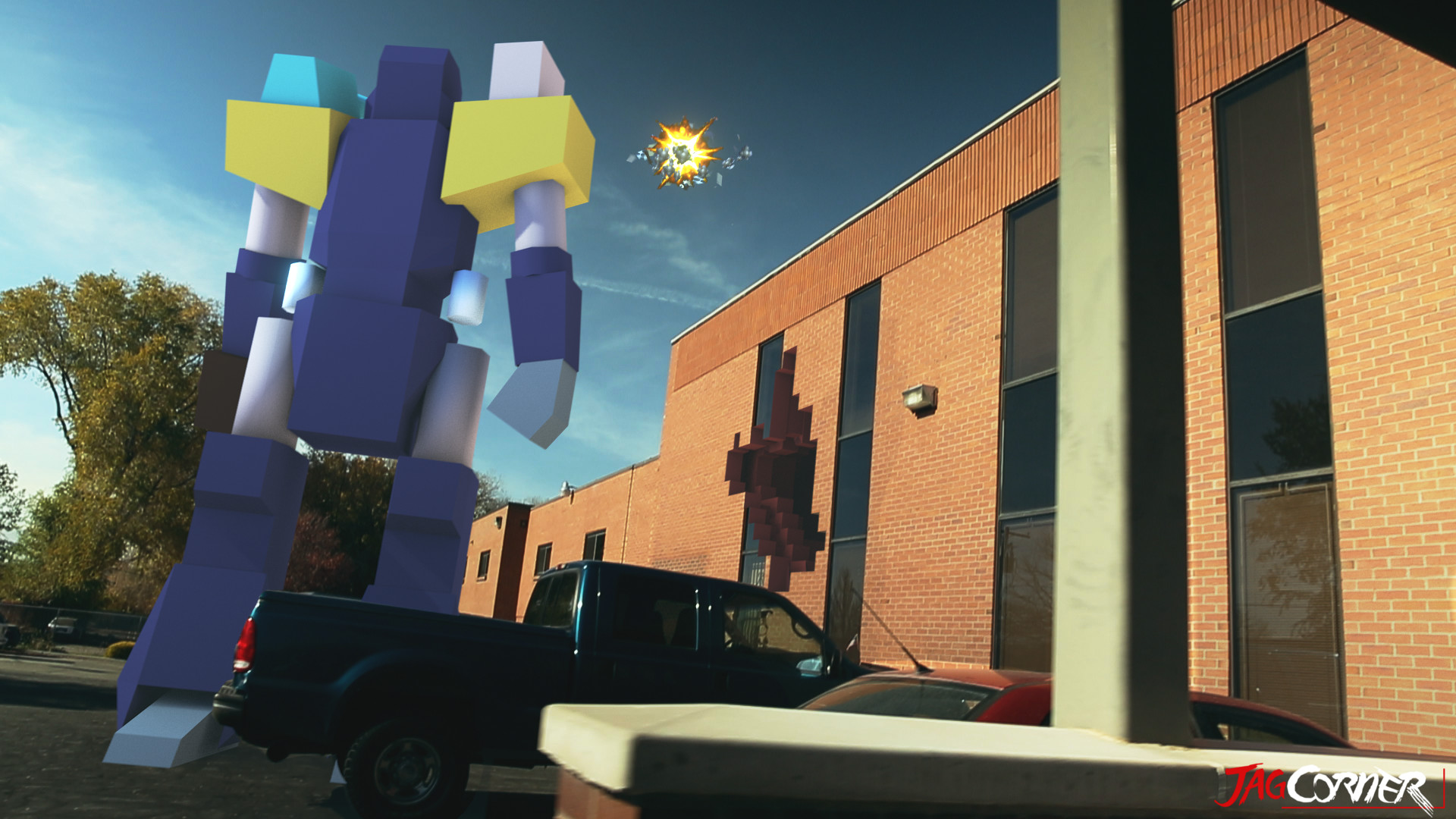
    Moving on, what I really wanted to talk about was the opening skit for this review video. I am taking these videos as an opportunity to build a portfolio and push my visual effects skills, and I was glad to see that this shows well in this video.

    iron_soldier_fx_shot_final_0653

    iron_soldier_fx_shot_final_0805

    Jacob and Bryce helped me come up with and execute the concept and it came together almost flawlessly. Everything was done in Blender. Modeling, Texturing, Rigging, Animation, Camera Tracking, Compositing, Editing, and Rendering of the entire video included. I love the Blender tool set, and it never seems to fail me.

    The hardest part about this video was the camera tracking. There were no purposely place tracking points in the shot, and the one section I had trouble with was when I stepped out of TV Specialists back door and then the camera swings to the left, revealing the Iron Soldier. I had to manually track 20 or so frames to get the camera swing, simply because all the information in the show was too blurred to track. Other than that, the track was fairly easy, with just a few minor slides and jitters in the final result, almost noticeable. At the end of the day, the entire production was 30 man hours. I wanted to spend more time, but we set a goal to have it released by Thanksgiving.

    iron_soldier_end_card_scale_example

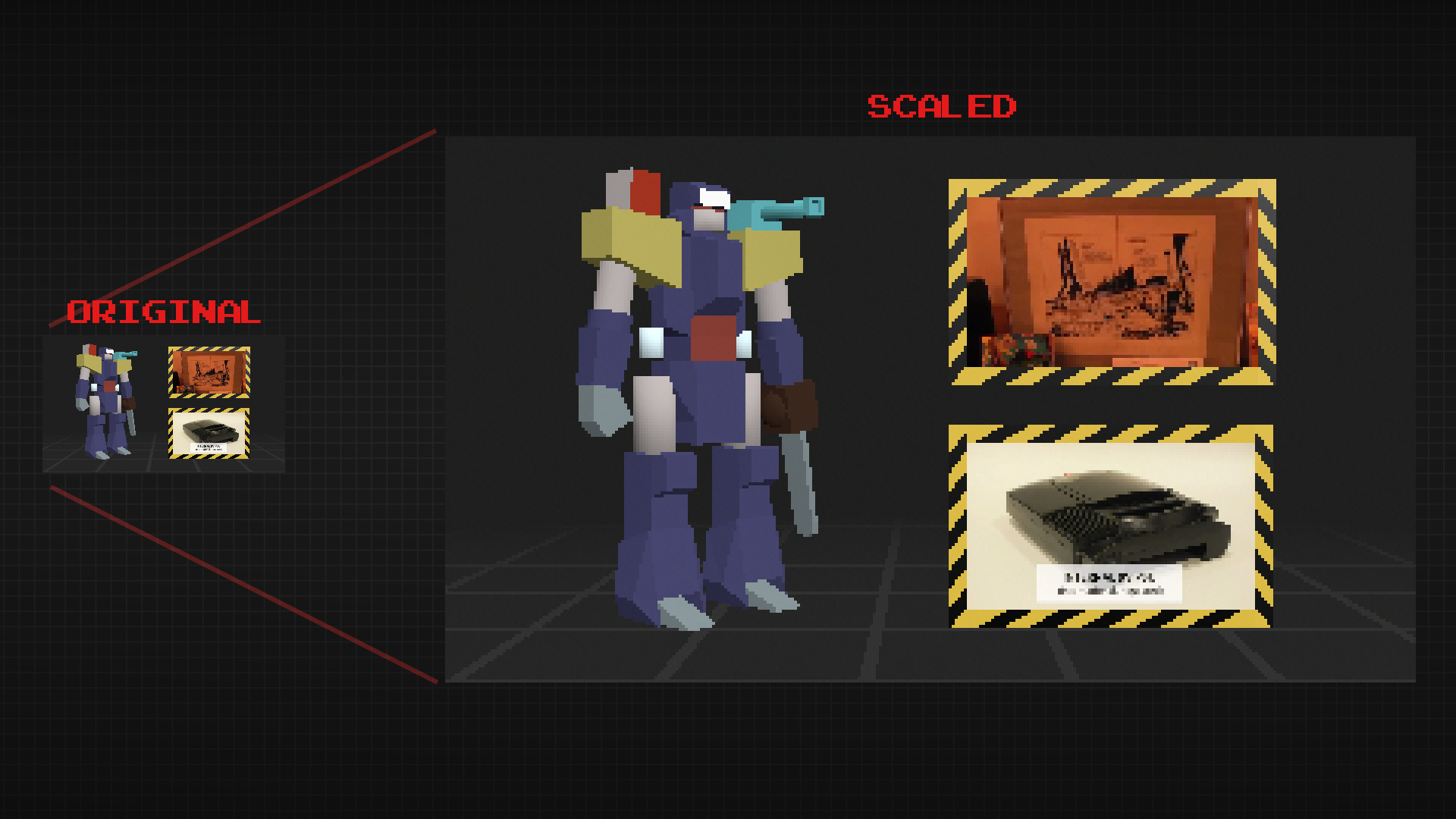
    The end card is a bit special. To achieve a more nastalgic feel, I rendered it out at 320×180 (a 16:9 resolution) and then scaled it up to 1920×1080 with no filter. This maintains the jagged edges on the polygons making it still feel like a low resolution, up-scaled to a high resolution.

    Overall, the result was almost exactly how we imagined it, and I love it when that happens.

  • Atari Jaguar | 20 Years – Do the Math | Anniversary Video

    Atari Jaguar | 20 Years – Do the Math | Anniversary Video

    Isn’t it amazing? A console that was so commercially unsuccessful, is still very much alive and kicking today. This console did much worse than the Sega Saturn commercially, and for a console that is under the great Atari name, this is surprising, and was quite surprising back then as well.


    For those of you who aren’t familiar with the Atari Jaguar, click on the name to go to the wiki, or continue reading for a quick run-down of what this console generally is for many fans.

    Without going into much detail, lets just say that the Jaguar’s history is rough. It was released in November 1993, with much anticipation. At first it did well, but unfortunate set backs began to determine it’s future, early on in it’s life. There are many reasons for it’s commercial failure, but I really only one focus on one for now.

    The leading consoles of the time had something that the Jaguar couldn’t really get a handle on. A mascot, a title franchise, a symbol, to help sell the console. While Nintendo had Super Mario, and the Legend of Zelda, and Sega had Sonic the Hedgehog, Atari really didn’t have much in the way of recognizable characters or symbols or something that the player could relate to on a more personal level. Besides their logo and maybe Pacman, they didn’t have much. (Ironically there was never a Pacman game on the Jaguar.) The arcade generation was beginning to close around this time, and titles like Tempest, Centipede, Space Invaders, and Pacman didn’t appeal to a larger audience as a whole. Players wanted story, worlds, and most importantly, characters.

    Sure, Atari tried to create mascots with Bubsy and Trevor McFur, but these characters lacked appeal, not to mention, the games they were in, weren’t that much fun to play. So, as consoles with more appealing franchises took the market, the Jaguar slowly sank into the background, and eventually disappeared with the advent of the Playstation and Nintendo 64. The third party developers moved on from the console, and, in 1996, Atari was sold off. Also, official support for the Jaguar ceased.


    Willy-Wonka-Meme-oh-youre-a-retro-gamer-please-tell-me-how-great-the-nintendo-64-is_thumb

    With all of it’s faults, the Atari Jaguar was still revolutionary for its time. It was one of the first consoles to push out games that were entirely 3D. Titles such as Iron Soldier, Hover Strike, Battle Morph, all showed that the Jaguar was leagues ahead of it’s competitor’s. And while Nintendo, Sega, and Sony didn’t really have any sort of online capabilities until 1999, the Jaguar had support for online and locally networked games. Which included the only console port of Doom that had multiplayer support. As for those who grew up in the arcades, this system had amazing reincarnations of arcade classics, such as Tempest and Defender. And for the people who grew up with Atari, those who played the games, or programmed for the systems, who went to the arcades, the Atari Jaguar represents a culmination of everything that made Atari what it was.

    This brings me back to why the Jaguar is still going strong. The last system that Atari ever made, and the embodiment of everything that Atari was. For someone who grew up with Atari this means allot, and is one of the pinnacle reasons why my brother and I want to make games for the Jaguar. Not because we want to make games, but because we want to make games for a console that represents our childhoods. Proving that a console’s success isn’t based solely on sales. That a community of dedicated gamers and programmers can bring value to a system, and hopefully the bi-products of that dedication is good games.

    download

    In May of 1999, the hardware, and development code was released into the public domain. Allowing developers to make and release games without having to worry about licensing. This is the catalyst that allowed the community to grow. This along with that dedication to the Jaguar is what allowed for many titles that were initially canceled, to be restarted, and eventually release later on. That dedication, is what kept developers together, and has given us great titles like Downfall (produced by Reboot), and Elansar (produced by Orion), Games that were released 17 years after the console’s “death”. Very few consoles can tout that they have this strong of a community, many years after official support has ceased. It is a testament to the consoles quality, and the quality of people who support it.

    43223733


    I am not sure where the Atari Jaguar will be in another 20 years, but I am enjoying the great success it is seeing today. BitJag hopes to contribute to this success, and we hope to see many more people flock to this console, and many more games in the future. Here’s to 20 years of the Atari Jaguar.

  • Armored Empire | Teaser Trailer & Website

    Armored Empire | Teaser Trailer & Website

    The last week I have been working on some initial marketing stuff for Armored Empire, our next app project at Thor media. If you want to learn more about the game, and take a look at the wordpress site I put together for it, check out the official website.


    This is another Blender and Gimp project, with audio done in Audacity. The one thing of any real note it the imitation of an old CRT monitor. This was the challenging part of this little project. I wanted to simulate a zoomed in shot, so using things like the scan-lines and dust on the glass seemed to pull off the effect well. The flickering of the text and the diagonal line that passes by make it feel old and worn a bit.

    Overall I think that everything about this small teaser fits well with each other, thanks to some initial story boarding. The visuals and audio fit really well and help make the view curious. The doors closing are a good surprise, and just about everyone that has viewed the teaser liked the feeling that it makes.

  • Blender VFX | “Spaceman” Shortfilm

    Blender VFX | “Spaceman” Shortfilm

    This has been a long one in the making. I guess I shouldn’t put it that way, though. It took only a week or so to actually finish the work. I have just been waiting for the release of the actual short film, to get permission to post about it.

    Over the last year and a half, I have had allot of opportunity to work with the Blender compositor, and it has given me the chance to learn, in detail some of the things needed, to pull off some simple effects. One of these projects was “Spaceman“. A short film by producer Holly Tuckett and writer/director Jaron Kent Hermansen. Their short film required some visual effects work, and they asked Thor Media to step in and do the job. Here is a short breakdown video of a few of the shots that I worked with.


    spacemand composite nodes_1

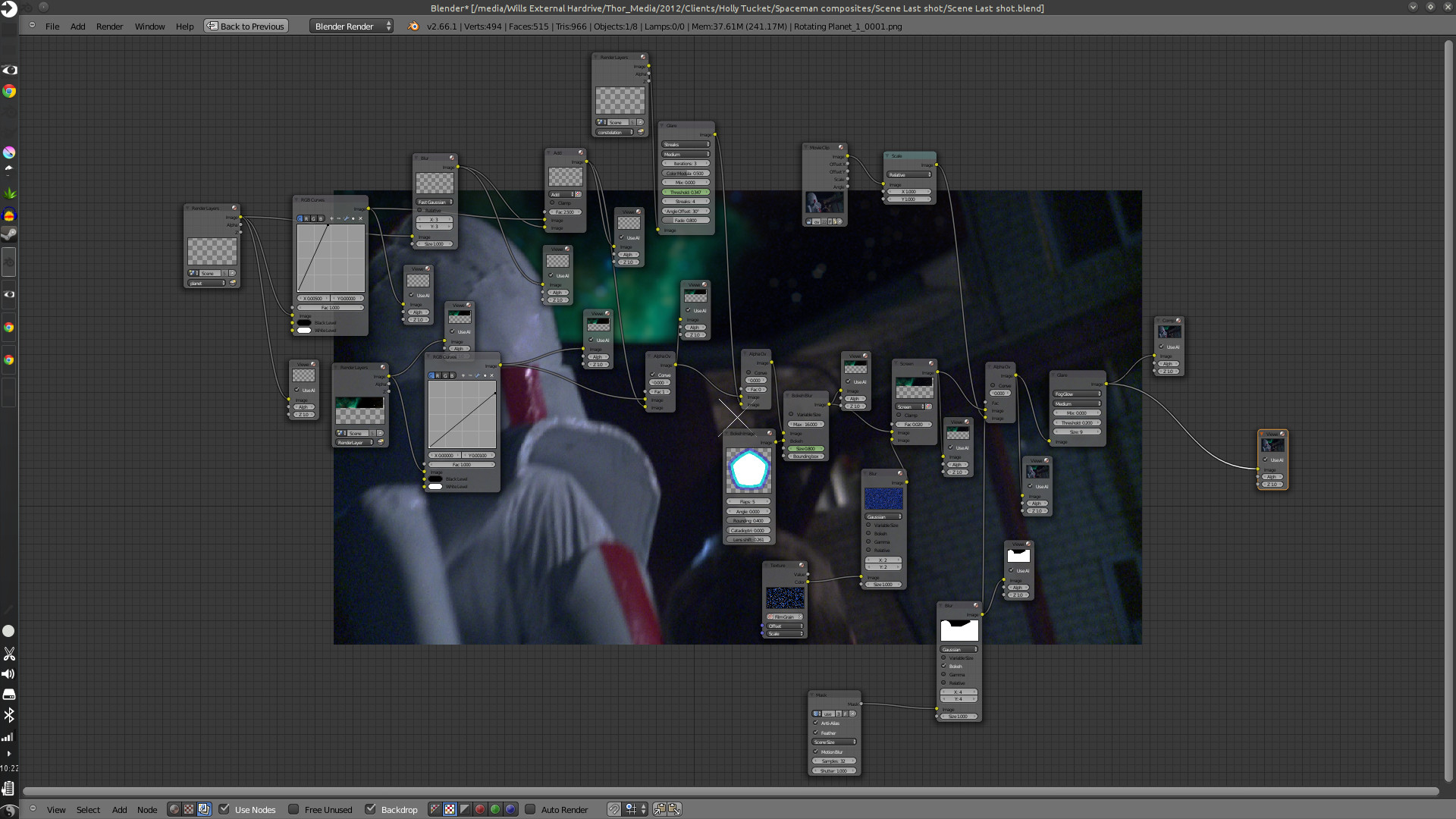
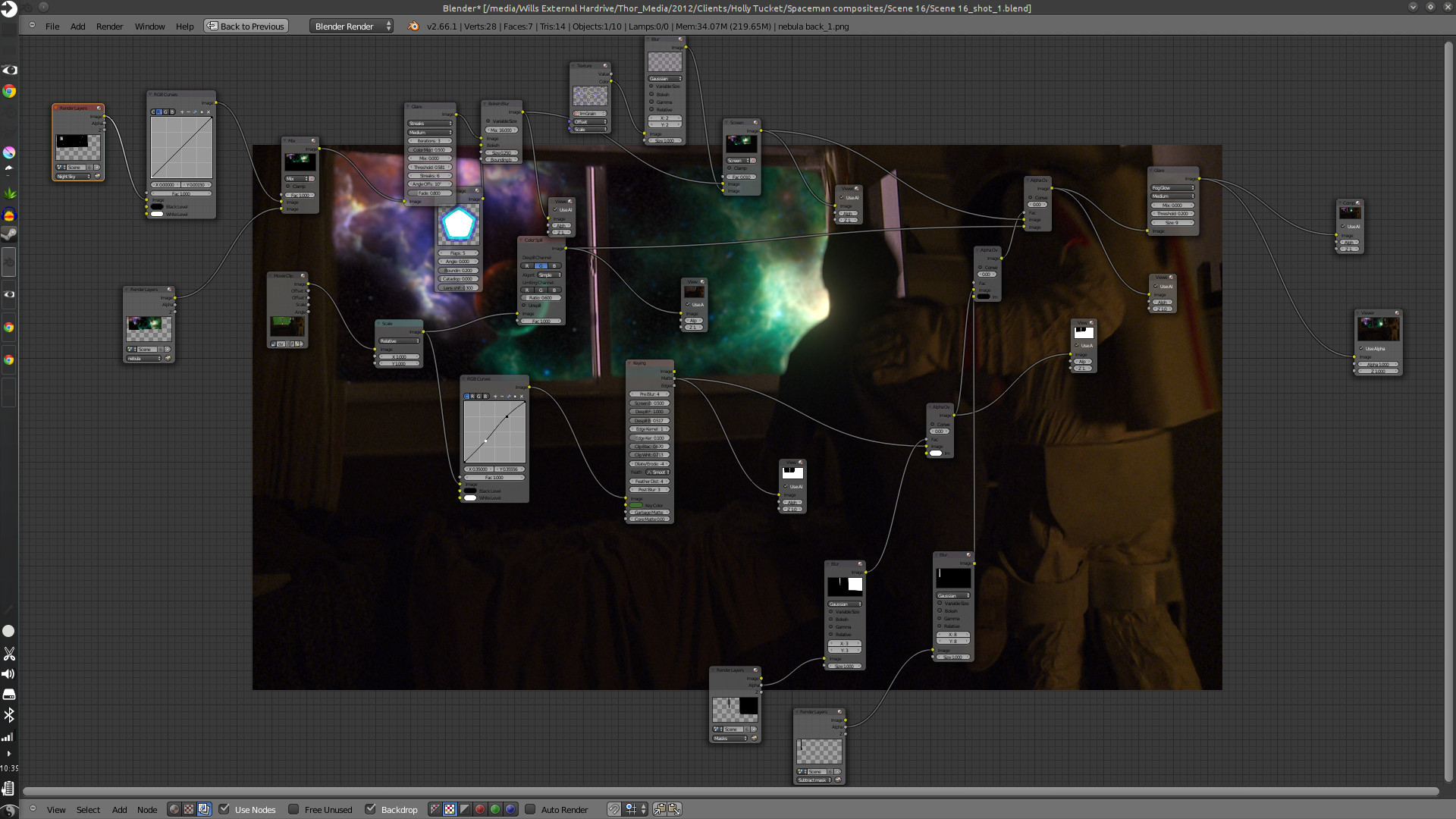
    Here are some of the compositing trees. It looks allot more complicated than it actually is. And to put in new backgrounds only takes a few steps.

    First thing is to track the footage, whether the camera is moving or not. The camera is always moving, whether its the wind blowing, or the heartbeat of the camera man, the image will always move. Next is keying the green screen, and creating any masks that are needed to maintain what you want out of the original footage. And attaching those masks to the camera tracking data.

    spacemand composite nodes_2

    After which you build your background and attach it to your camera tracking data, and adjust to make the movement look good. Then comes any color correction, adding other effects like glows or motion blur, adding film grain, and then the final composite.

    The hard part is getting the new, digitally created elements to look good with the real stuff, speaking of style and lighting. This takes allot of patience, critique from other people, and just playing around with the options that are at your disposal.

    This was especially hard with this project, because most of the visual effects take place in the boy’s dream, and are meant to be exaggerated a bit. But at the same time, I had to get a look that fit with the mood and style of the story, without making it feel like the visual effects were making light of the situation.


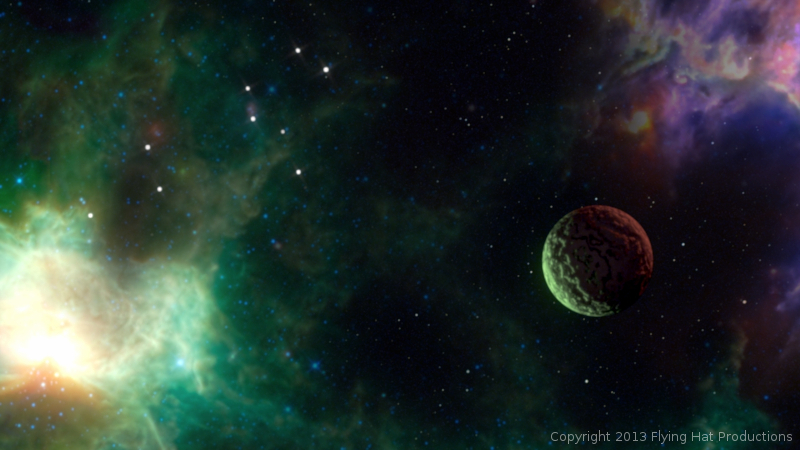
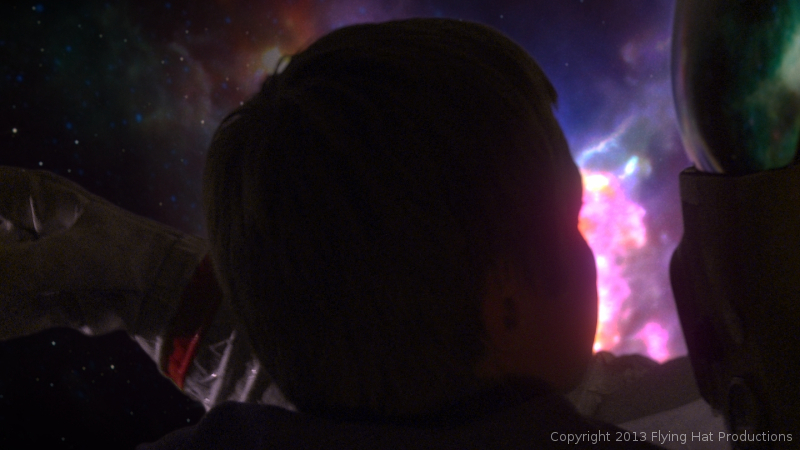
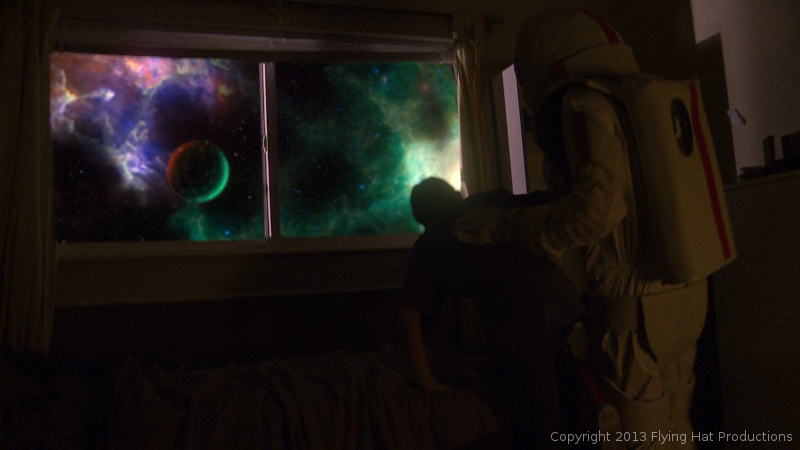
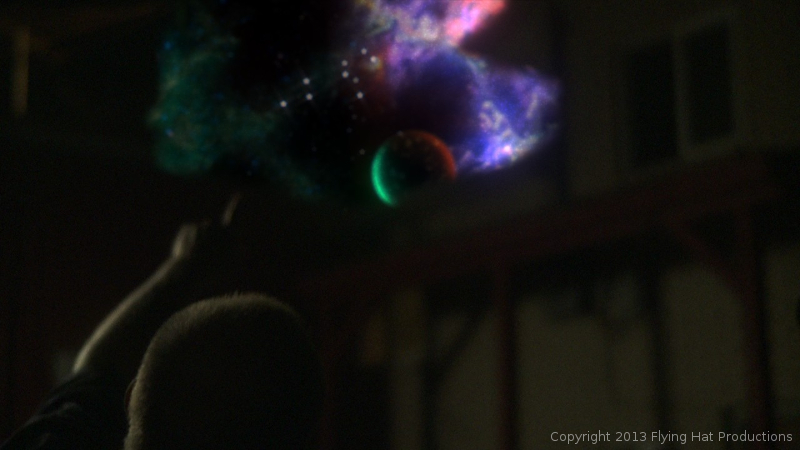
    spaceman_blog_image_1spaceman_blog_image_2spaceman_blog_image_3spaceman_blog_image_4

    Overall it was a very fun project to work on. Jaron and Holly at Flying Hat Productions, are great people to work with, and gave me good feedback and direction on the project. And, also, my brothers Jacob and Bryce gave great feedback and critique. I hope there are similar job like this in the future for Thor Media. Free, fun and creative.

    The short film hasn’t had an official release yet, but they have trailers and all sorts of content on the film’s blog. Click on this link, http://spacemanthemovie.blogspot.com/, to learn more about the short film and it’s creators. They did a great job putting it together, and would love to see your support.

  • Josh the Whale | Official Trailer

    Josh the Whale | Official Trailer

    Thor Media is coming up on the release of there latest project Josh the Whale. And during the last few days, I have been working on the official trailer for the app. Here it is.


    josh surface composite_yourname

    It has been fun getting the last touches together for this app. One thing that has been especially interesting for me is the music. We have my sister in law putting together the music for the app, and even though she doesn’t compose professionally, she has done a fantastic job so far. Her music fits the moods that we are trying to get across in the app very well.  The trailer itself came together really easy.


    josh surface video edit

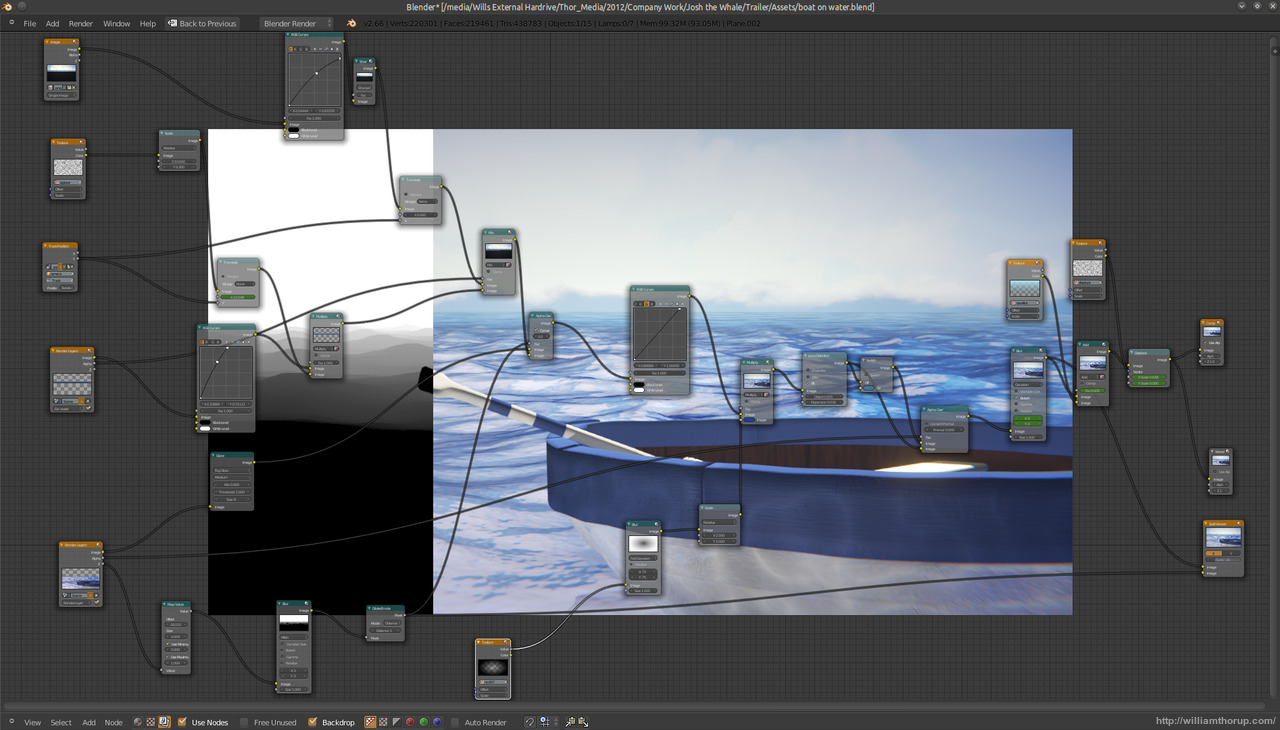
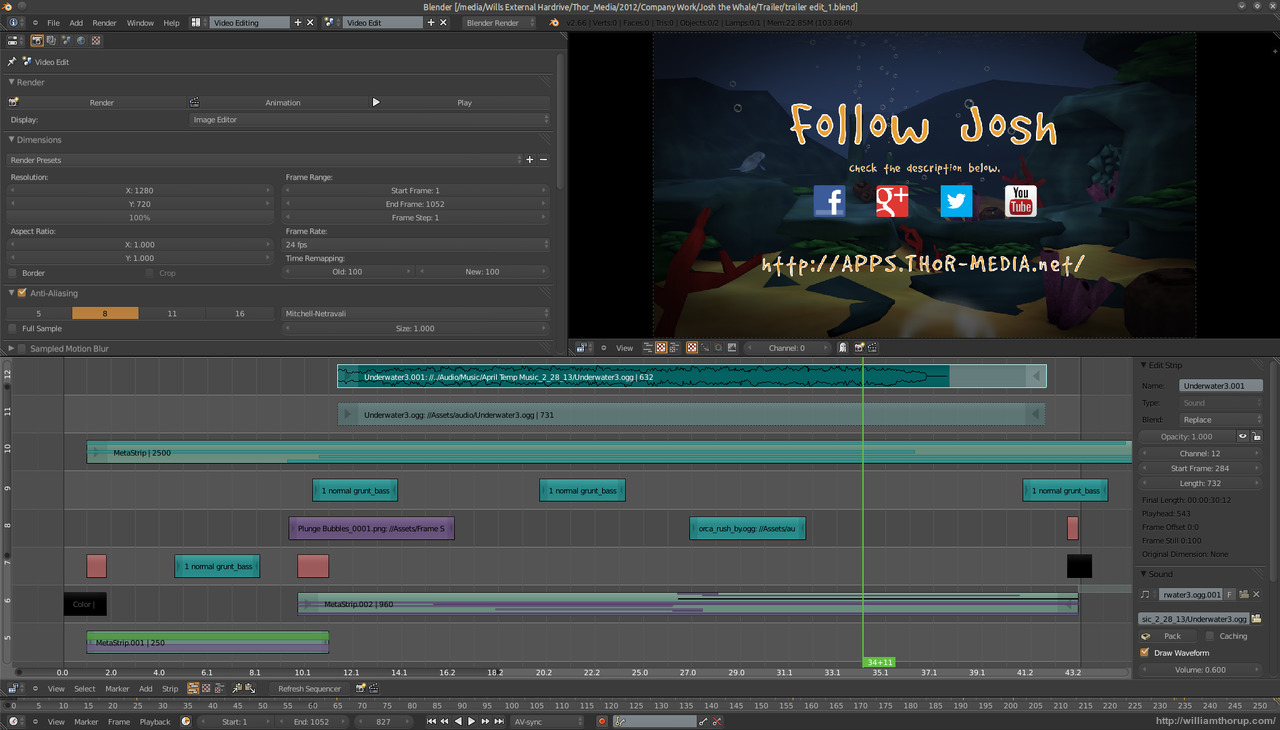
    Most of the assets were already prepared. All the underwater scenery was practically done, because we used it in the initial concepts for the game. I had to do another animation for Josh, and do some simple compositing in the Blender video sequence editor. The only part that I had to put allot of time into was the beginning. I struggled with compositing distant water, before discovering how easy it is to add it in by using the z-buffer to create a fade between the distant water and the foreground water. Everything else was a cinch.


    If you want to check out some beta screen shots of the app in action, head over to the official page HERE. We should be releasing the app in a few weeks or so, on both Android and iOS.

  • Josh the Whale | Level Design and Creation

    Josh the Whale | Level Design and Creation

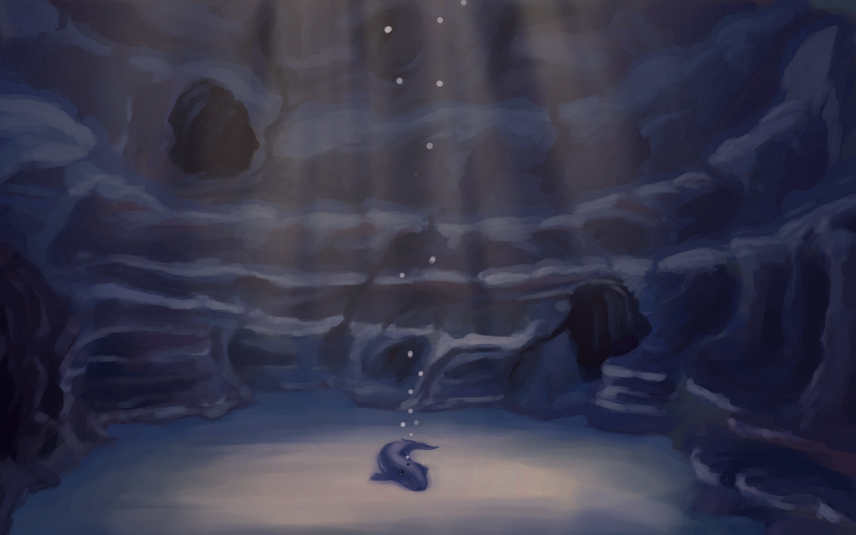
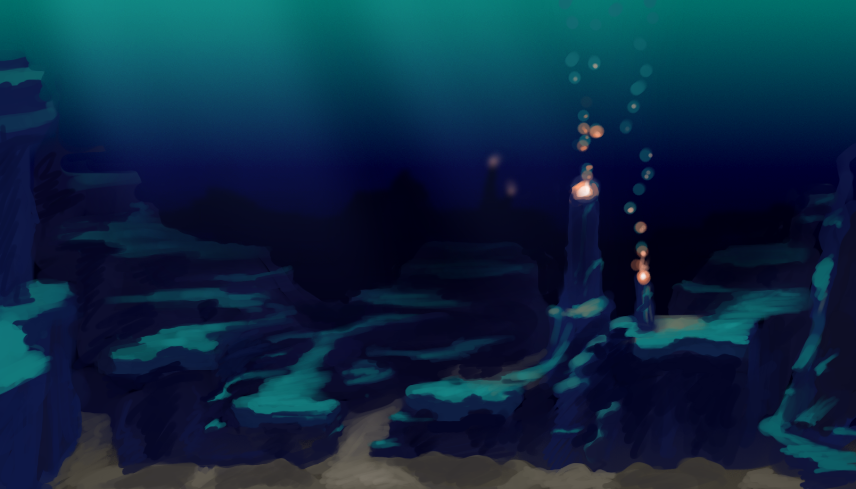
    Josh the Whale is moving along nicely.  Bryce is figuring out the new engine and we have already put together some proof of concept work.  While he’s figuring out how to get this all put together in an application, I am trudging forward, getting other areas of the game designed and finished.

    This is a time lapse video of the cave entrance where a few pages if the book will take place.  This video is especially long because all the interface  movement would be too distracting if I compressed it down to 4 minutes.  So, if you don’t want to spend 20 minutes watching this video, watch for about 1 minute and then skip ahead 5 minutes, this will give you a good feel for the whole process.

    As you can see, the difference between the concept art and the finished result is dramatic. And I predict that there will be more changes in the future, as we test on different platforms.  This is partly because of my lack of planning, but also because plans change as you continue to consider your market and what ideas you wish to express visually within the story.

    And there are also limits with polygon count amount other things.  I try to avoid thinking that way when doing this kind of work, because even with restrictions you can usually get what you want out of it, if not stubble upon a few good things you wouldn’t have seen without the restrictions.

    The processes that I go through to hash out these designs are simple:


    Brainstorm and Sketches (What colors, what environments, visual style)

    Concept art  (Hardest part, because you are trying to develop a visual style and language that best fits the idea)

    3D’ize  the Ideas (Modeling, Texturing, Rigging, Animating, and other asset creation)

    Troubleshooting (testing to make sure that the colors are sending the right visually messages, the main character sticks out enough, etc.  Often the longest part of the job)


    It’s allot of work, and can be very daunting when you first approach it.  But as the artwork comes, the assets get animated, and those assets are placed into an interactive state, it can be very exciting and encouraging.

    I will continue posting about this app, since it looks like we are still a good month away from a final product.  But I do have other things lined up.

    I am currently putting together a personal project video series, that should carry on for a few months.  I got a few ideas in mind on things I might be able to contribute from my limited experience.  And placing some of that experience into a fun video series will help keep me motivated in my work, and hopefully motivate some of you as well.

  • Concept Art Among Other Things

    Concept Art Among Other Things


    Again, sorry for the lack of posting.  I have been busy with a few things.

    First, Thor Media’s new live wallpaper has been delayed for a couple weeks, so I have been working around that.  Also, I have picked up a smaller VFX job.  Just some small tracking and green screen work, which I will post a little later on.

    But, in between things I have been able to tidy up the script for our up coming game, and work on some concept art.

    I decided to tackle some of the environments first.  There are good reasons to do this from a production stand point, but the main reason why I started painting environments is because I have very little experience in painting imagined environments.  Especially long shots of out door environments.  So, to see where I stand on that skill-wise I did a few paintings of some environments in the game.

    And, to give myself a little critique, I have a long way to go.  I think the lighting in the painting with the sunset is good, but it struggles because there really isn’t anything special about it.  I know when designing for video games, the worlds are very, very small, compared to the real world.  So to liven up these imaginary worlds, they need to have things exaggerated, things that stand out.  In fact from what I know, it is very similar to character design.

    Then the Mountain Slope painting lacks depth.  I was trying to go for a more diffused lighting, but there is obviously much to learn before I can pull it off.  Direct lighting seems to be easier to work with right now.

    I did record one of the paintings, I hope you enjoy.  Let me know what you think, or if you might have some good references for me to look at.  There will be allot of learning in the next couple months on the this project.

     And speaking of learning.  I just got an awesome new art book.  It’s called ” The Art of Journey“.  It includes a ton of the production art.  From doodles to finished concept art.  And what amazes me is that most of the art was done by one person.  It gives me allot of hope in this project we have just started.  I am thinking about using the book as a model for the kind of process I should go through to produce the art for this game.