William Thorup

Illustrator, Motion Graphics Designer, Animator, and VFX Artist

Tag: blender

  • Atari Jaguar – Cover Art & Packaging for Last Strike

    Atari Jaguar – Cover Art & Packaging for Last Strike

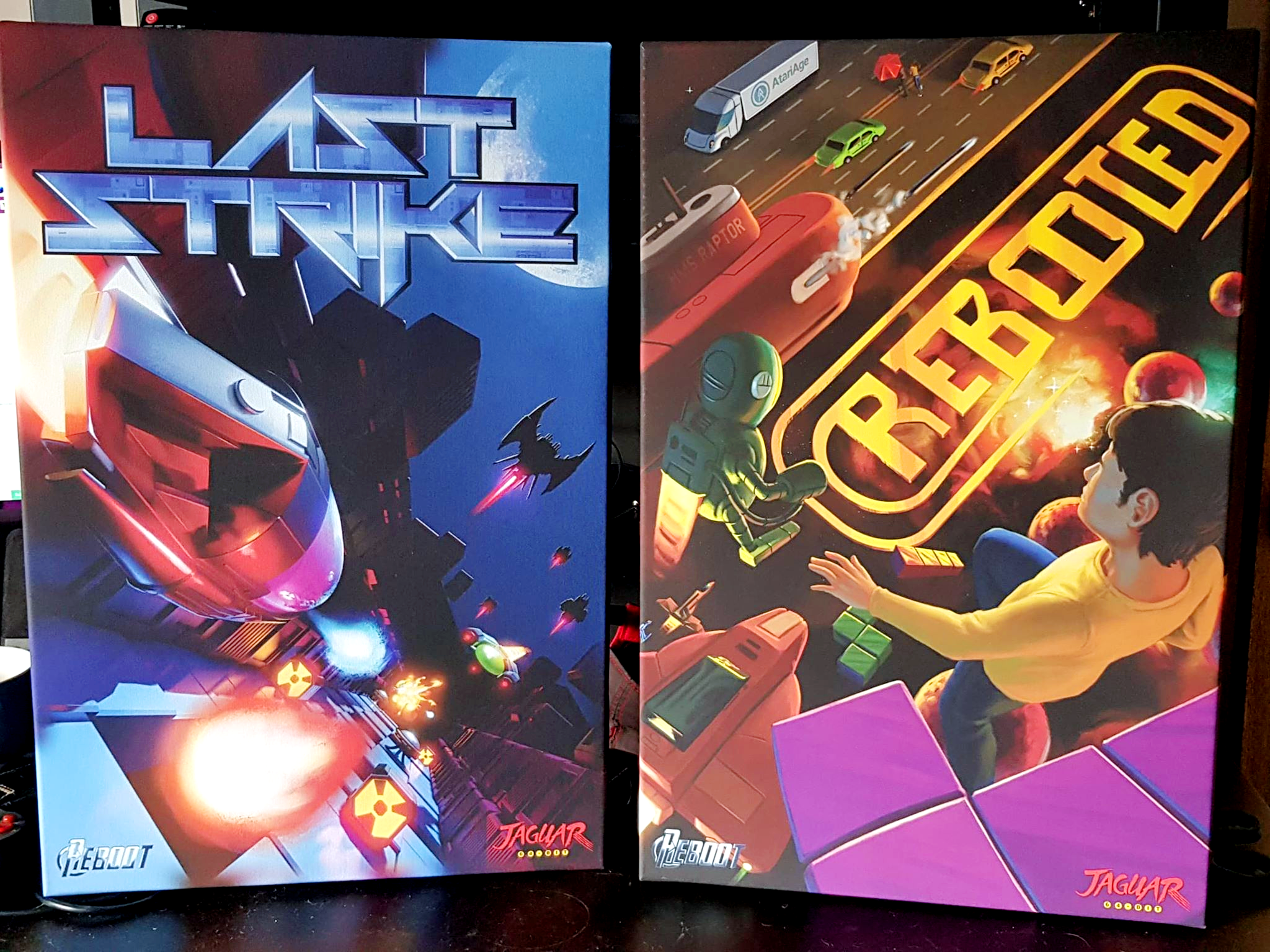
    With customers on the verge of finally getting their copies of Last Strike, I thought I would do a post on a bit of the background on how the packaging for this great piece of Atari Jaguar homebrew came together.

    Digging through 3 years of emails, it’s interesting to see how much you tend to forget on these long term projects. My involvement with Last Strike started with helping Albert at AtariAge in 2018 with some banner artwork for his booth for Portland Retro Gaming expo.

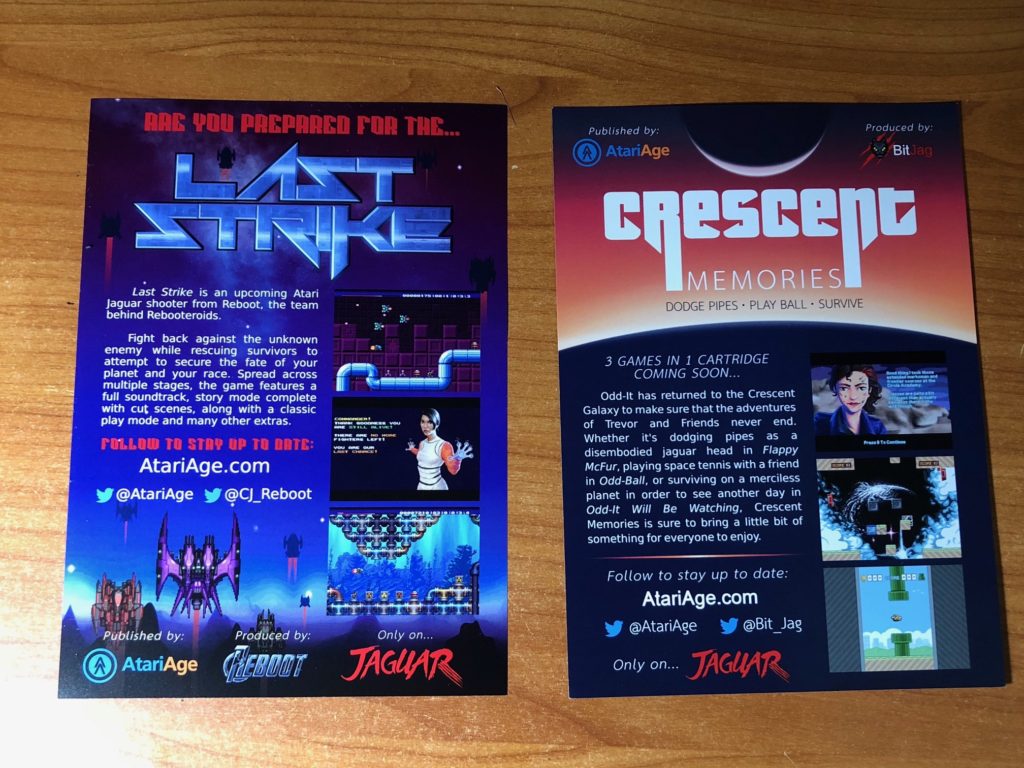
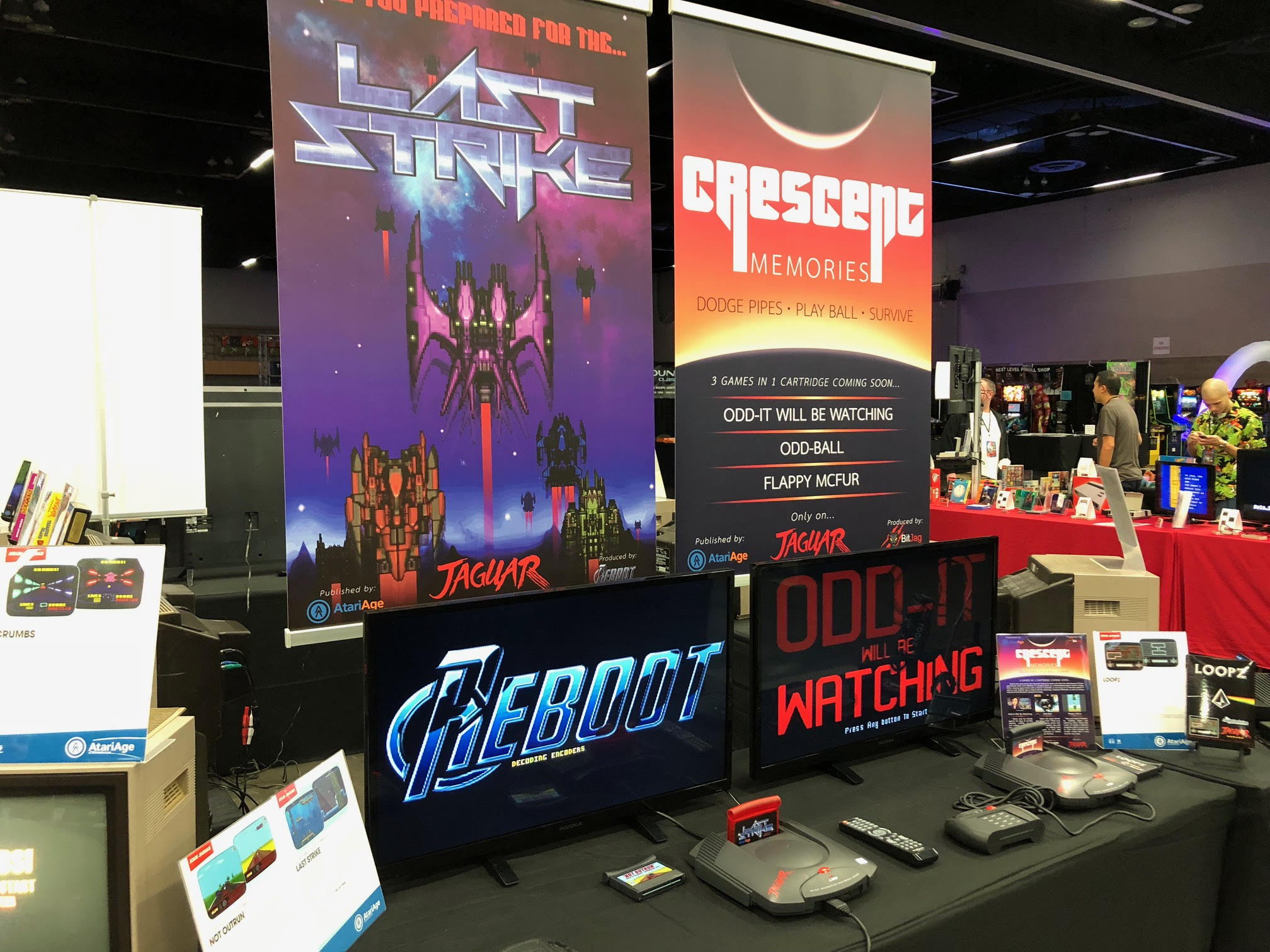
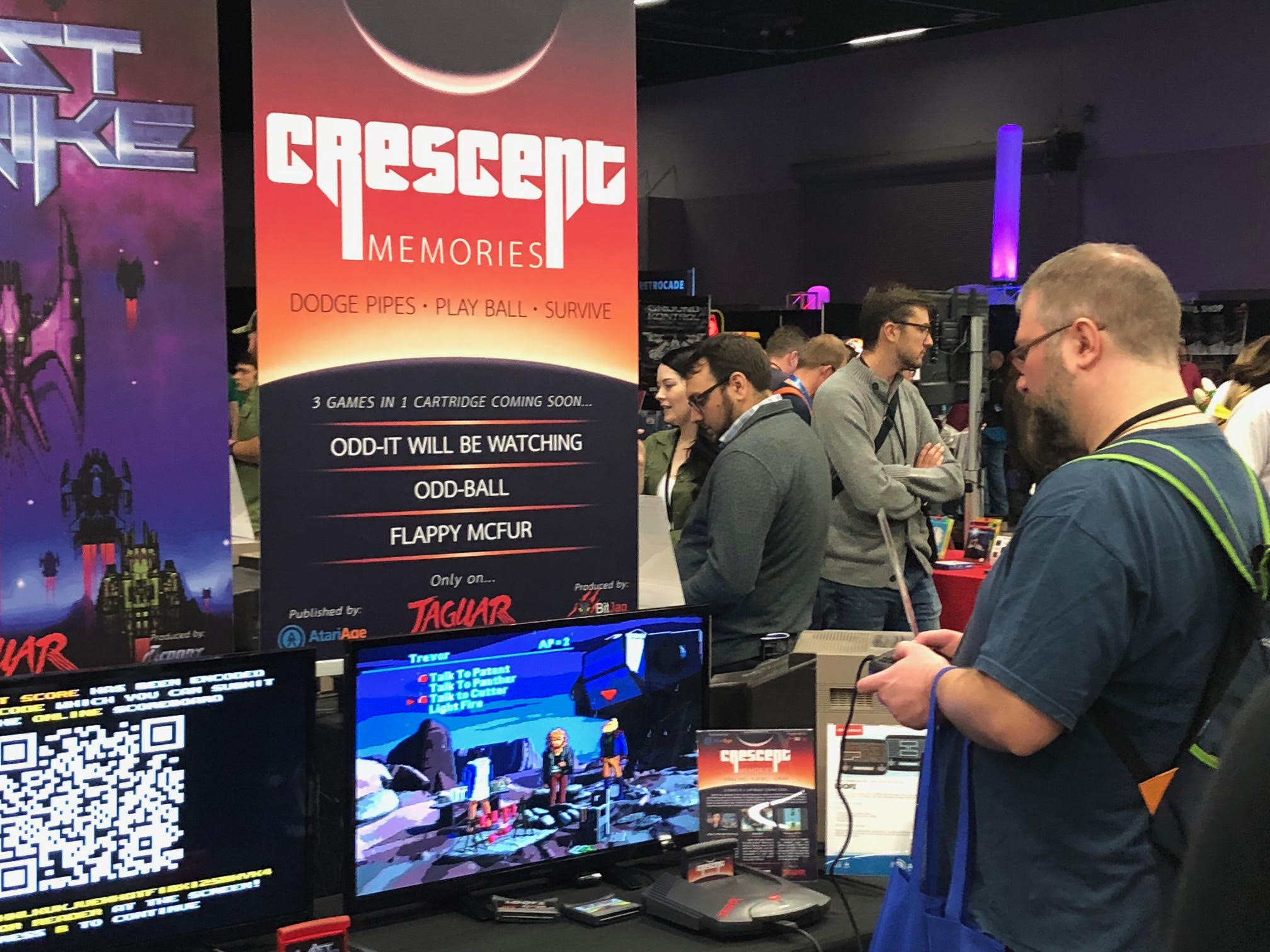
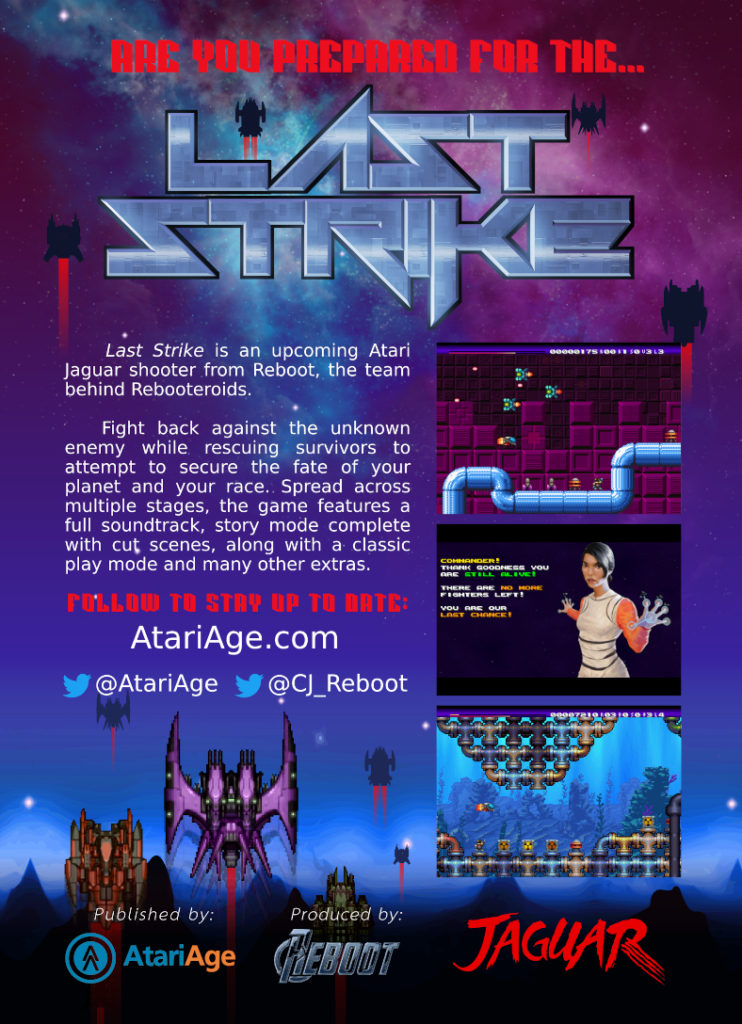
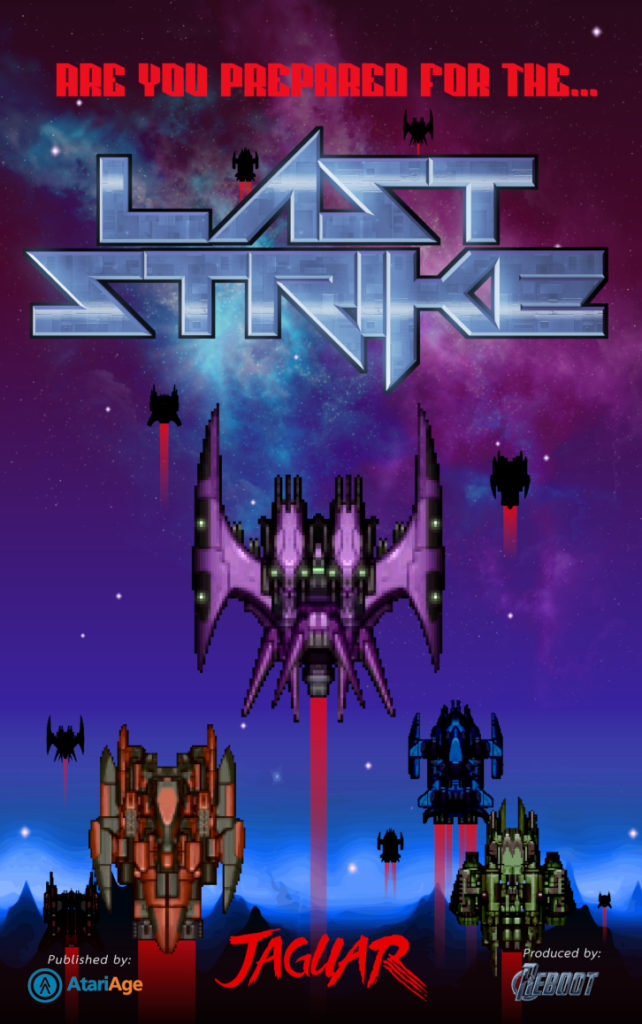
    I have actually never see these booths in person, and with the lockdowns, that chance may not come any time soon. Based on pictures posted by AtariAge though, it’s an honor to have some of this quick graphic design work show up at conventions where thousands of people get to see it. Along with the banner, I had put together a flyer that was available for pick up by potential AtariAge customers. Last Strike was printed back-to-back with the flyer for BitJag’s Crescent Memories game. The sprite artwork for the spaceships is from https://opengameart.org/.
    After the convention wrapped up, along with the holidays, work started on the cover art for Last Strike. April 2019 is when the emails started, along my usually first step for work like this. Thumbnail sketches.

    I decided to bypass pencil sketches and go directly to color sketches. A couple reasons for this. Reboot didn’t have much in regards to direction except for pointing me towards previous content generated for marketing and assets for the game. This makes picking a color palette fairly easy. Just stick to what is used in the game and the banners/flyers that were used for Portland Retro Gaming Expo.

    For the content and composition of the boxart, I decided to take inspiration from other shooters. One in particular was used as inspiration, and that was the cover art for Raiden on the Atari Jaguar.

    Raiden’s box art takes a very simple but effective approach of extreme perspective to create a good sense of depth and movement. With the nose of the aircraft pointed towards the obstacles that the player must face in the game they are about play, we are given a good tone for the game without needed to plug and play.

    With these thumbnail sketches I decided to take the compositional ideas and translate them into something new for Last Strike. I also decided to play with a few different camera angles to see if the client might want something not quite on the beaten path.
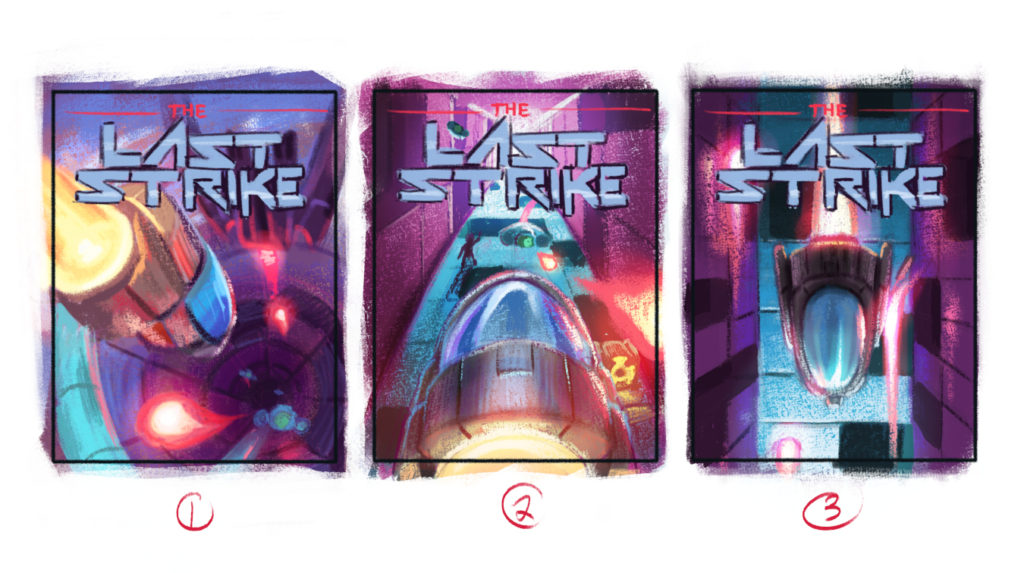
    After a few suggestions for changes the first thumbnail was the direction chosen. Before moving onto the final illustration, and because of the feedback, I decided to do a one more thumbnail sketch. Working in the adjustments and to refined the composition accordingly.

    Along with this new sketch, I was also needed to look forward to how this might look on actual product packaging. I had developed some templated 3D renders for testing artwork on for previous projects I have done for Jaguar games. I felt that we were far enough along with this final sketch to get a good feeling of what the final cover art and overall package would be like.
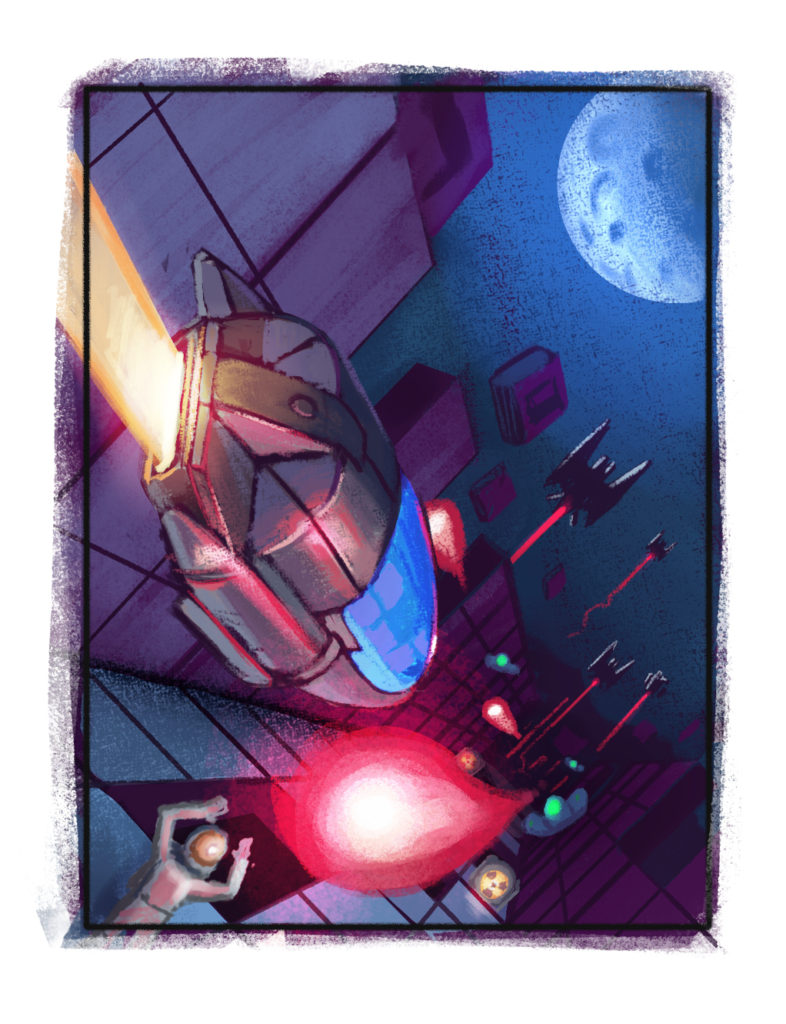
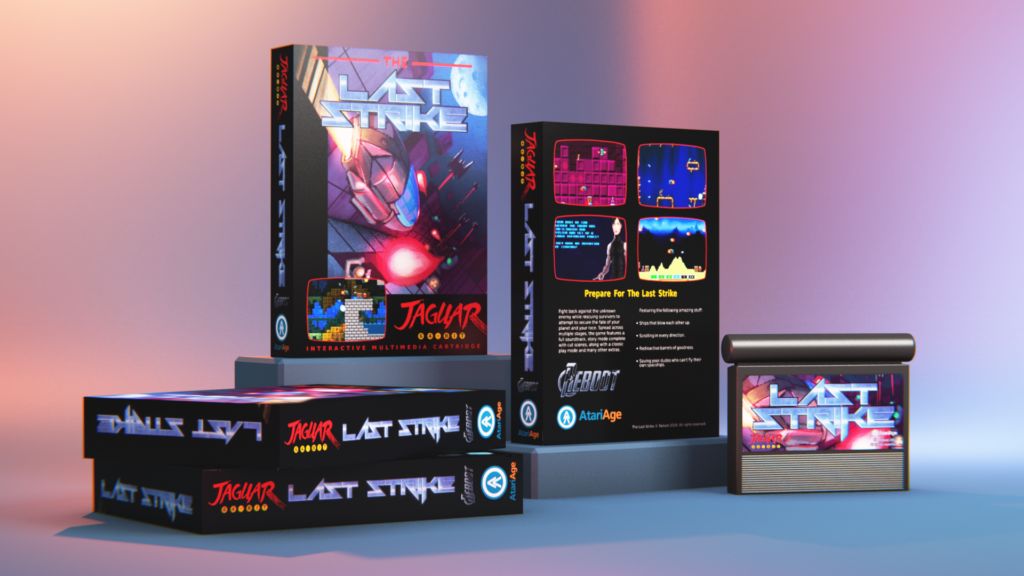
    With a go ahead for the artwork and confidence that the cover art would work well for box, manual, and cartridge label, I moved forward to the final illustration.

    I decided not to go with a strictly painted process and instead decided to use Blender to generate a pre-rendered base to work from. Building the models for the ships, the corridor, and other objects ended up taking up as much time as it would have taken just to paint them from scratch in Krita. But I believed that starting with a very clean and synthetic base to paint from would lend itself to the sci-fi feel of the game, while still giving me the freedom to add more organic edges here and there. Organic things like the people, blasts of energy, and the moon, contrast in form and silhouette with the more refined edges of the walls, floor, and ships. Creating a nice tension that plays well with the action of the scene.

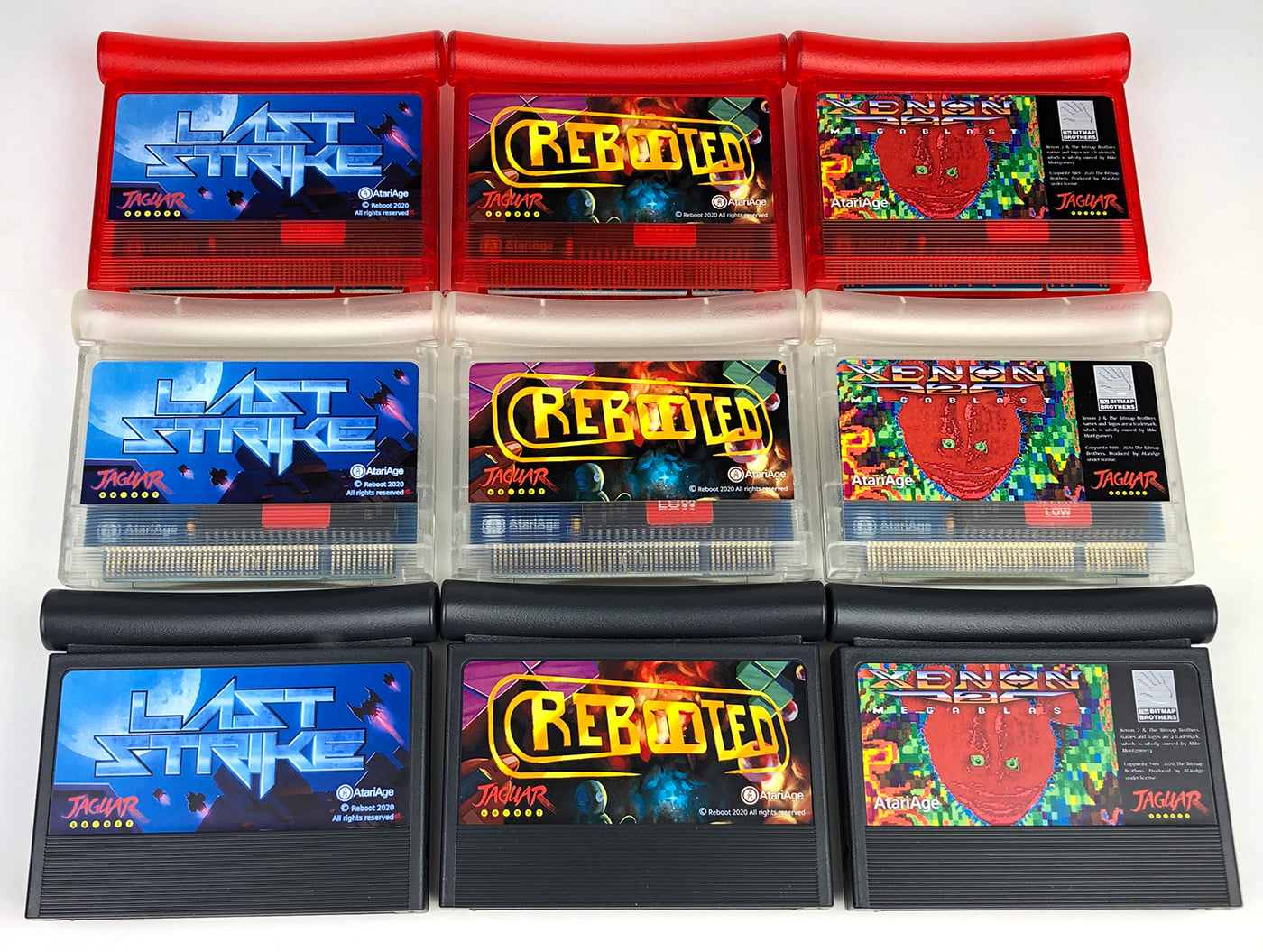
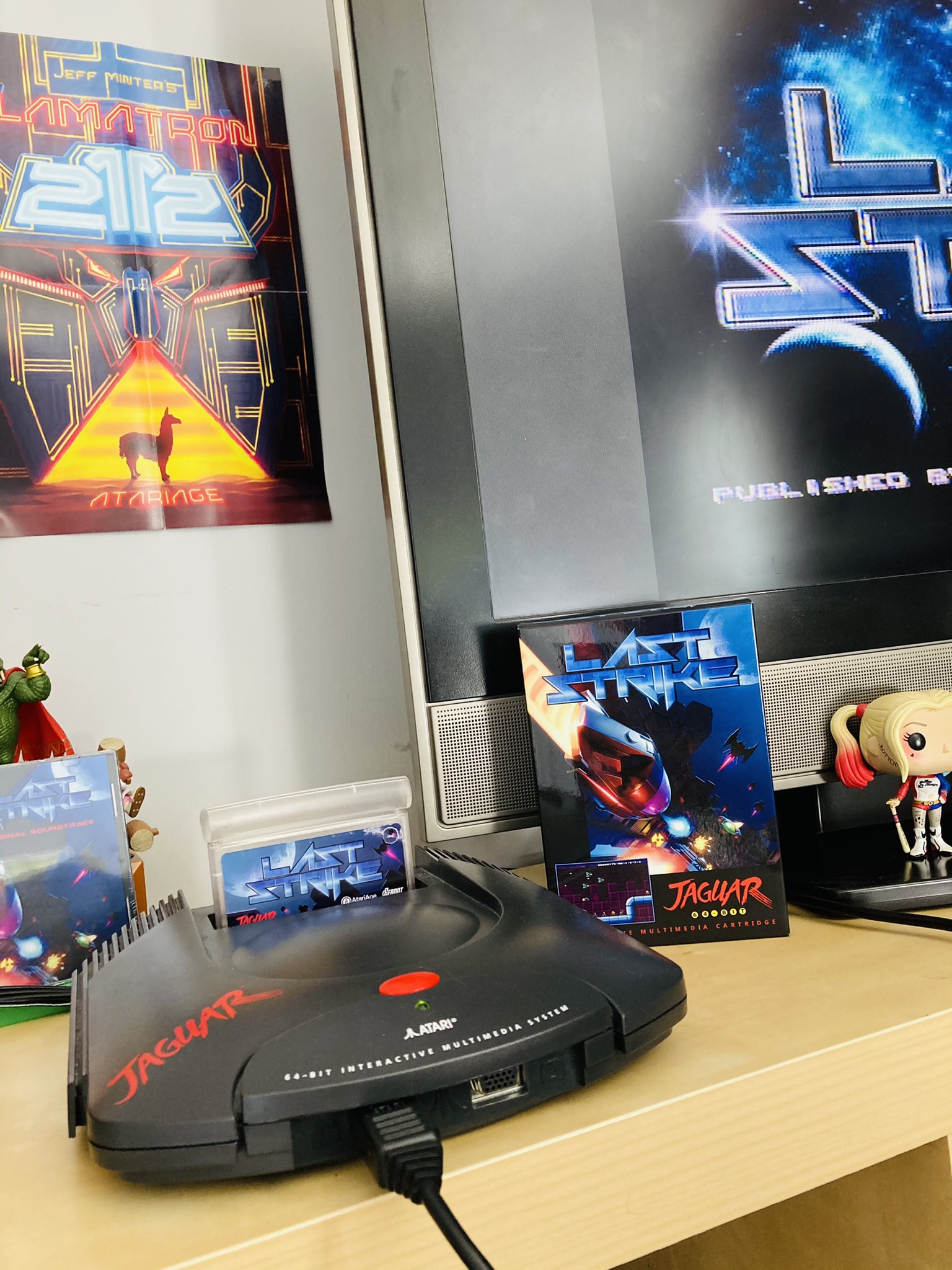
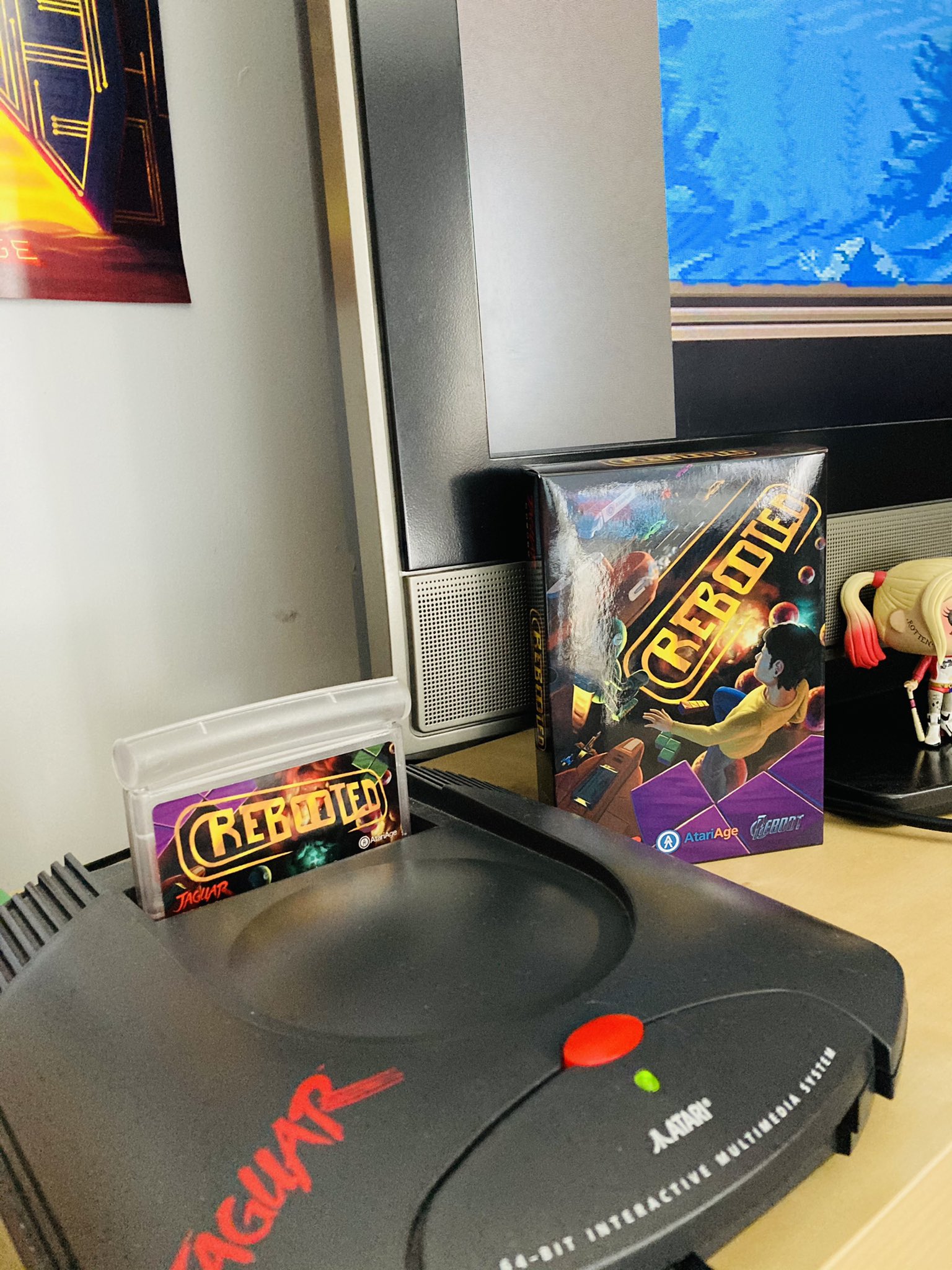
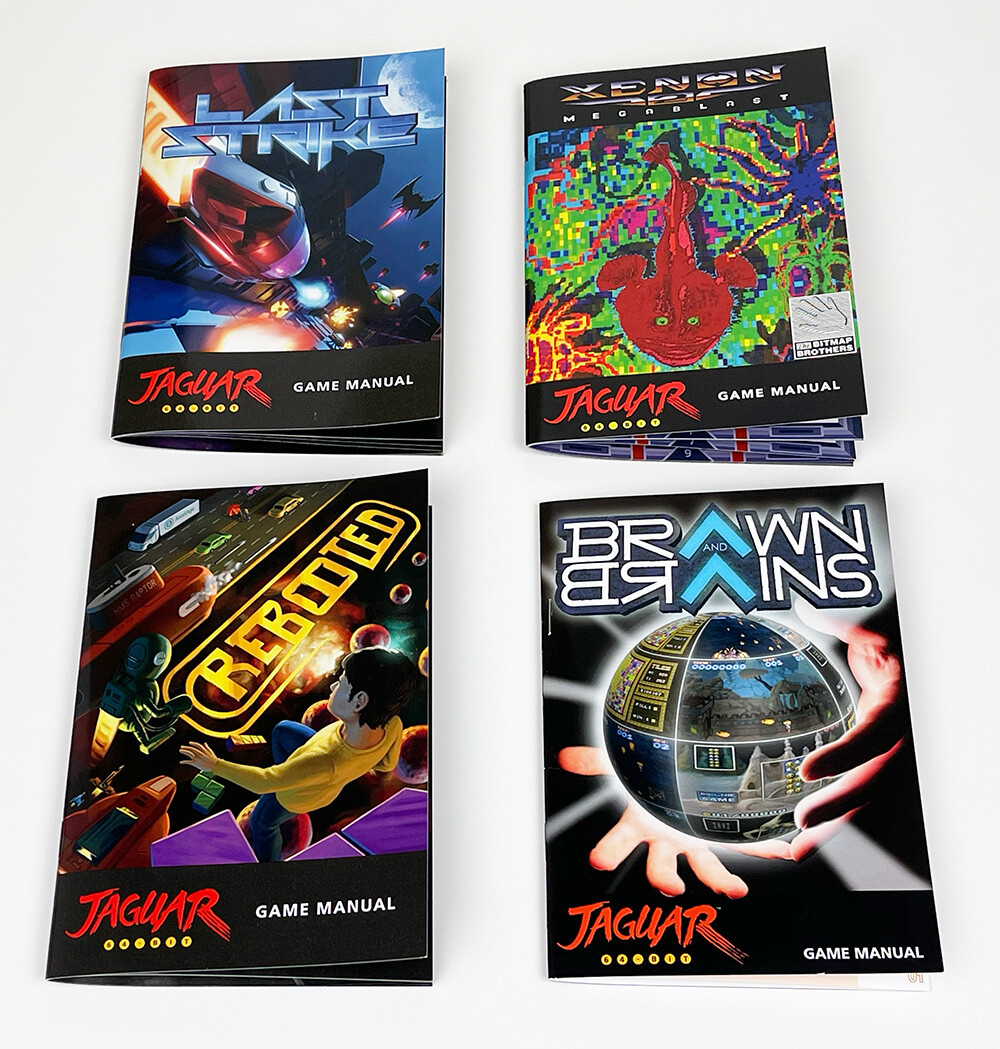
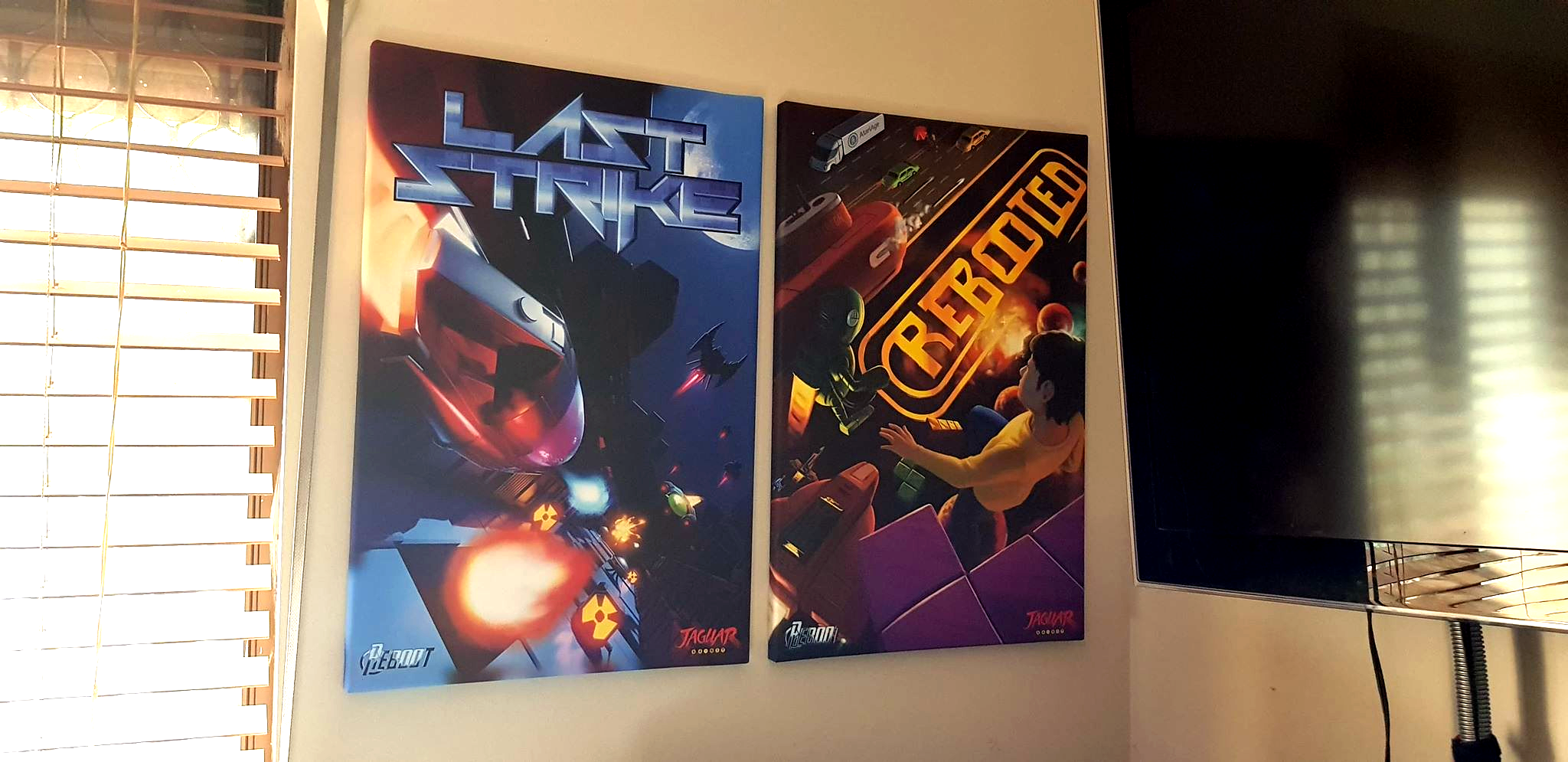
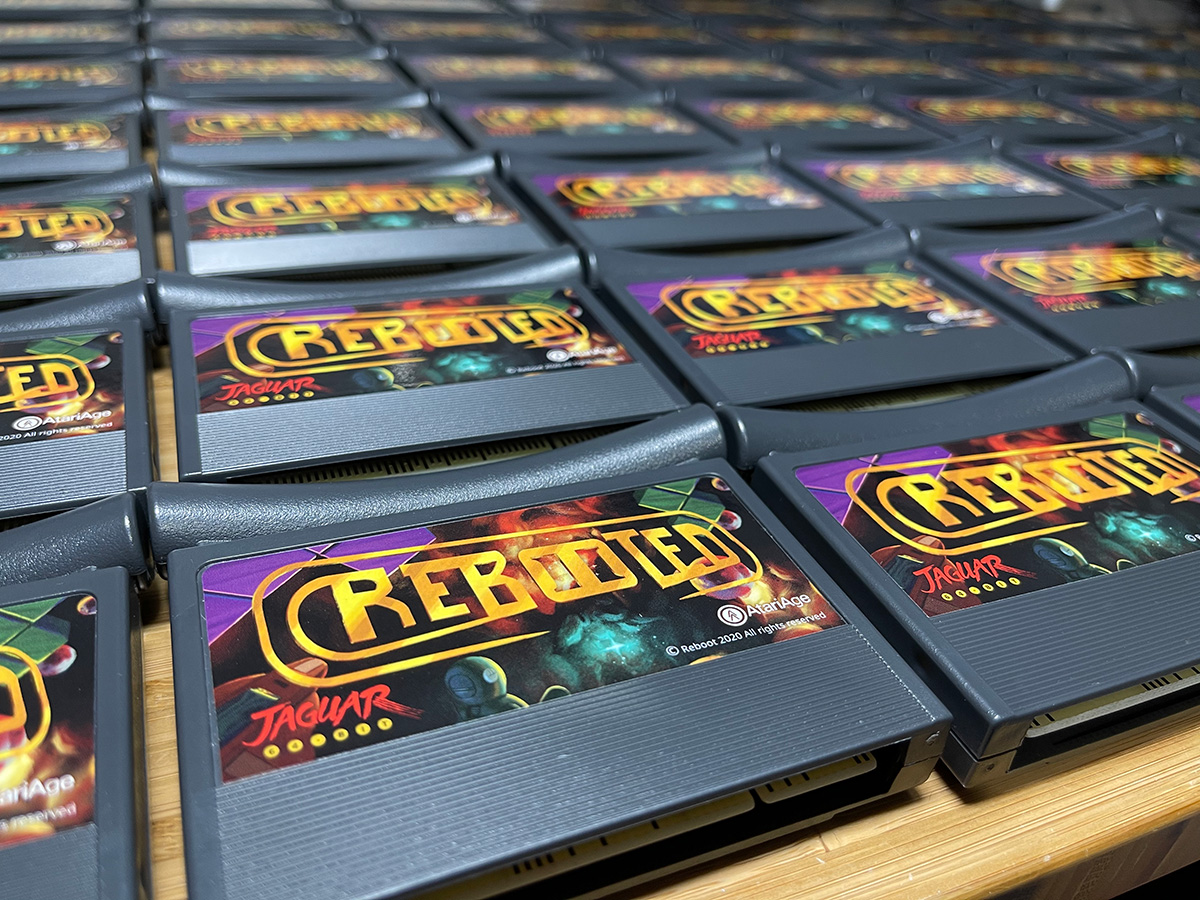
    I want to avoid posting final artwork here, but here is a render of that same 3D template that was used in previous steps of this process along with a time lapse of the process after the final thumbnail sketch was produced. Along with the box and cartridge label, I also assembled the manual for the game along with some basic cover art for the CD soundtrack. Also below are some pictures taken by Albert of AtariAge, Lawrence from Reboot, and a few people on Twitter who have already received copies of the game.
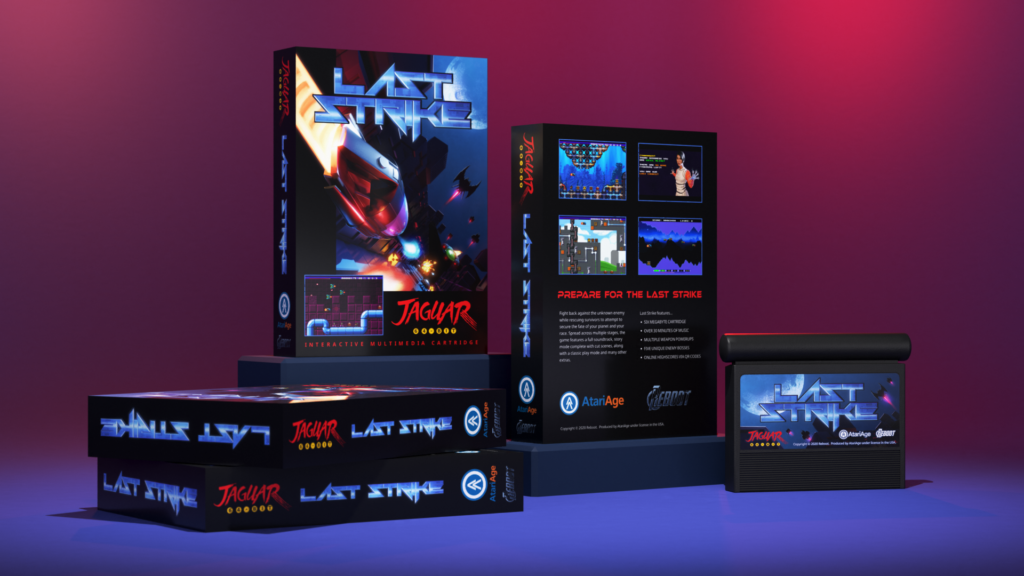
    I did have the opportunity to play the game during play testing. I want to avoid doing a lengthy review, since I am sure the game has gone through some changes since then, and my unavoidable bias due to my involvement. I do highly recommend the game if you like shooters though. In regards to variety it is much better than Raiden, but it is not quite as serious in tone. Having a fun edge to it, along with some good boss fights, it’s definitely worth adding to the collection. It gave me strong vibes of Blood Money for the Atari ST, one my childhood favorite games. Reboot knows how to make fun, high quality release, and it was great to be a part of that.
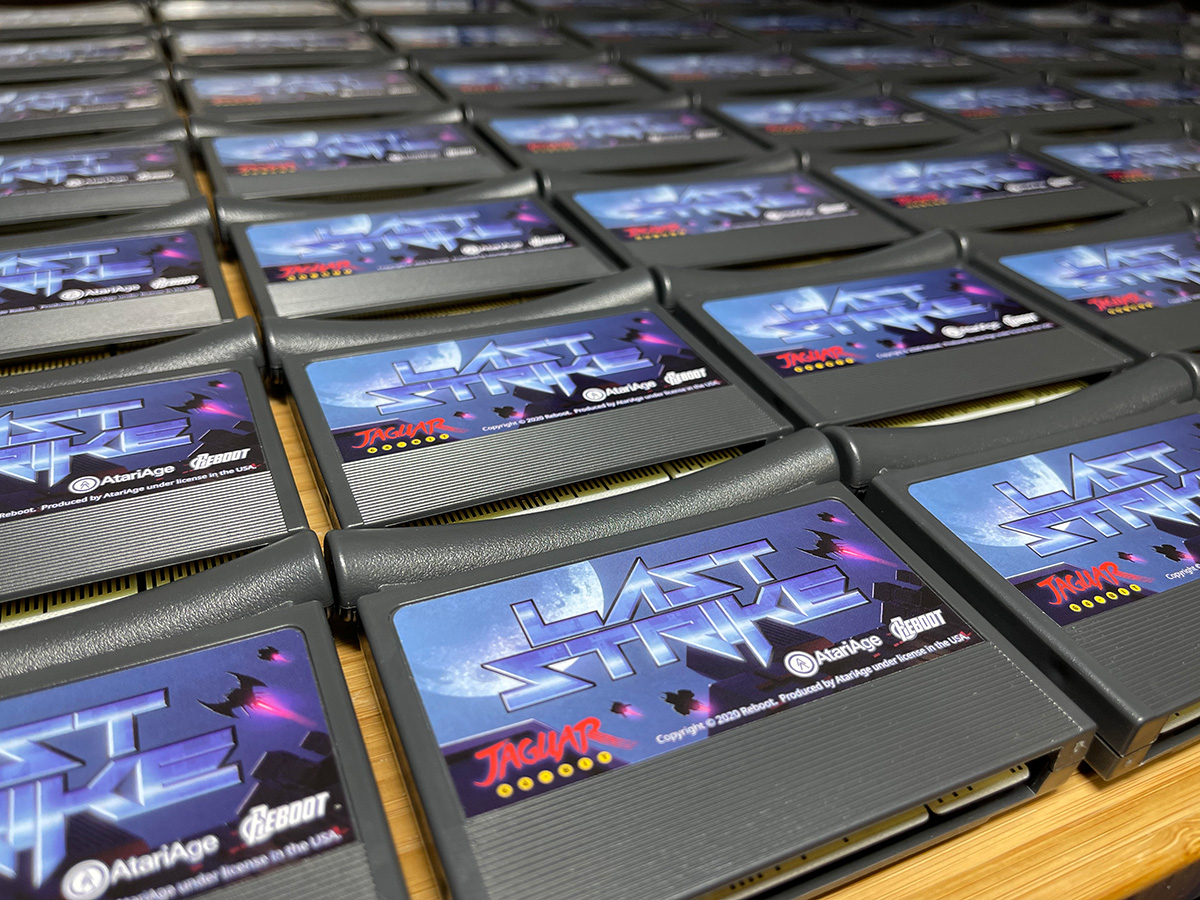
  • Legends Boxing 30 Second Commercial

    Legends Boxing 30 Second Commercial

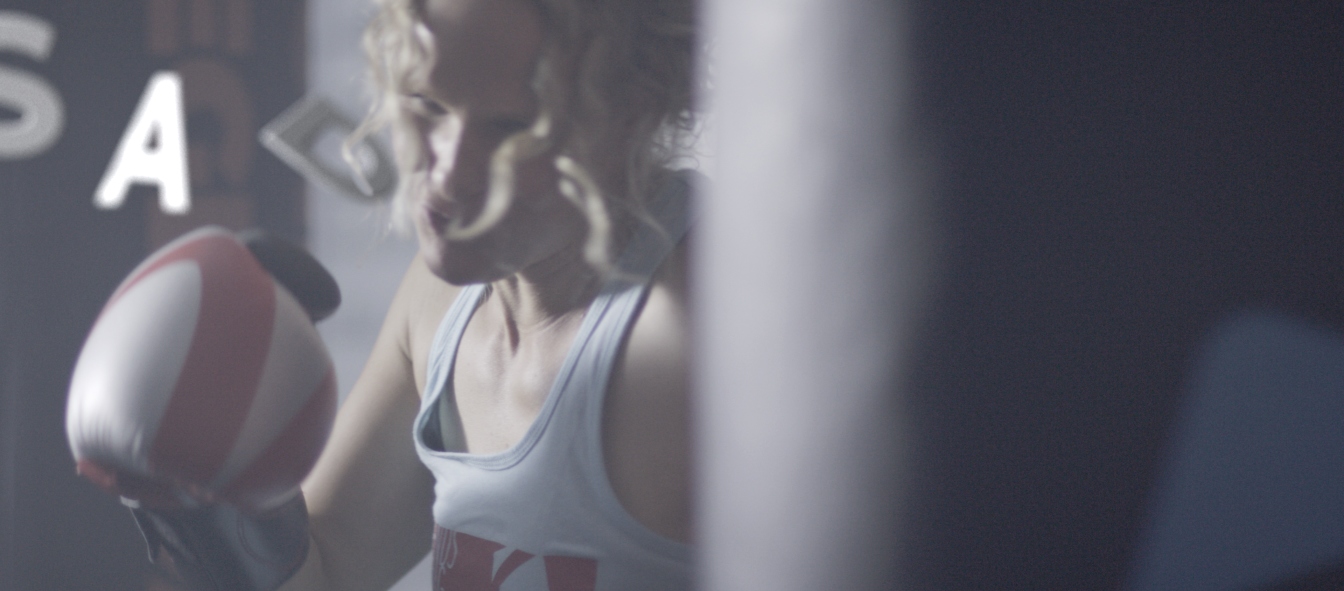
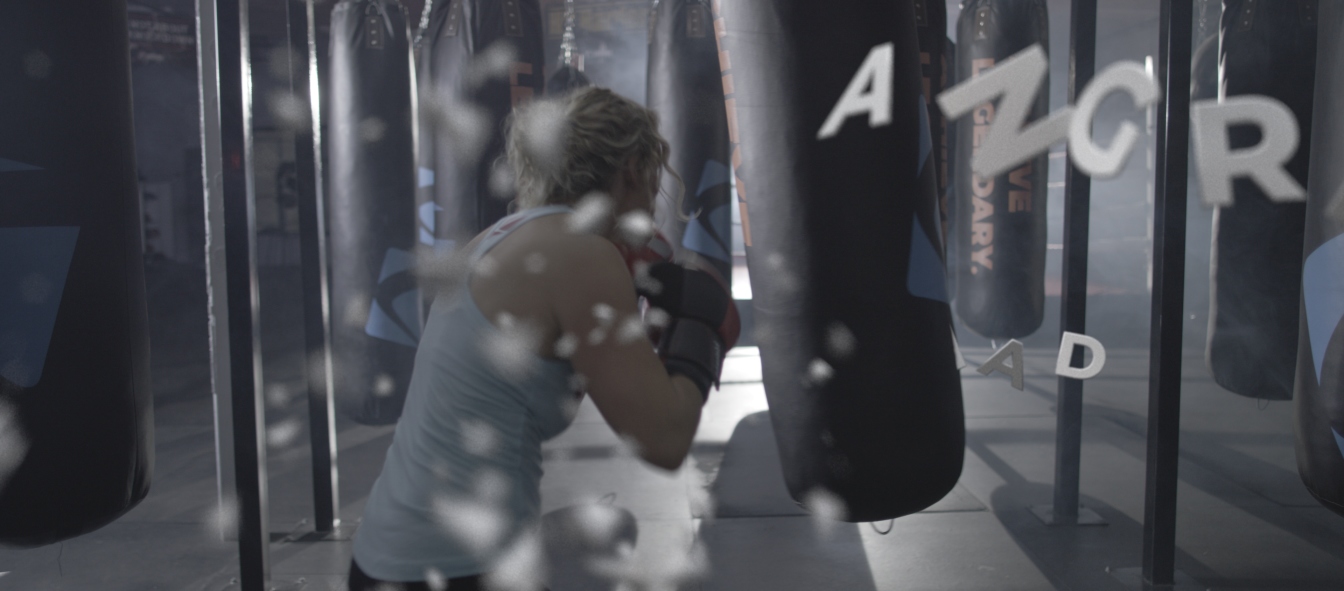
    Working with Bryce Media, I was brought on as an on-set VFX consultant and as the post-production VFX/Motion Graphics artist for a 30 second web spot for Legends Boxing.

    The Prompt

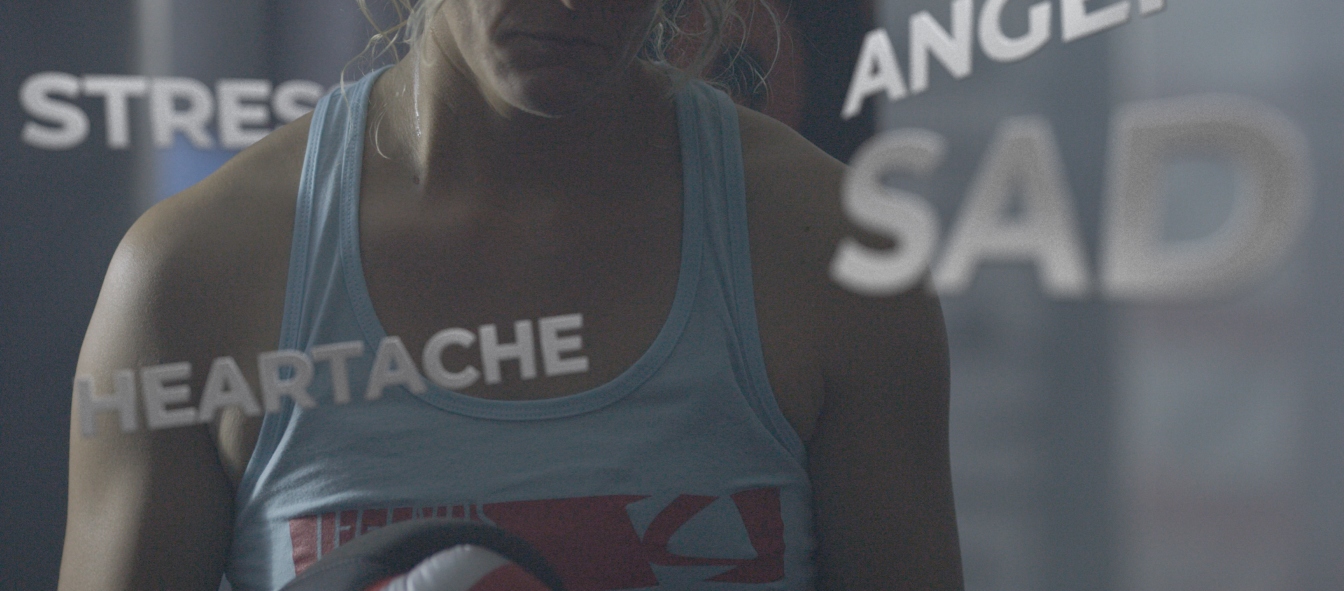
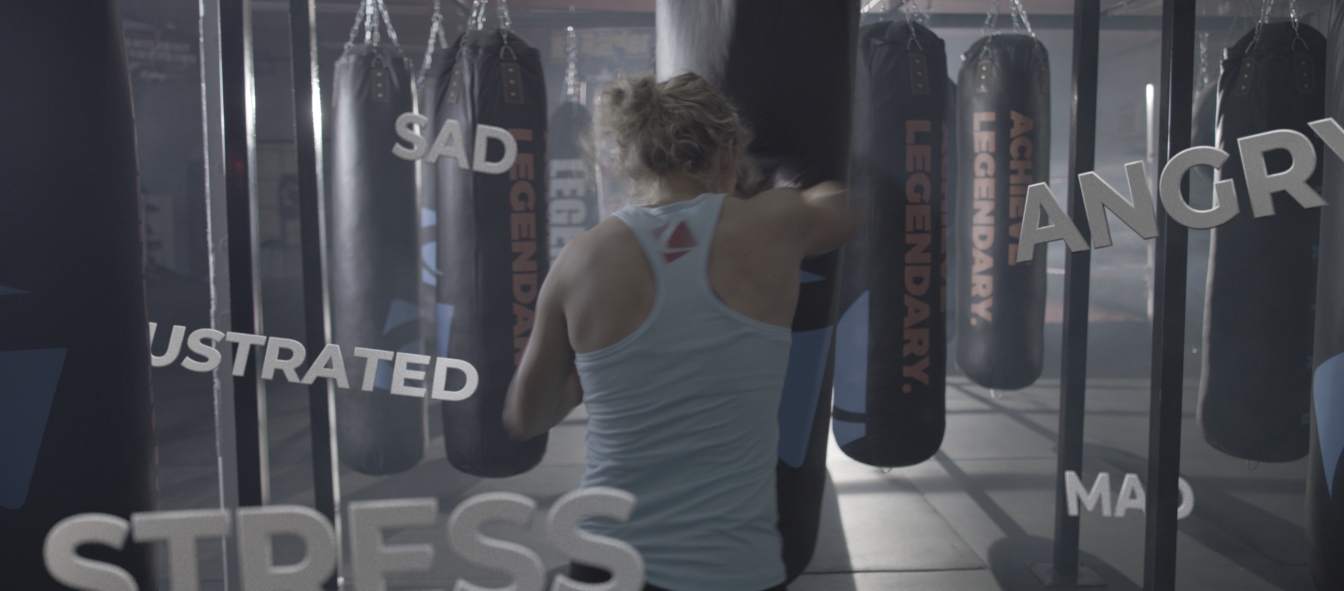
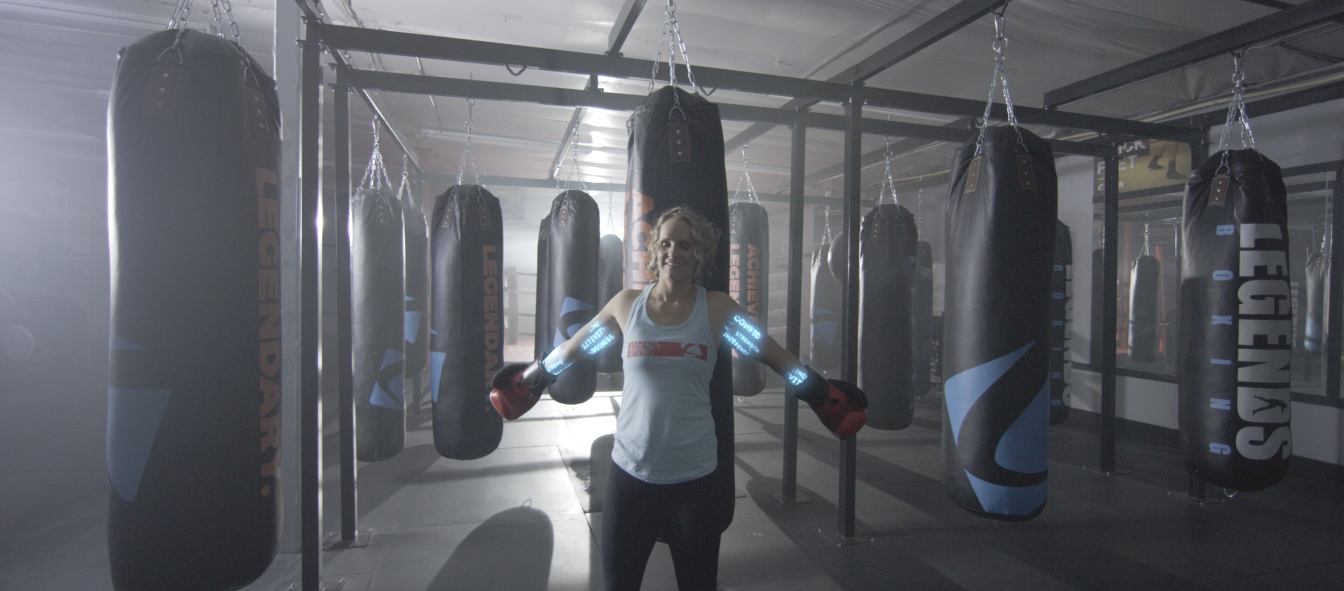
    The primary goal of the spot was to show how Legends Boxing can be used as a tool for empowerment. With this prompt Neil Bryce and one of the owners of Legend Boxing scripted a 30 second spot featuring a woman between 35 and 40 reviewing the daily struggles that she and many other face. 3D text/graphics would be incorporated inside the real space of several shots, words representing these negative feelings. Throughout the spot, this woman would be punching a punching bag, and at the same time destroying these negative words floating around her. The spot continues, the words finally all destroyed, the woman “resolves” these negative emotions, with a visible sense of relief. Graphically, positive words are illuminated on her arms and travel upwards.

    On-Set Production

    On-set, Neil and I decided to simplify our shots as much as possible in order to fit the available budget of the job. Our primary tool for this was to stick to lock-off or on rail shots in order to eliminate any 3D camera tracking that would be needed otherwise.

    Beyond these suggestions, I stayed on-set to act as director of photography and help setup lighting and shots for Neil. Just a second pair of eyes to get ensure attractive and usable shots.

    Post-Prodcution

    All post VFX work was done in blender. Most shots were locked off, so it was just a matter of matching focal lengths, and figuring out approximate height of the camera and other distances for masking our punching bags and other objects in the scene. Then, just placing animating and exploding text where appropriate.

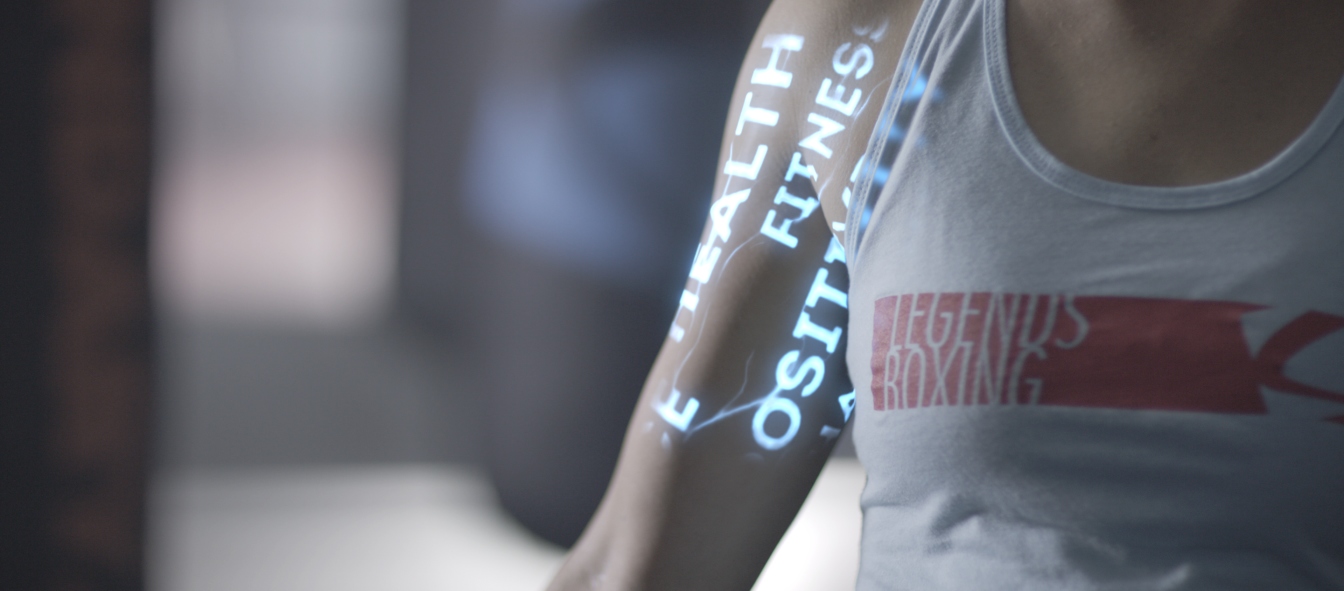
    The tricky shots were the arms and the blue glowing words on the woman’s arms. I had to create 3D maquettes for the arms, and then manually rotoscope the maquettes to match the movement of her arms. Besides a single 2D track to get the basic movement of the arms, this needed to be an entirely manual object track.

    The maquettes where rigged and modeled as closely as possible to the real arms, but 2d masks for the silhouettes of her arms were still needed to restrict the textured glowing letters to the positive space of the woman’s arms. After masking and animating the maquettes was finished, I was able to add and composite anything on the the arms of the woman. At this point I did a 2D animation of the veins and words that would appear on the arms, and then applied this has a texture on the 3D maquette.

    The composite on top of the real footage was simple to approach. Blurring and film grain in Blender’s compositor was added. With one special case of the last close up shot, near the clavicle where her shirt covers some of the text, I needed an additional mask to blur and diffuse the light of the text to simulate it passing through the cloth of the shirt.

    All graphics went through about 3 revisions to get to their final product.

    Wrap Up & Telly Award

    The entire production of the spot has about a month turn around, and I believe was re-edit several times to multiple social media posts for the company

    Me and Bryce Media were both happy with the final result of this spot. We decided to put this in for a Telly Award and won Bronze in General Online Commercials.

  • MojiLife M3 Product Reveal Video

    MojiLife M3 Product Reveal Video

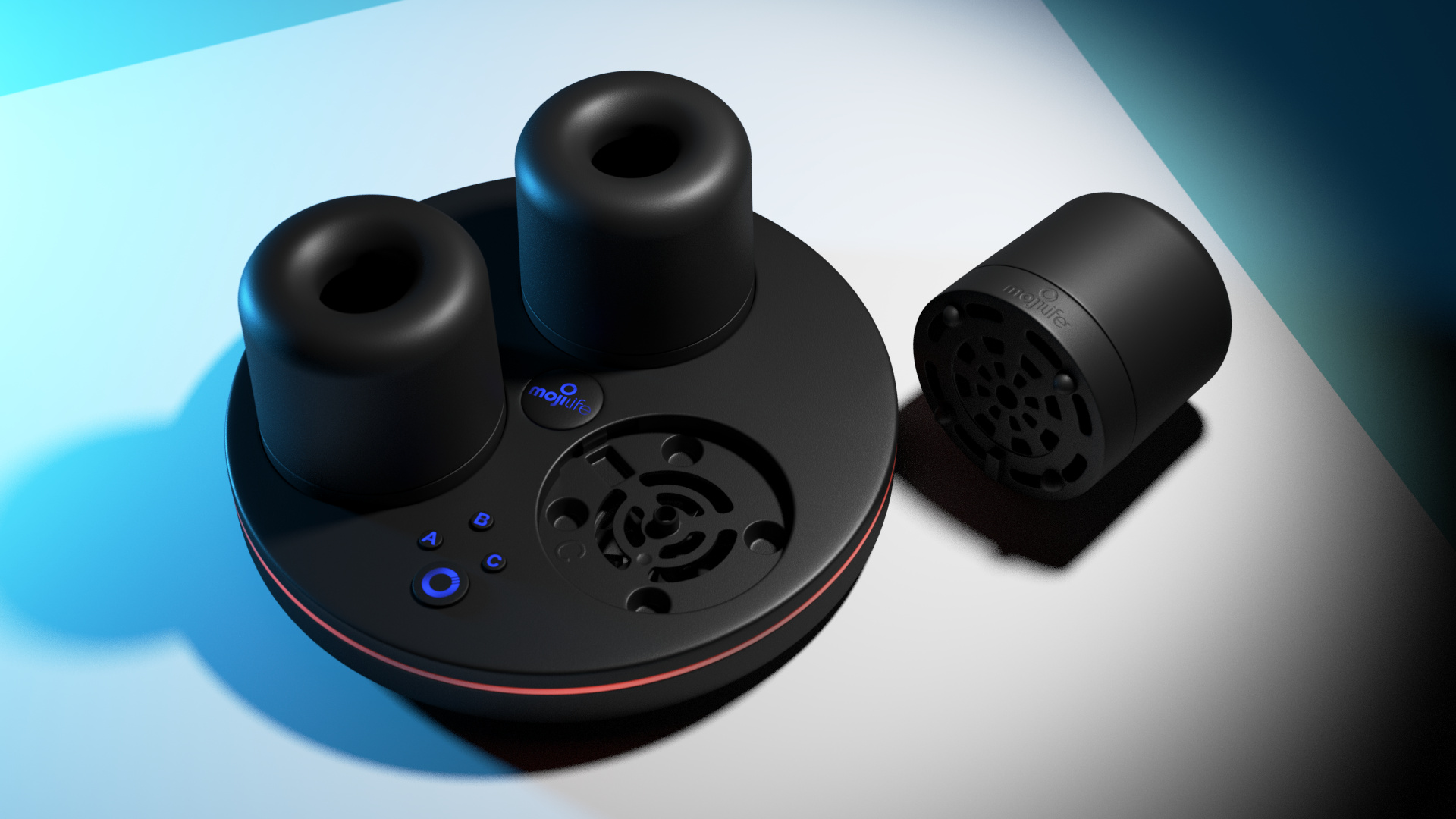
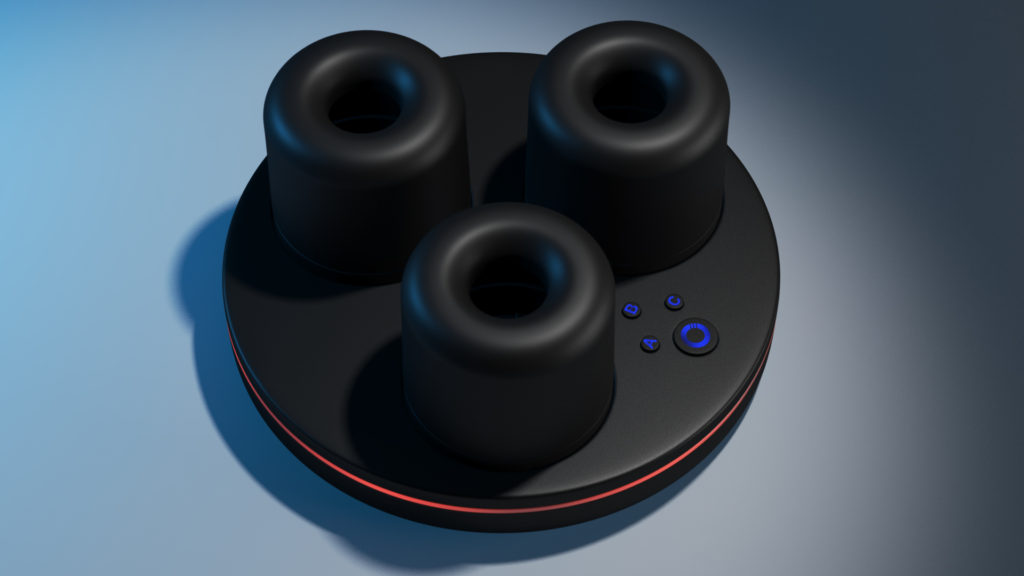
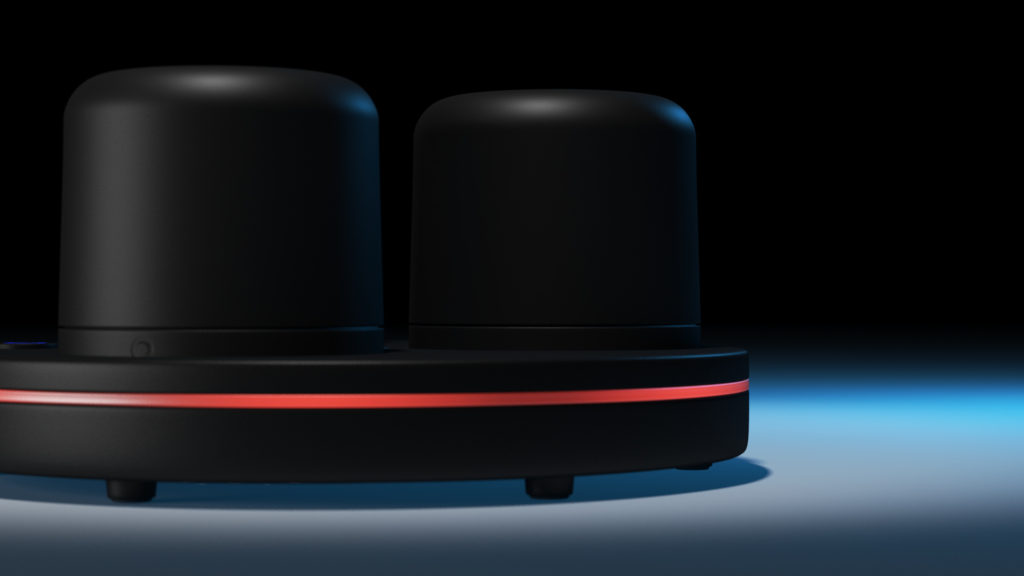
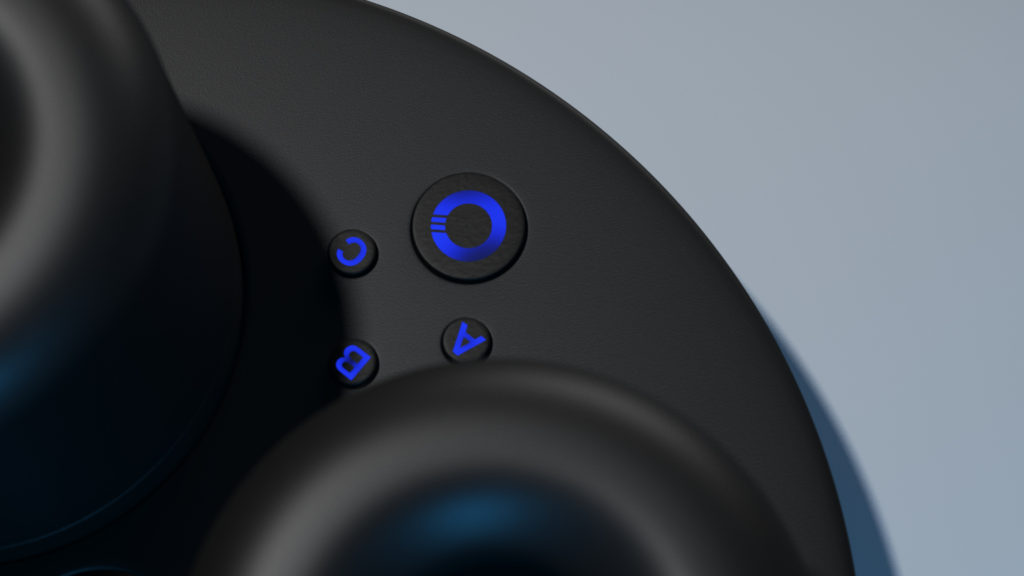
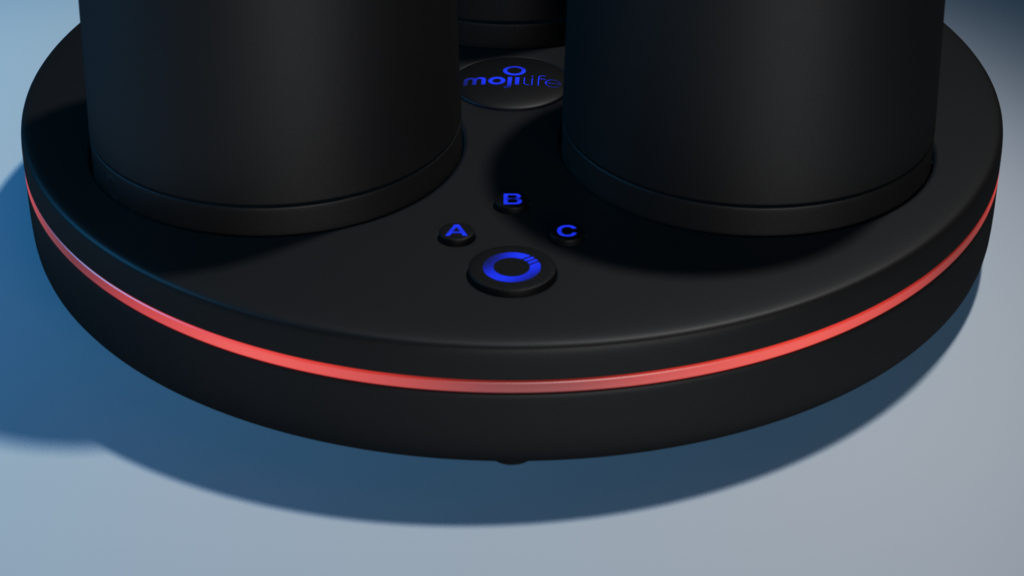
    It’s not everyday I get to do a from-scratch product render. Also, taking that product and producing a short intro/promo video to make it as sexy as possible isn’t par-the-course for me either.

    Product Preview Render Before Animation Work Started

    This small projects had a very short deadline. Everything was created and finalized in less than a week for a MojiLife conference. I wasn’t at the conference myself to see the video in action, but I was told it was used as the reveal video for their new product, and the video received a good reaction.

    Most of the time was spent on modeling the product itself, with lighting, animation and rendering done in just a couple days. Because of time constraints I wasn’t able to spend as much time as I wanted on materials and textures for the objects, but for a projected full motion video, it is convincing enough.

    I used Blender’s Cycles rendering engine for the final render. I tend to avoid Cycles because of render times primarily. But because of the run time of the video and the simplicity of the scene and its contents, the render times for this specific project were bearable. Also, because Cycles simulates light more realistically than Blender’s internal renderer, this helped make up for the mediocre materials due to time constraints.

    I don’t get modelling work like this very often. Most of the time I am going from 2D vector designs and animating in a 2.5D scene in Blender. More akin to what you would see in Adobe After Effects, but with more options for lighting and geometry manipulation. The opportunity to have to mimic a real life object in both form and material/texture in order to provide an affordable alternative to shooting live is a fun challenge, and I felt I pulled it off well for the client in this case.

  • 3D Motion Graphics | Franchise Business Law Group Company Video

    3D Motion Graphics | Franchise Business Law Group Company Video

    Thor Media was commissioned to produce a company introduction and services video for Franchise Business Law Group. A business that helps other businesses with legal protection and future planning for franchises.

    Prompt

    The commission was for a two minute motion graphics video. Something particularly emphasized by the client was to have a handmade feel, as opposed to a high technology feel. In their copy online they emphasize a customized or tailored solution for their clients. By bringing that out with symbols of creating or making things with one’s hands with everyday materials that people interact would help establish the idea of customized or tailored solutions.

    Production

    Upfront, time was spend working out the Audio/Video script. This usually takes a few revisions to get something that everyone agrees on. The voice over script usually needs to go through the client’s legal department or a copy editor for final approval. Then, the video portion of the script is always a bit ambiguous for the client, since they aren’t used to the idea of some explaining motion and other visual ideas with text. This portion of the script typically serves as a starting point for the artist, and help rangle in the visuals in the case the client tries to push the artists into ideas that exit the scope of the Audio/Video script.

    Because of the amount of effort that would be needed in regards to object modelling and texturing for props and other animated objects, we decided to approach our final product with an animation to begin with. This helped establish camera shots, compositions, lighting, and objects. Along with generally testing out ideas and overall tone and mood without the full investment into a final product. With a heavier production workload these kinds of animatic tests facilitate conversations between the client and artists to check their ideas long before bad ideas manifest themselves after a considerable amount of work done.

    As the animatic created and checked ideas and conversation are had on what the final product might look like, I was busy building and rigging animations for buildings and objects, made out of paper, that would self-assemble.

    Learning how to rig a completed model of a building, and then deconstruct in such a way to not make permanent changes, and give me controls that would easily animate and adjust animation when need was fun puzzle to work out. I was able to do this all in Blender without the need of additional plugins. Below are two examples of me working out the all important rig, but also the overall look of the paper and possible lighting styles for the final video.

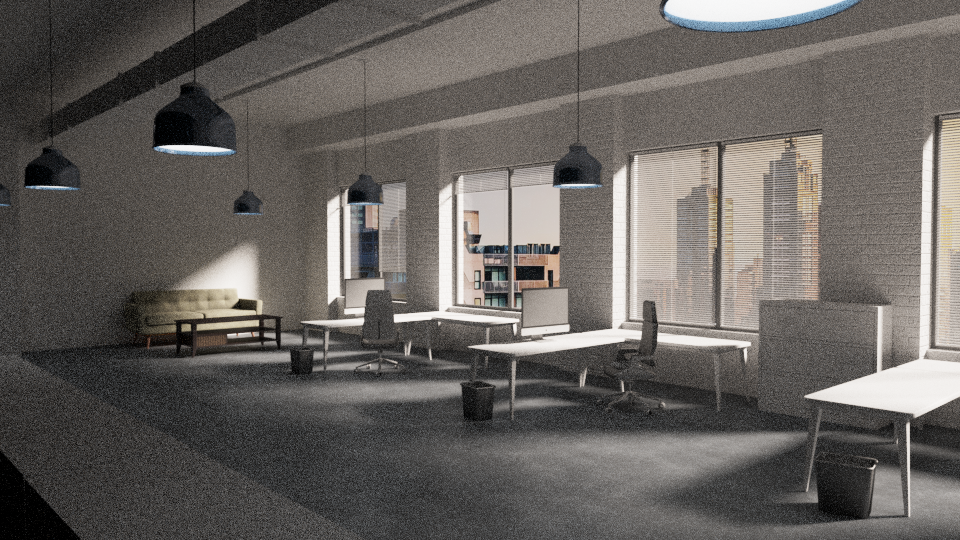
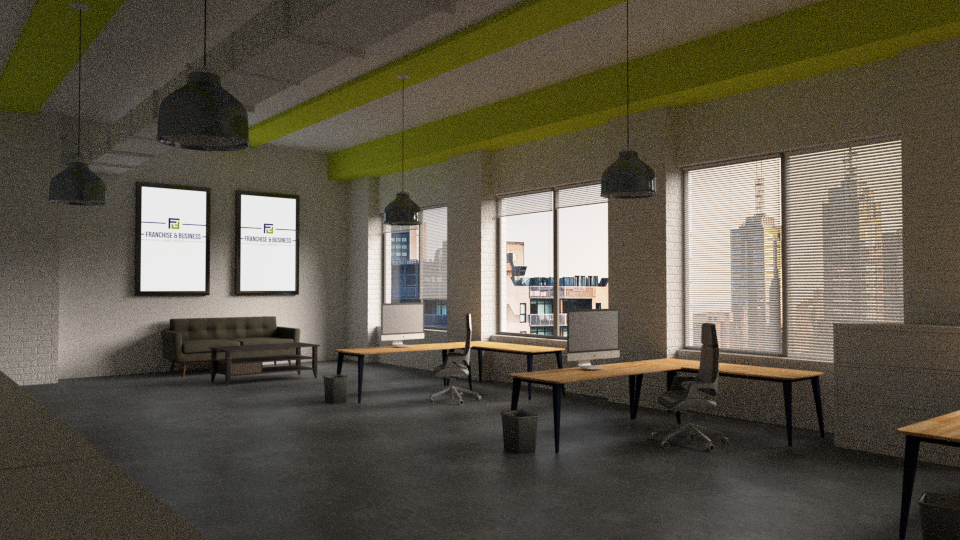
    As the final vision for the video is finalized, through conversation and test renders, I began the longer process of building the set for the video, along with all the objects needed to fill that set. Couches, desks, writing utensils, books, shelves, lights, etc… Many of these objects were sourced from online repositories, but often they still need work done on them in order to get them fit the scene as a whole.

    After objects and the space have been laid out and built, lighting and rendering the space is next. The idea of a small business space was picked to match their target customer, and I chose an afternoon or evening time frame to create the base for the lighting coming through the windows. A natural light, I believed, would fit well with natural/customized/tailored fit, as opposed to a structured clean cut feel that pure white or artificial lighting would create.

    Wrap Up

    The client at one point felt that the push too hard to a naturalistic look might be a bit too much. We decided to include some technological elements into the motion graphics, while maintaining our connection to the paper motif for flat motion graphics, and the marker board with a hand drawn feel for later in the video. This ended up creating a good relatable balance for the viewer, since most people exist in both the physical and the digital life in various parts of their lives.

    The client felt final video turned out really well. The are some obvious deviations from the original animatic to the final video. The biggest was the inclusion of text cards to visually represent questions and other important text information. I personally like these because they help reinforce that paper feel used throughout the video, it gave us another use for the brand colors, and it made some really good visual breaks between different sections of the script.

  • Marketing Materials | 2017 – 2018 Graphic Design for Lance Conrad

    Marketing Materials | 2017 – 2018 Graphic Design for Lance Conrad

    Over the last half year or so I have been doing little odd marketing graphic design jobs for Lance Conrad. Below are short breakdowns of these jobs.

    The first of these projects was creating materials for Lance to use to inform his consumer base about his appearance at the 2017 Salt Lake City Comic-Con. Specifically a digital/real flyer to hand out as he did his presentations at schools and other events that he involves himself in. Along with digital campaigns on social media and email mailing lists.

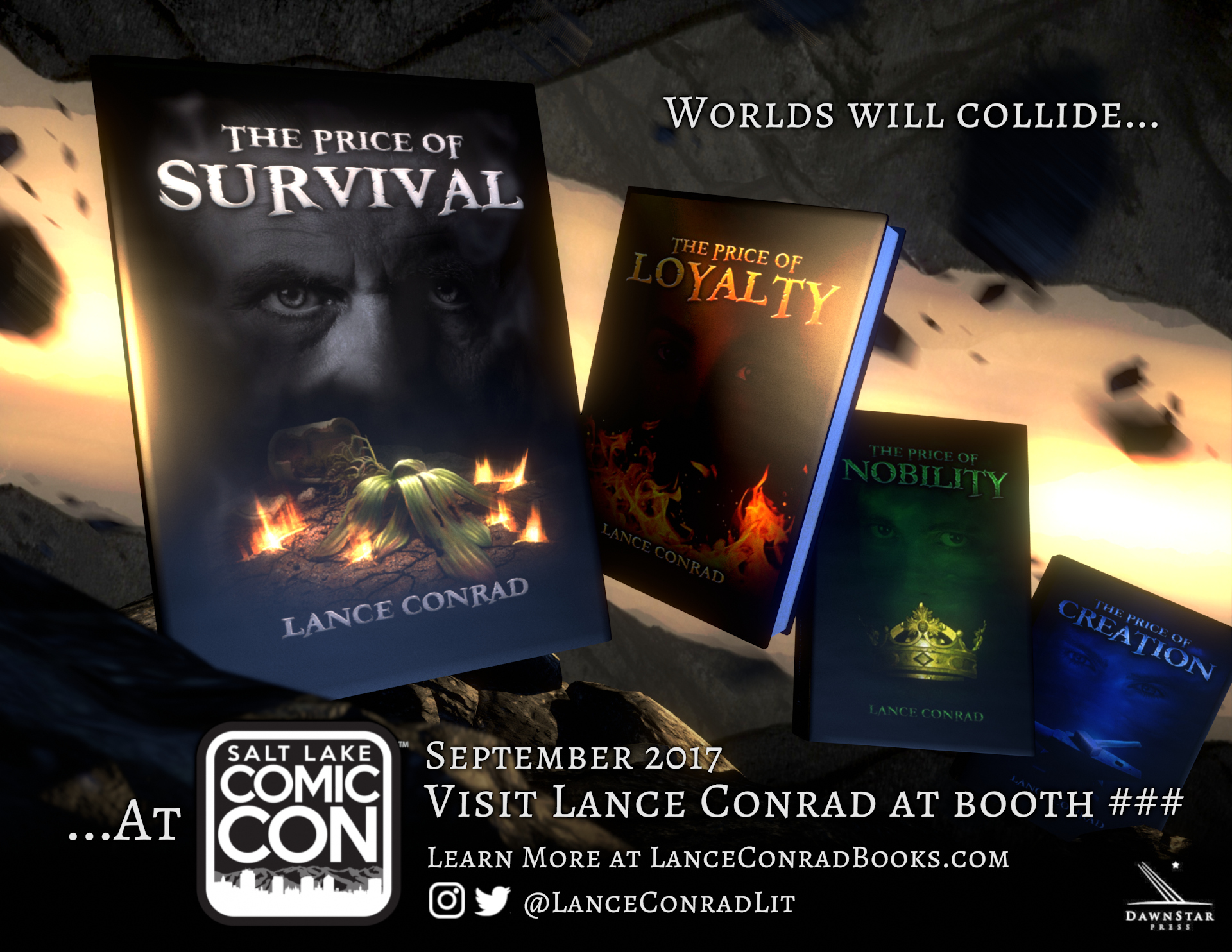
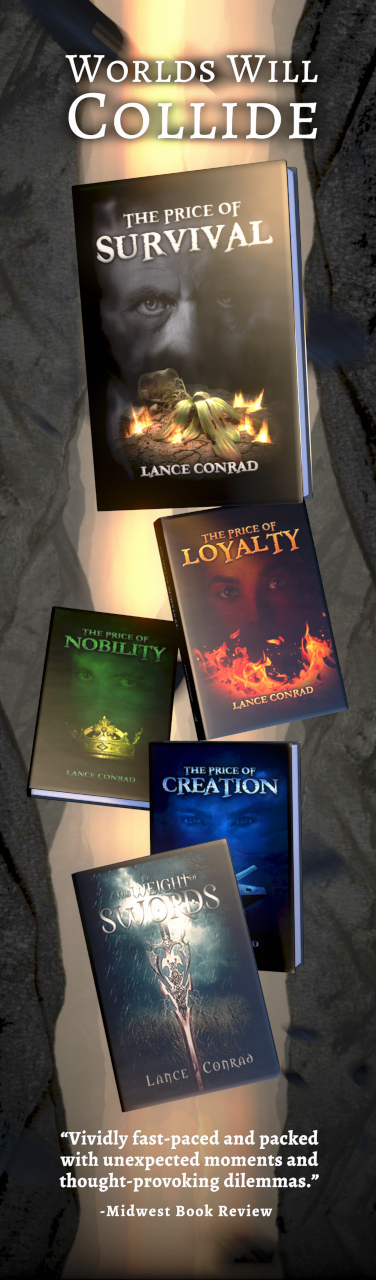
    When discussing the copy to be used on the flyer, we sought to distill the essence of his books, or find a through line that all the books could relate to, for a slogan or a basis that copy outside of information text could be derived from. What we eventually settled on was “Worlds Colliding”. This theme ended up informing not only the copy but also the visuals as well.

    I decided to take a literal approach, and changed the theme to “Worlds will collide..”. Making it more urgent and dangerous. Using a mixture of stock photos of some mountains and some 3D rocks, I modeled the books and did the whole design, layout and final composite in Blender. No 2D application was involved here. Making literally two worlds colliding in the background, the viewer is stuck in the last moments of twilight. The last moment of what one knew of existence, just before the sky falls and the light is snuffed out.

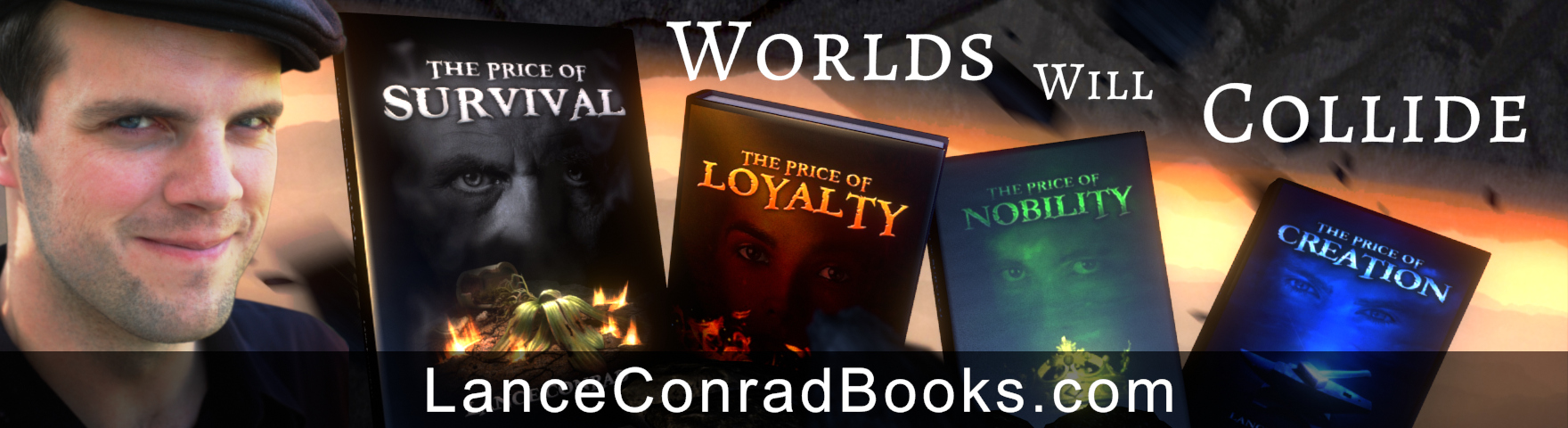
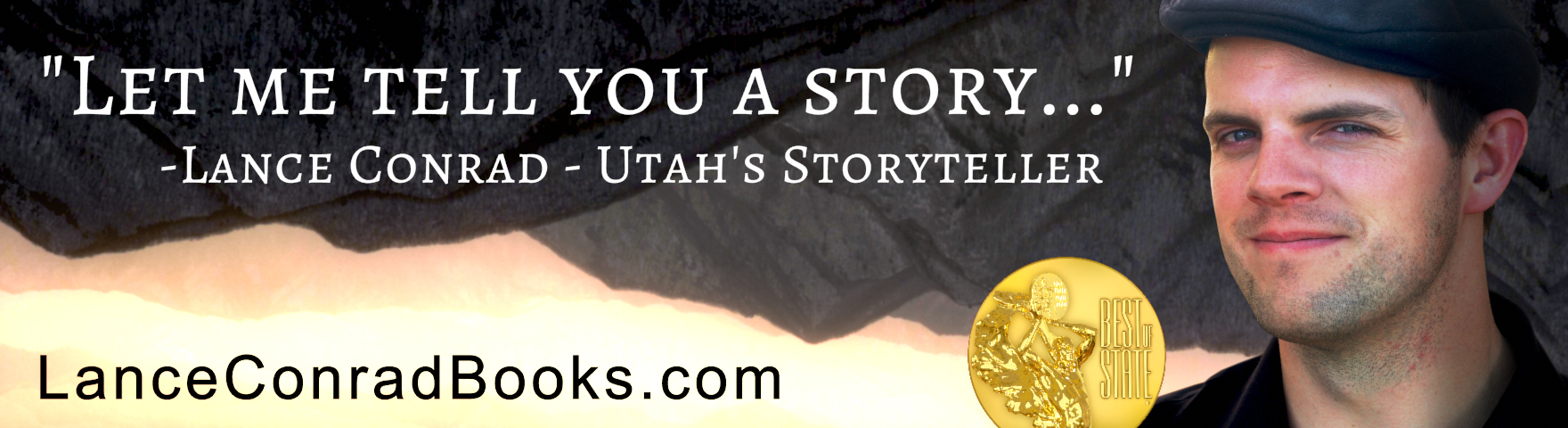
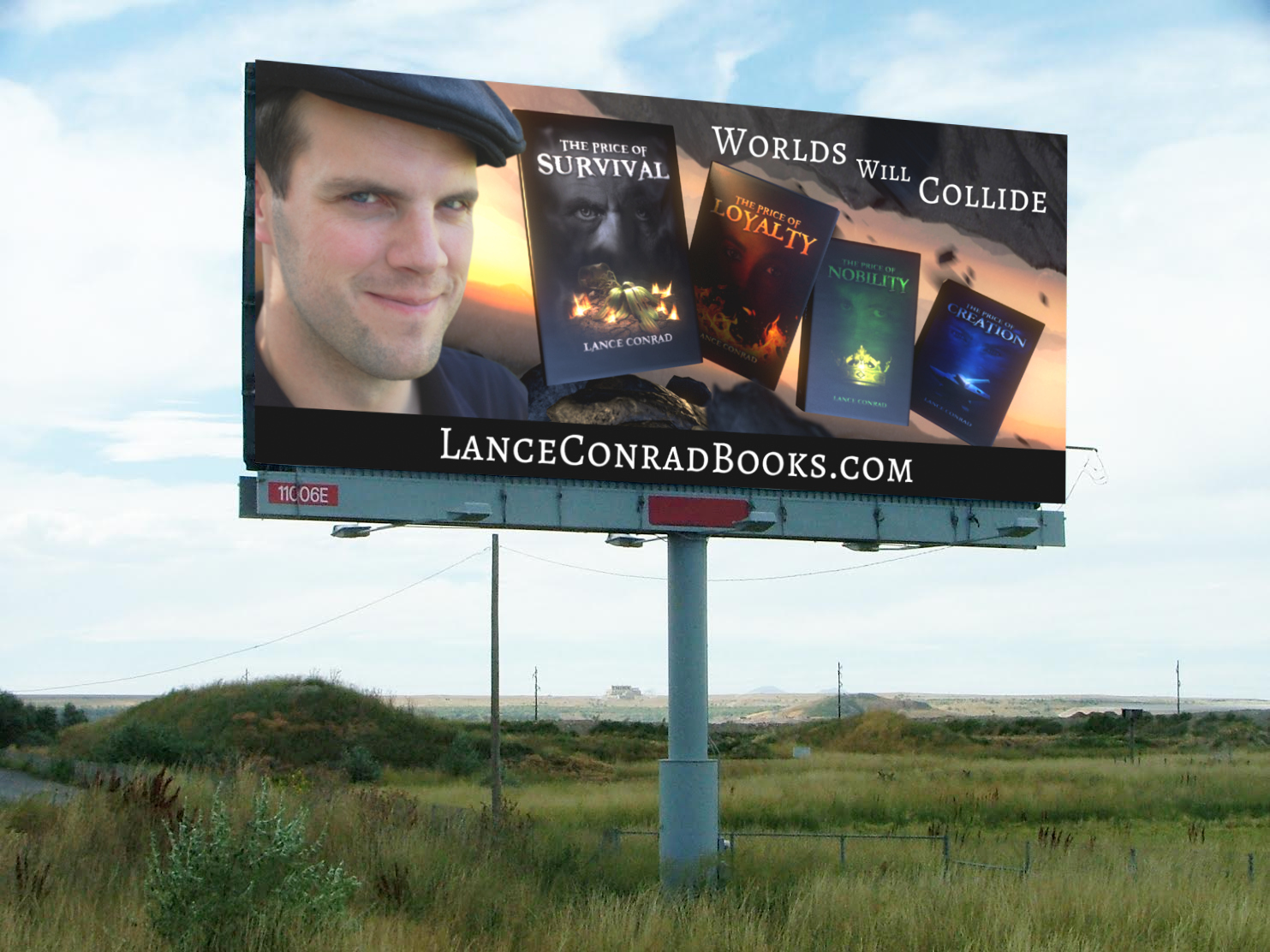
    Later on, we took this same visual motif and applied it to some digital signage for use in Utah. Specifically roadside billboards. The only change/addition was Lance’s face, which crowded things a bit for the book advertisement, but was good fill for the Best of State advertisement. Unfortunately, we couldn’t predict exactly when these advertisement would show up on actual billboards, but I did put together a mock-up inside of a preexisting photo of a random billboard below. This was to help pre-visualize the ads before they were sent to whoever controls the ad space for billboards.

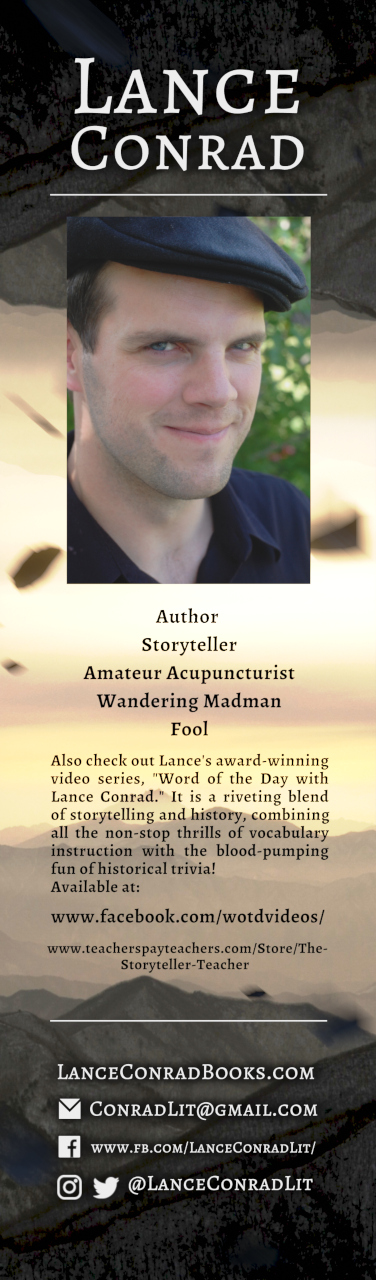
    The last piece of marketing materials based off of this “Worlds Colliding” theme was a bookmark. Lance uses these as free giveaways at his at school presentations and conventions. This is something he has done before, so communicating what he wanted here was simple, and with some small adjustments to previous project files I was able to export these as finals directly out of Blender as well.

  • Book Cover Illustration| The Price of Survival

    Book Cover Illustration| The Price of Survival

    Lance Conrad is a talented, popular and highly motivated author that I have come know and consider a friend through my work at Thor Media. He has written several books that fit neatly into young adult fiction, and he recently commissioned me to work on the fourth book in his “The Price of…” series.

    Be sure to take the time to look at his other books for comparison, and consider adding his work to your library or to the library of someone you know who might be interested in his work.

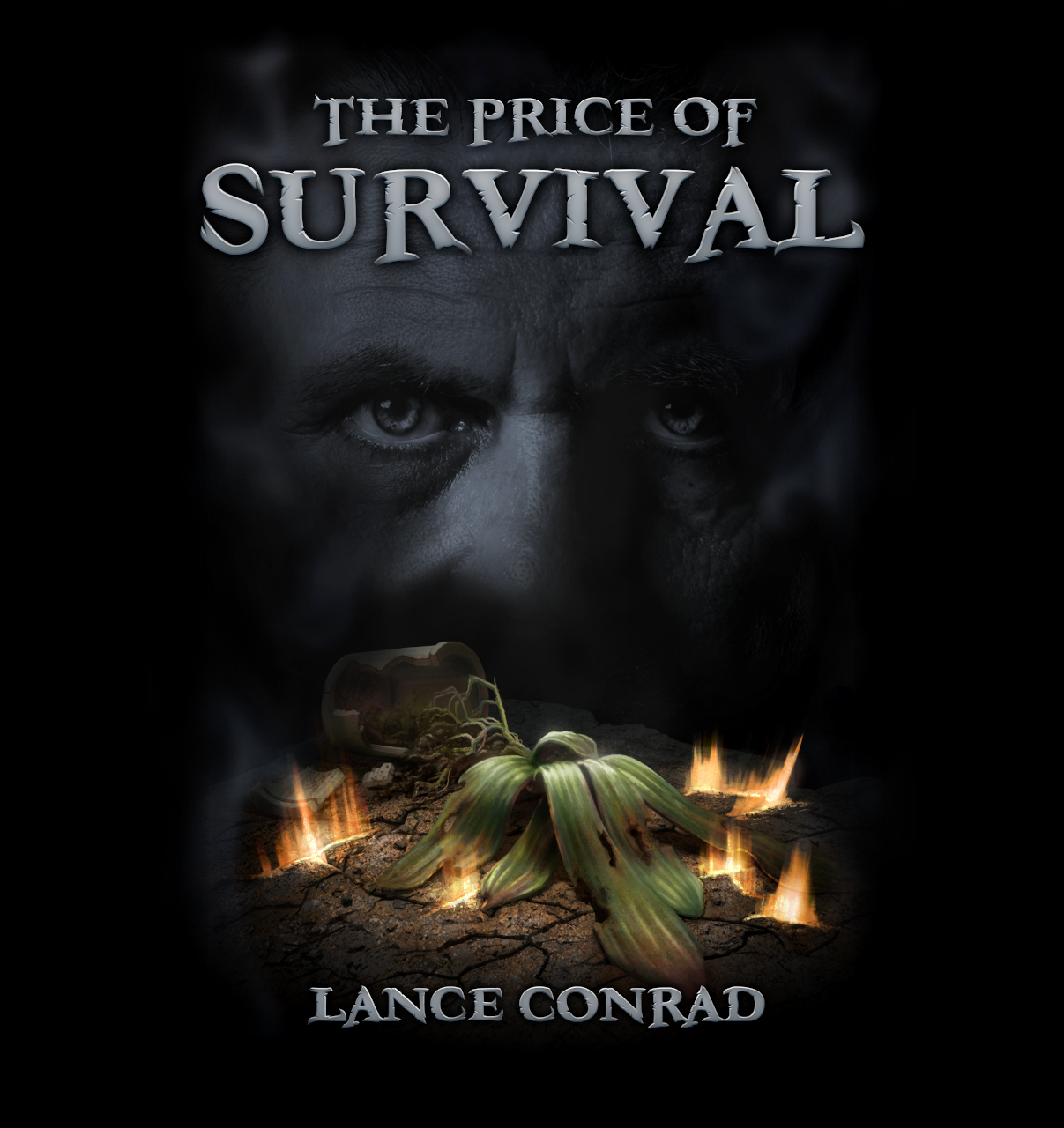
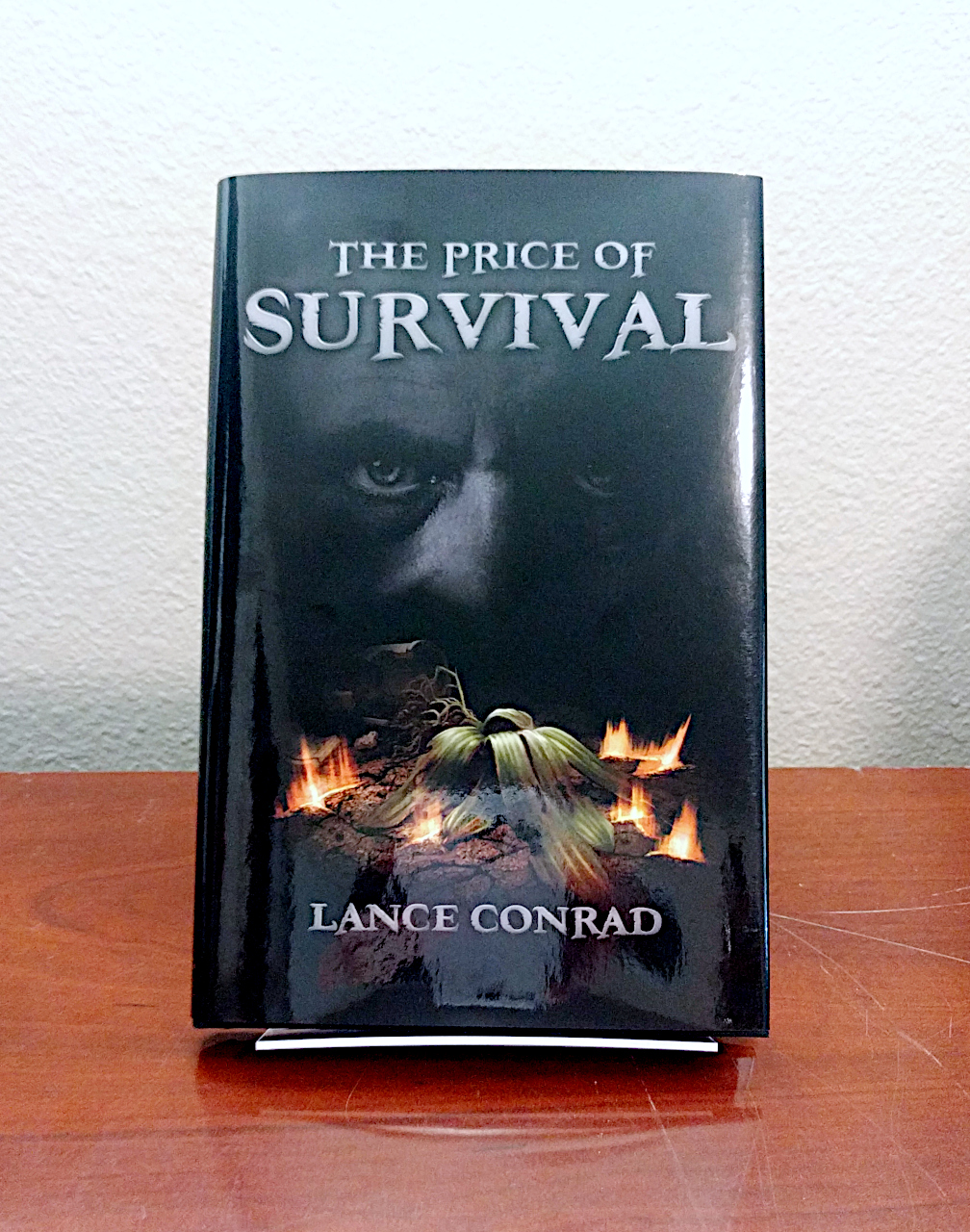
    Final Book Cover
    Title Text Was Rendered Out Of Blender
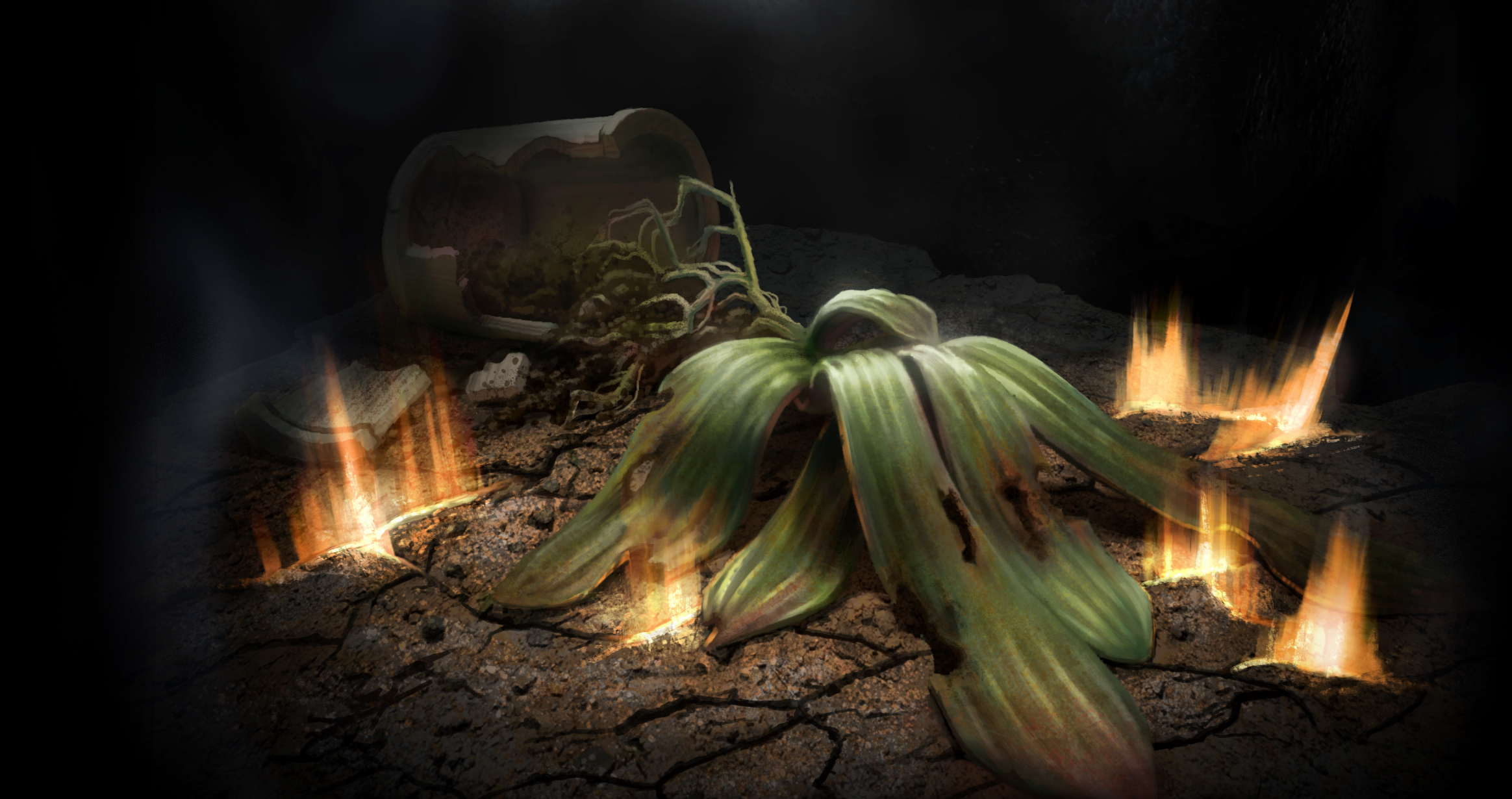
    Plant Illustration & Final Image Composite Was Done In Krita

    The Prompt

    This project could be considered a rescue in that he had already commissioned another artist to work on the cover. I don’t want to go into detail on this initial cover and instead just say that it didn’t meet the quality of the covers for previous books Lance had published. The quality of the initial artist made it unacceptable for me and some of Lance’s other friends in the close circle that were reviewing his book. We didn’t want the quality of his writing to be held back by a poor book cover. I am glad we caught this before the book was sent off to the printers.

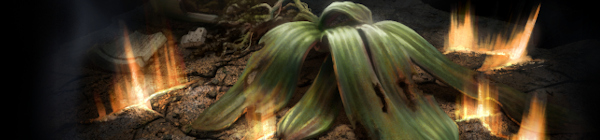
    The approach to the finished cover was relatively simple since another artist had already laid out what Lance didn’t want the book cover to look like. Along with the common visual composition used for all the books in the series, a face/pair of eyes along with a key item/element used in the story, getting started was easy enough. The basic prompt was to have an older man, who visually looked like they had seen allot, for the background, on black, with a potted plant that had been damaged by war/explosions.

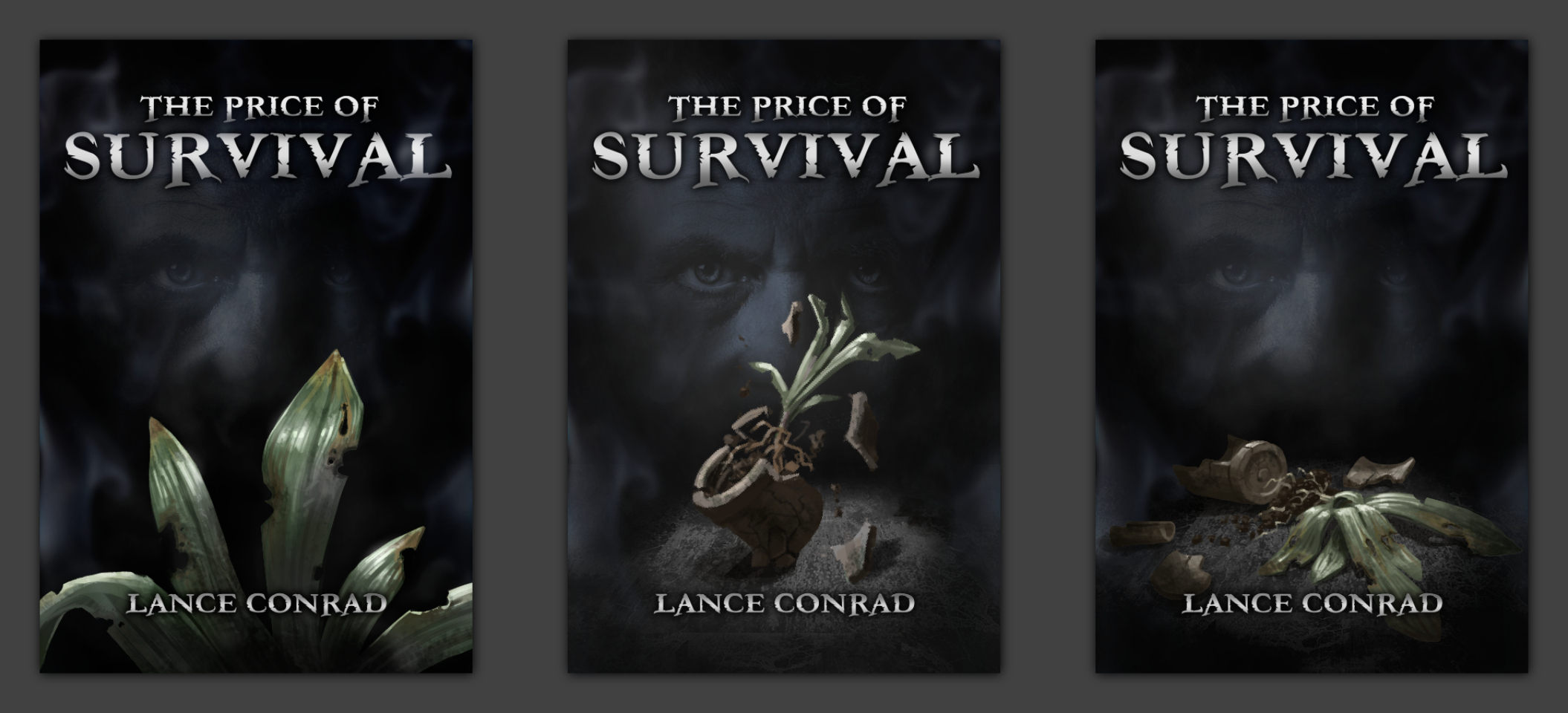
    Small Thumbnail Paintings Of Possible Covers
    Final Product

    Production

    Again, it was fairly easy to narrow down exactly what would work for Lance with just a few new thumbnails of possible covers. Then, after he picked which one he liked most, I took the chosen thumbnail and put several hours of rendering for the final image. Afterwards I followed the layout for his previous books to keep this book consistent with the rest of the books in the series, and then prepped the final file to the printers specifications.

    Wrap Up

    Both Lance and I were happy with the final result. This cover matches well with previous books in the series, considering the really quick turn around time of a about a week, it is attractive and mysterious enough to get people to pick it up and take a gander.

    This is my first book cover illustration outside of my own publications, and the opportunity to collaborate with a talented author to create the outfit that his writing will be dressed in to make a good first impression is an important task for both the writer and artist. I feel that this project helped stress the importance of a healthy collaborative relationship between artists in order to avoid creating content that would be potential embarrassing if not harmful to any of the artists involved.

  • Workman Nydegger | Silocon Slopes

    Workman Nydegger | Silocon Slopes

    The motion graphics work for Thor Media continues. This time, a complete 3D piece (done in Blender) with some minor character design and animation, with allot of motion graphics design. Join me on the “silicon slopes” and lets talk about the thorough process this piece went through.

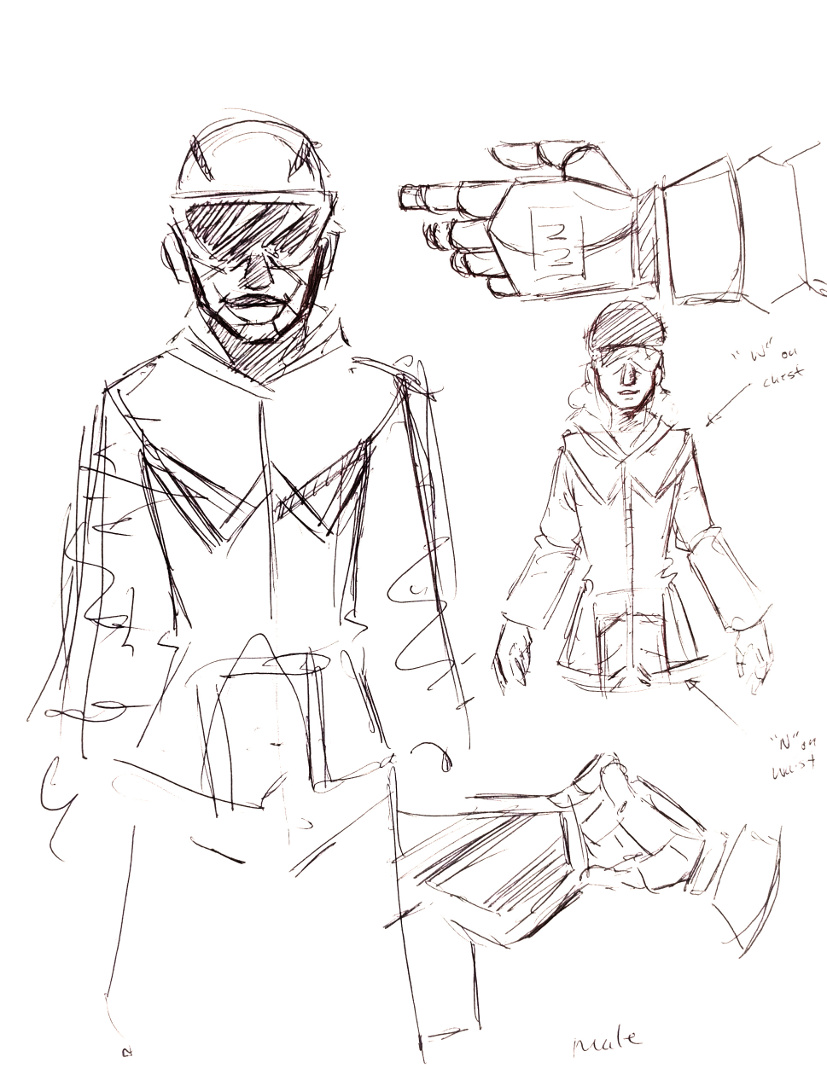
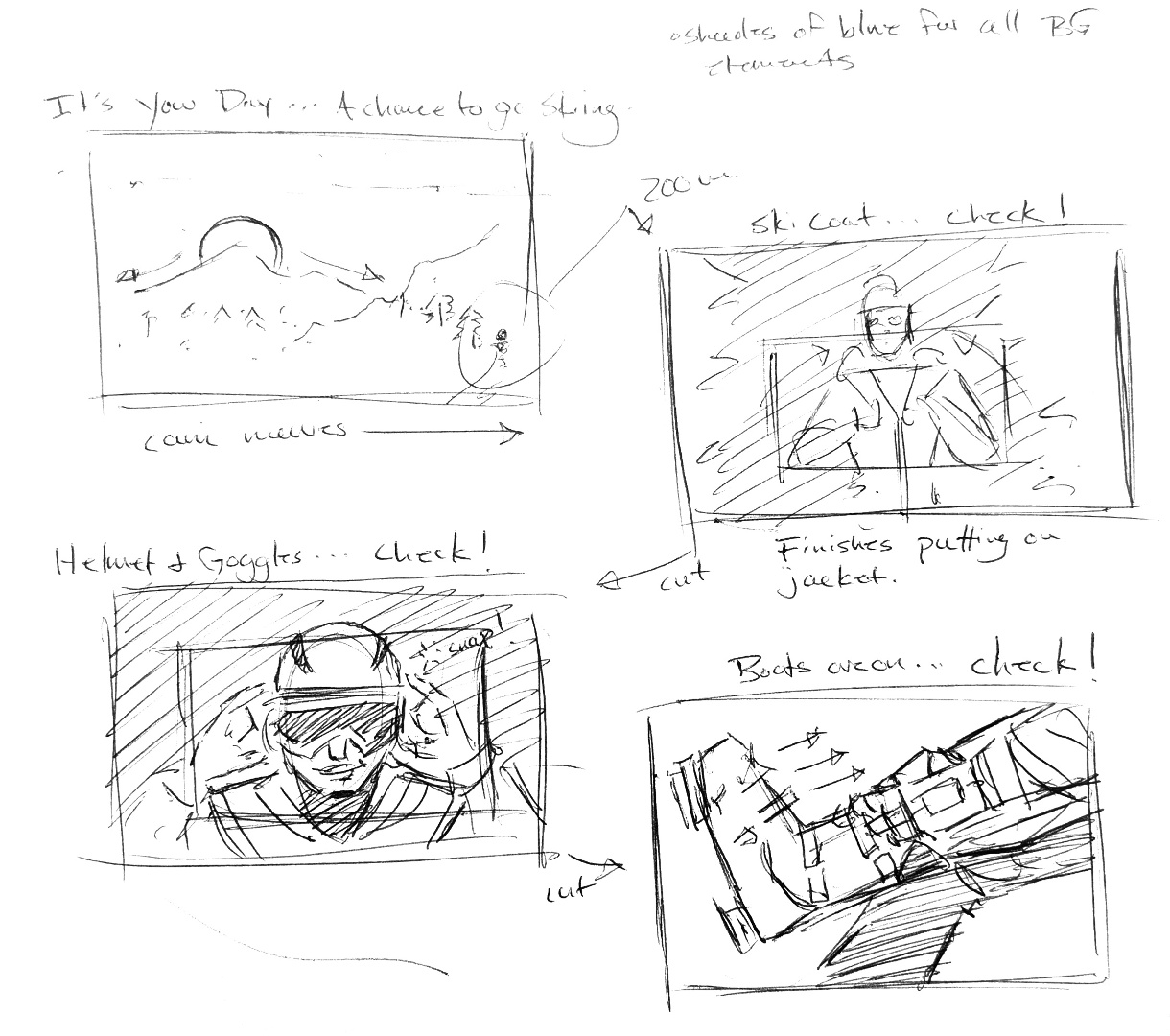
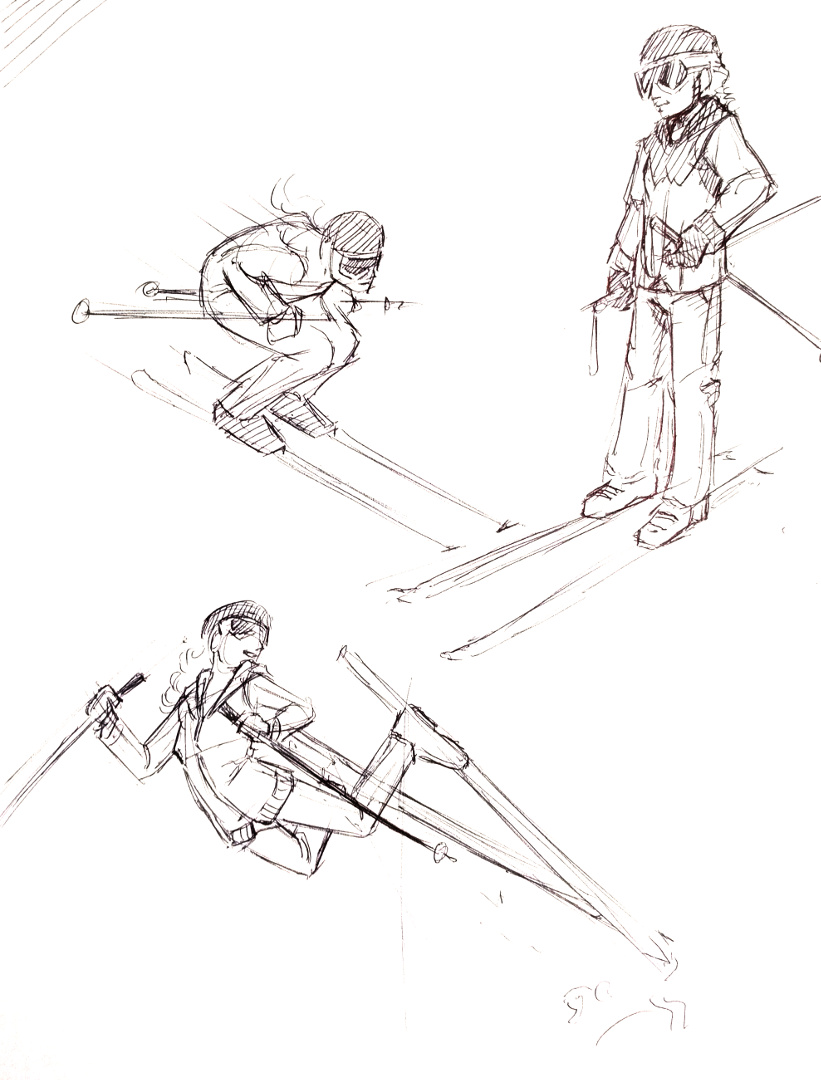
    Before I get deep into this one, I must credit Brek Bulton with the initial concept of the video, and for bringing the job to Thor Media. He wanted to show a skier progressing through a day trip on the slopes. This was to be the backdrop of the for the heavy legal verbiage used for the voice of the video, while highlighting the contemporary nature of the client’s service with the idea of the “silicon slopes”.

    With the scripting we were fortunate that Brek was handling that as well. After a few meetings hashing out the details, and pulling back to fit in the client’s budget, we got a near final script. I say near because the script was technically not locked down until the near finish of the project.

    After the a final version of the script was in place, we had to make a bit of extra effort to convince the client of the concept, and present a visual motif that they would be happy with. This is where motif and character design came in. Because of the budget, I had to come up with a simple but attractive character design to minimize animation work. Inspired by allot of current motion graphics character animation (see Kurzgesagt), South Park, and Google’s paper design, I found a solution. I decided to stick to a 2.5 dimension paper cutout feel, which created a great sense of depth and interest in the image, while minimizing animation work (primarily 2 axis to animate instead of 3).

    With a start on the visual design, I put together two shots to show how the video could look along with a temporary voice over. A long story short, the visual concept was accepted, and now it was time to approach the rest of the video.

    At this point, problems began to crop up when it came to finalizing the script. So, in an effort to keep the good momentum on the project, while accommodating an indecisive client, I decided that an animated storyboard would be needed to check the changing script against planned visuals to help the client to make final decisions in the script. This decision turned out to save everyone allot of time and allowed for flexibility in the visuals, almost right up to the end of production.

    After some minor back and forth on some of the text and visuals in the video, and putting together a small vanity logo for the client to use in another video content, the final video was finished. Even though the project went a bit longer than expected, the final product came out well, and the client was very happy with the final result.

  • Chalk Trees | Certified Conference 2017 Intro Video

    Chalk Trees | Certified Conference 2017 Intro Video

    Finally! A project that got me into Krita’s new 2D animation tool set. What an incredibly valuable tool have in the bag. Lets talk about growing trees made of chalk.

    This is the 3rd year I have done the Certified Conference introduction video, and it is always a joy to work on them. First, credit where credit is due. Neil Bryce is the man who got us this work. He has been a could colleague and friend over the last few years, and through him, Thor Media and myself have had the opportunity to work on a bunch of great projects.

    With these conference videos we have taken the “hand drawn” approach for certain elements before. What makes the approach different in this on is that this is the first time where we didn’t use masks or other automated methods to simulate hand drawn effects. With Krita’s new 2D animation tools, I was able to approach the animating of elements that would naturally be hand drawn from a more traditional approach.

    I have always had a keen interest in traditional 2D animation, I even took a class in college to help satisfy my interest in the subject. Since that class, I have had a few opportunities pop their heads above the water a few times, but the opportunity to develop those 2D animation skills further have always seemed to allude me. Usually due to budget constraints. 2D animation is a very time consuming thing, and to invest in someone like me who doesn’t have allot of experience, or, the project skill-wise is a bit out of my skill set, it has been a hard thing for me to approach on a serious project. Till now…

    Because of the simple concept (Neil Bryce’s concept) I felt that this could be the project to dust some of those old skills off, and give them a go. I am glad I decided to take the risk. Everything, except the obviously 3D elements (rendered and composited in Blender), were hand drawn 2D animated elements. This includes all the text transitions, leaf transitions, along with the introduction of the seed being blown in by the wind with the growing tree.

    I am really proud of this piece, and the client really loved the way it turned out, and came back with only some minor revisions to the animation and colors. Nailed it! I also discovered that animating text this way, as opposed to using a mask, feels much more natural, and ends up taking about the same amount of time as other masking methods. The only issue is, is if the text needs to change. In this case, you have to start from frame 1 with the traditionally animated method. I just have to make sure the project script is locked down before working on these elements in the future.

  • Zombies! Run! | VFX for AFCU Commercial

    Zombies! Run! | VFX for AFCU Commercial

    A small job, but a fun one nonetheless. Another video production studio here in the valley, called Mighty Clever, needed some help for a commercial they were doing for America First Credit Union (AFCU). I believe they have been doing commercials for AFCU for the last couple years at least, and they have this fun zombie theme going on. They just needed help for one shot, here it is below.

    You may not even notice what was done on the shot, and if so, that means I did my job right?

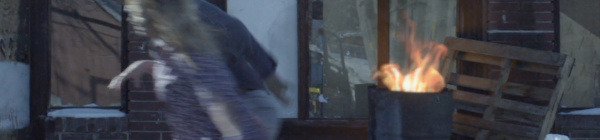
    There are two things done for this shot. The first is the large sign above the store entrance. In the original shot, the sign didn’t have anything on it. This required a planar track with a simple composite. The last element added to the shot is the fire in the barrel. This was a fire simulation was done in Blender, and then composited into the shot, along with the sign, in Blender. The light emitting from the fire required some reconstruction of the set, and this was composited onto the original shot to make the additions a bit more convincing.

    Since we finished this shot, we have had the opportunity to help out with a few more internal AFCU videos that required more planar tracking, but this video covers the way I approached those videos, and it would be a bit unnecessary to show them here.

  • Tales of a Jaguar Head | Flappy McFur Atari Jaguar Homebrew

    Tales of a Jaguar Head | Flappy McFur Atari Jaguar Homebrew

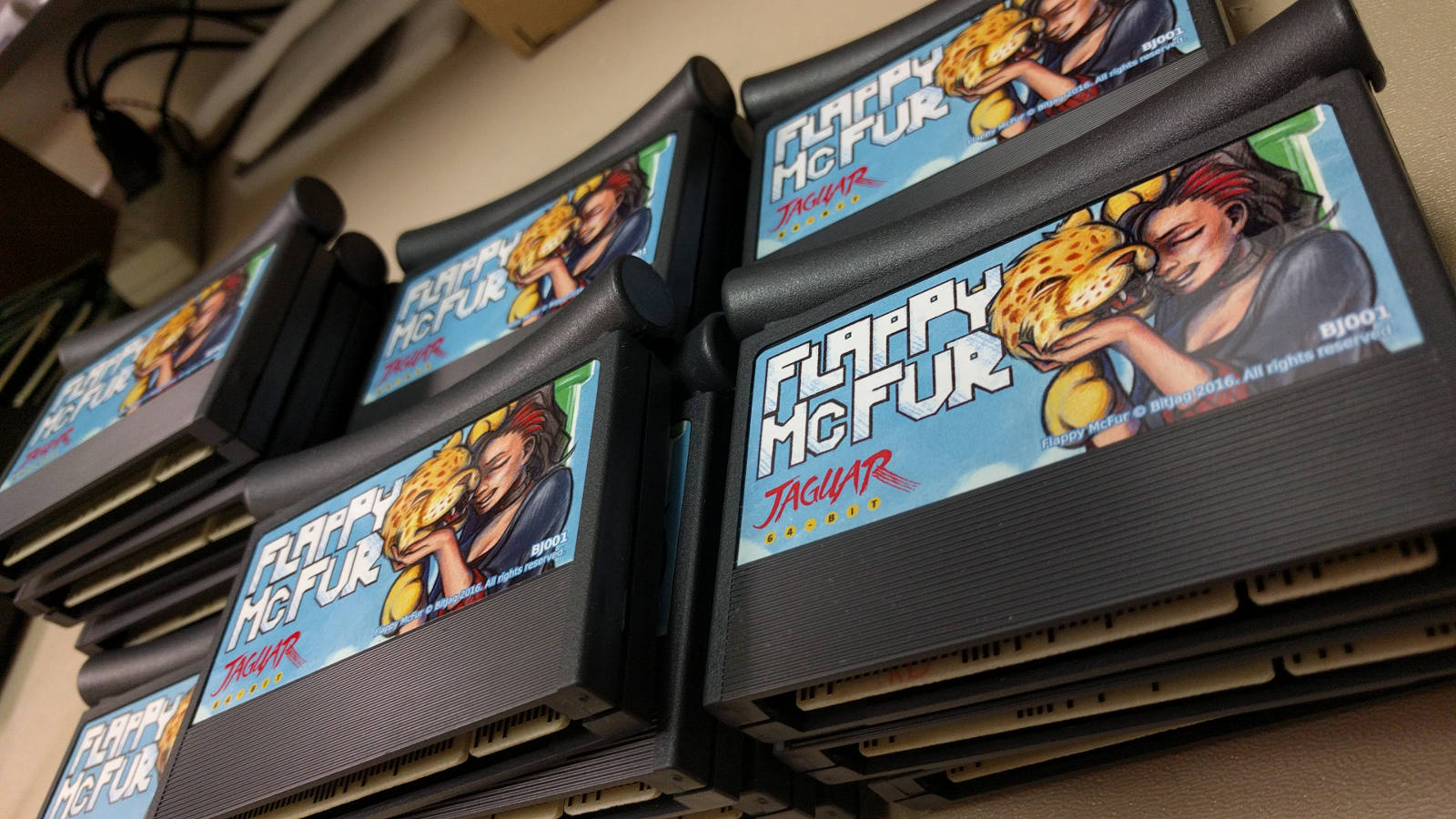
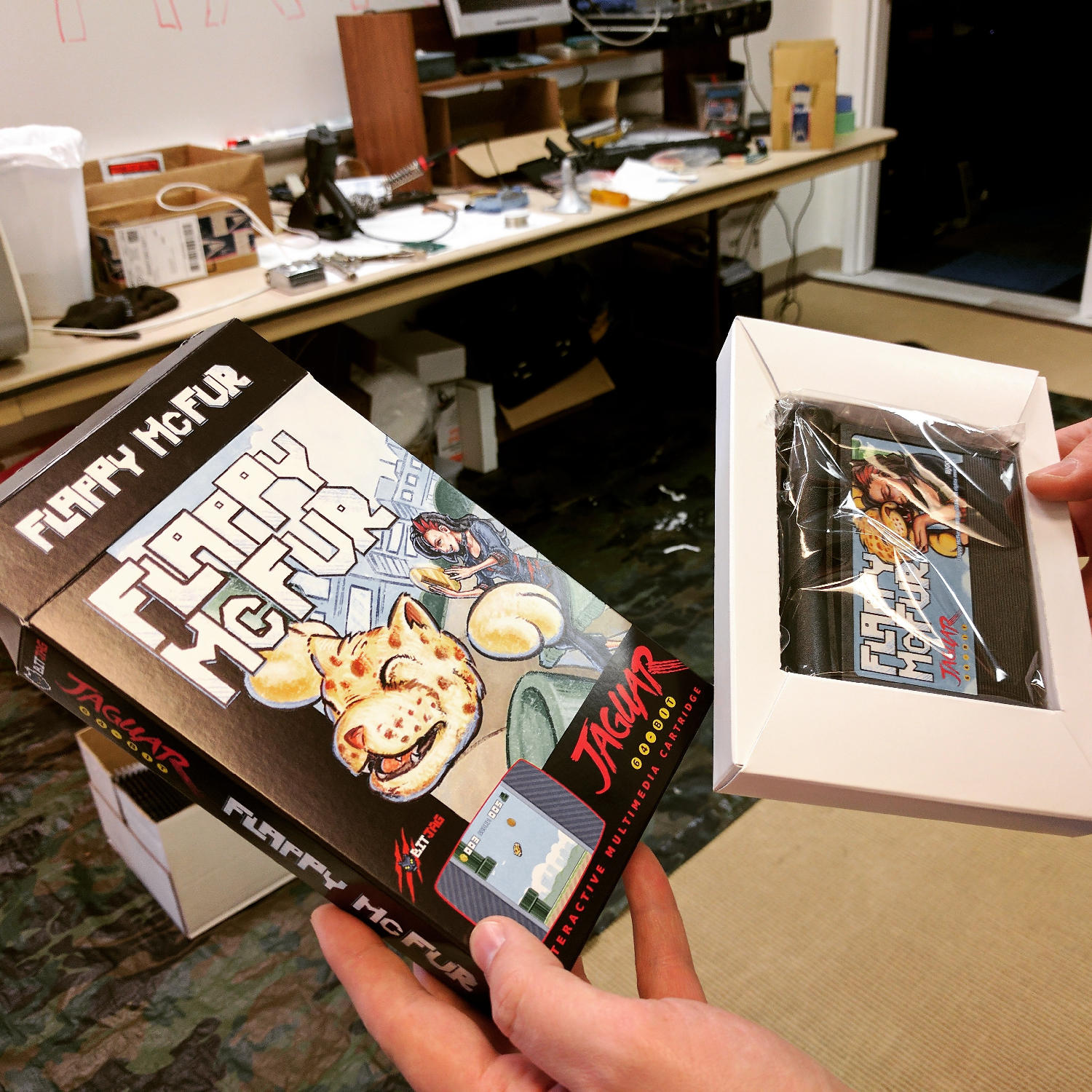
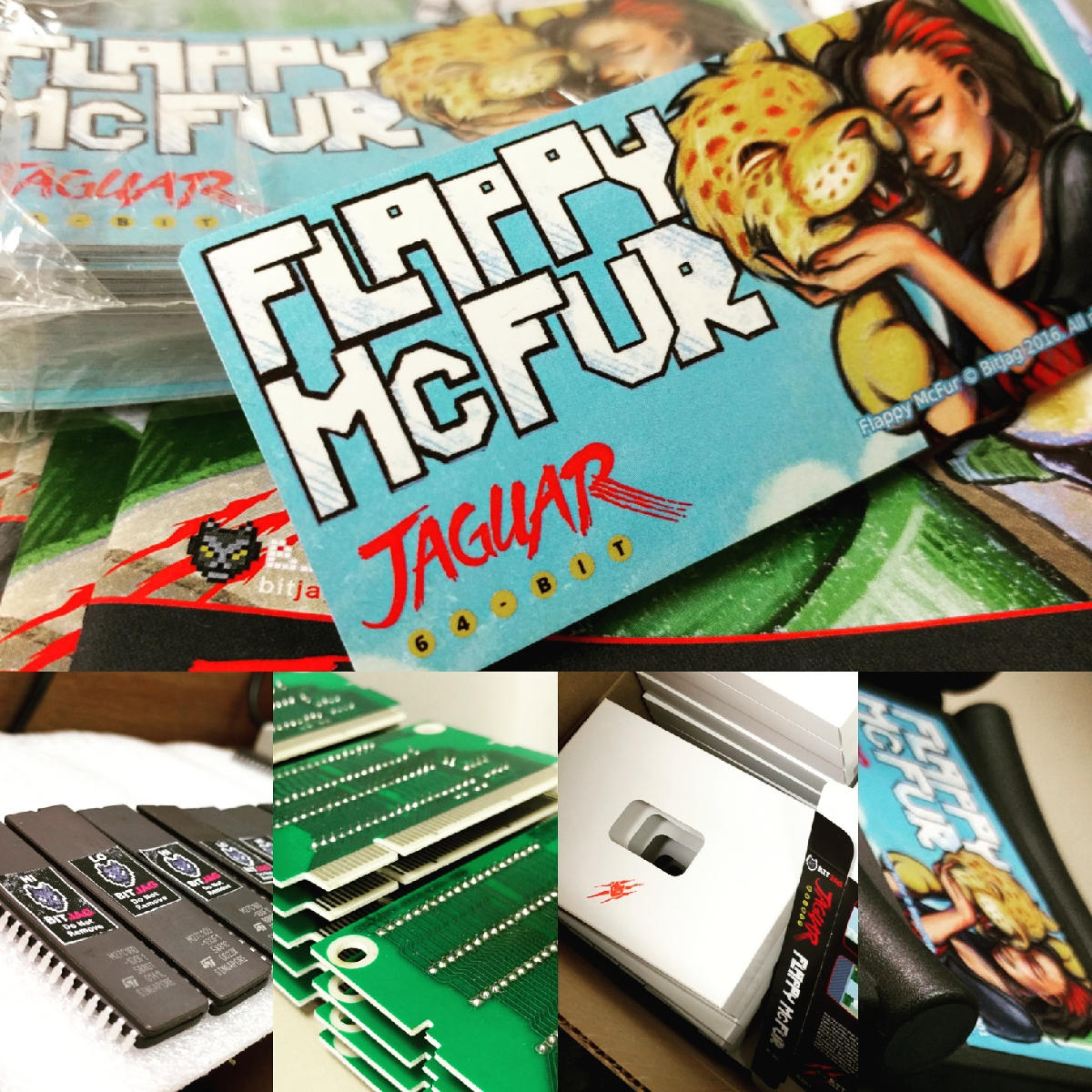
    Three years of learning. Three years of programming. Three years of drawing. And it all should have taken three weeks. Flappy McFur is finally in the hands of the masses, or at least the 80 or so individuals that were actually interested.

    The beginning

    Atari Jaguar programming has been something that my brother and I have been interested for years, and ever since returning from my church mission from Taiwan, I have made it a primary goal.

    With the formation, branding, and online presence establishment, all that was left was for me to learn a bit of programming, and start making games. To help facilitate the programming learning curve, we took on a request from Paul Westphal to put together a demo specifically for his booth at the Portland Retro Gaming Convention.

    Programming at this time wasn’t completely foreign to me, but C programming was. So this little demo was a great opportunity to start my C coding adventure, and it led well into Flappy McFur.

    Development

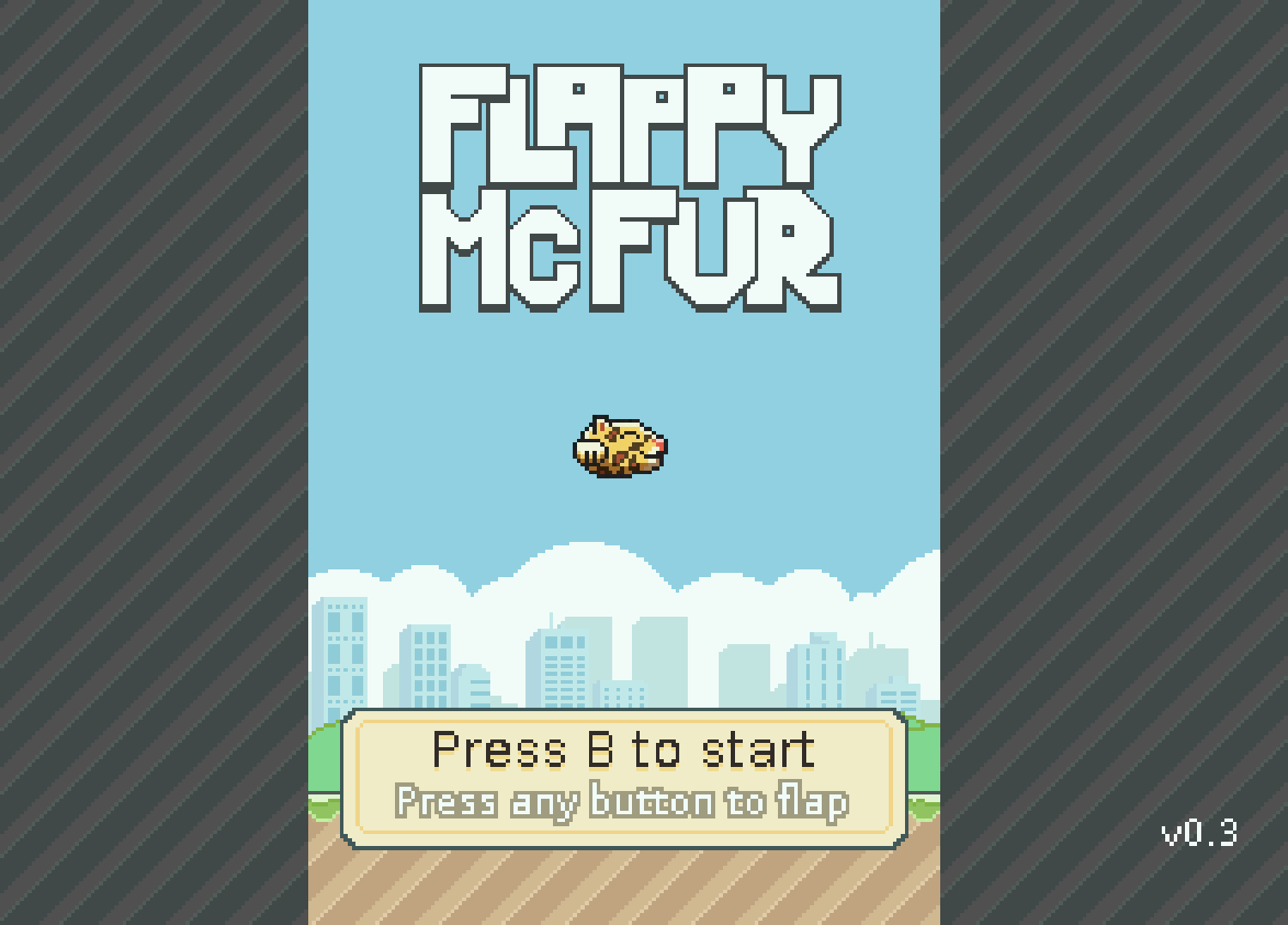
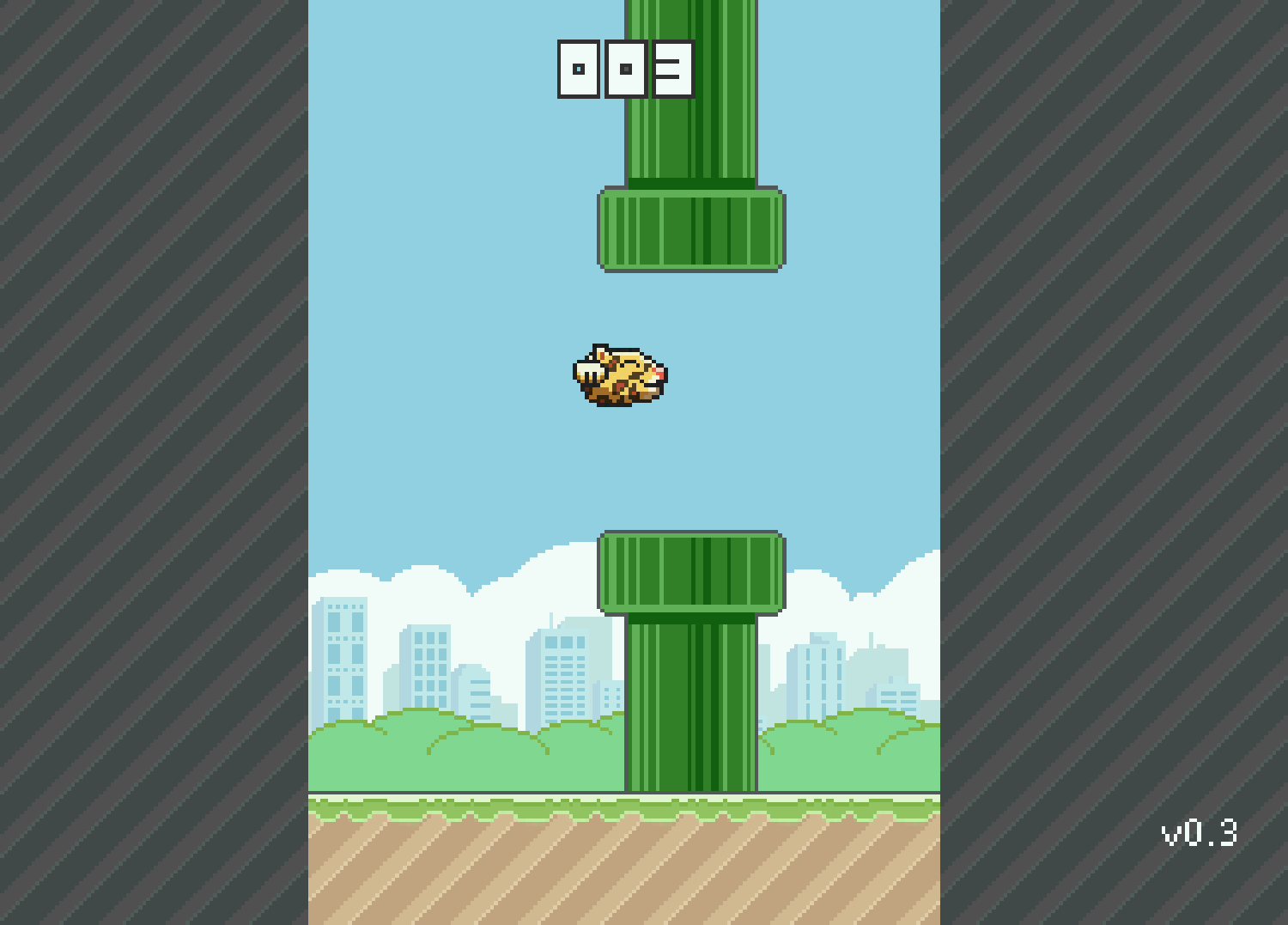
    Version 0.3 was the first fruit of my efforts, and the fruits were bearable. The gameplay was there, but it was far from enjoyable. McFur moved around more like a horizontally locked fly than a disembodied Jaguar head falling in style. But, the core gameplay was there, and this little demo was well received by those out there who look out for anything new for the Jag.

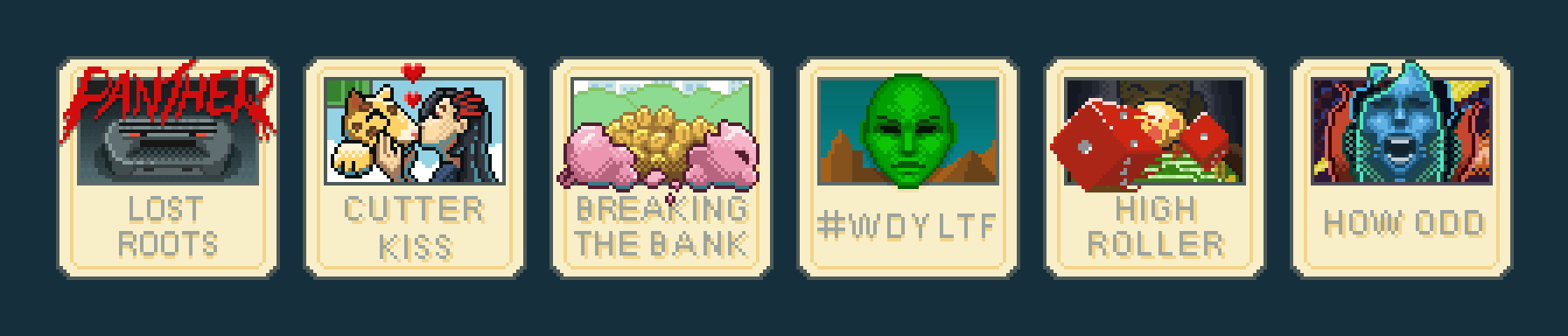
    After the demo though, there was polish. I planned out menu systems, with a simple achievement system. Worked out four different play modes that changed the speed of the game and how the pipes behaved. With Bryce’s help, a simple text engine was implemented to facilitate menus, and he also implemented the save code system. All of this along with an end game made Flappy McFur a much more noticeable product and a more enjoyable experience overall, with a bit of depth to the gameplay.

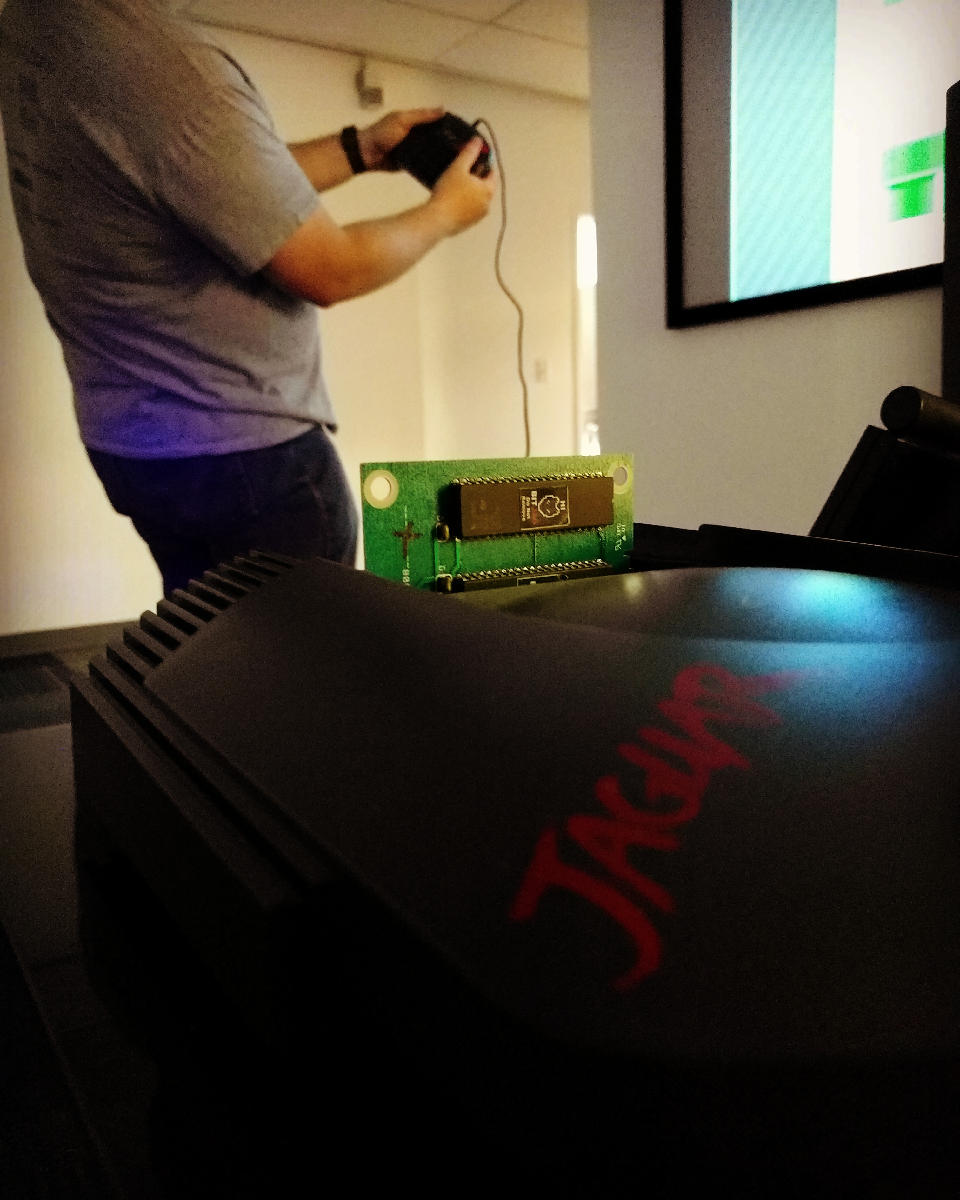
    Development also included some play testing. Usually I would setup our Jag-In-A-Box at family parties, Draw Nights with friends, or just let all the nieces and nephews have a go at it. It was interesting to see how some people caught into the gameplay really well, while others found it impossible. It made balancing the difficulty a bit of a challenge, this is one reason why the additional play modes were added. To try and accommodate a wide spectrum if players.

    Even though the game overall is fairly simple, there was a massive learning curve for me to overcome. Overcoming that learning curve has had its payoff though, and I feel much more prepared to takle our next project.

    Art

    Sprites and Palettes

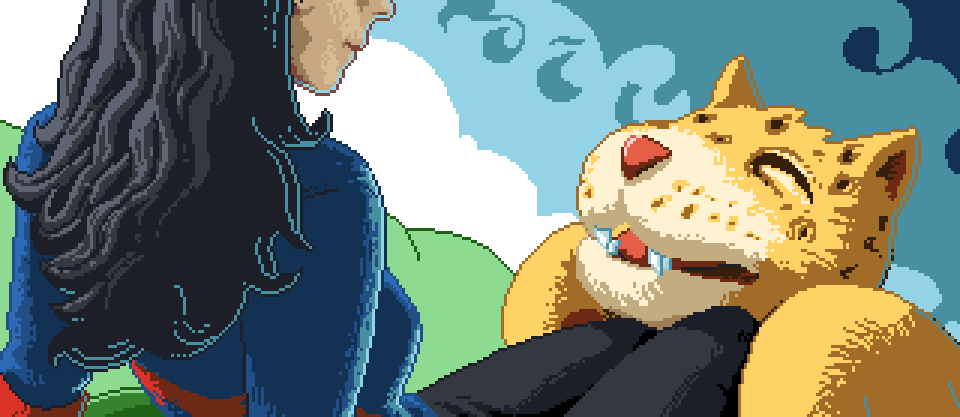
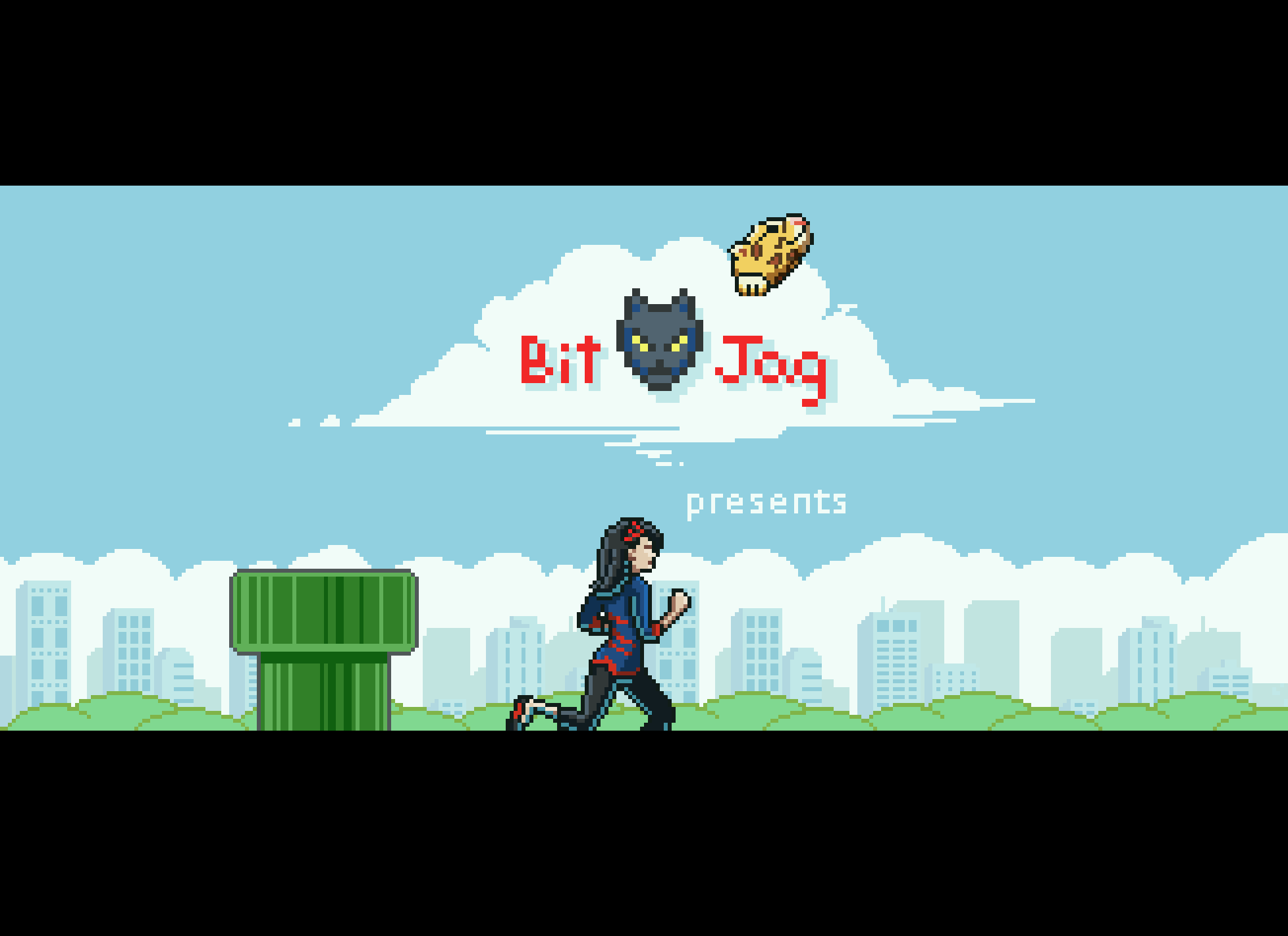
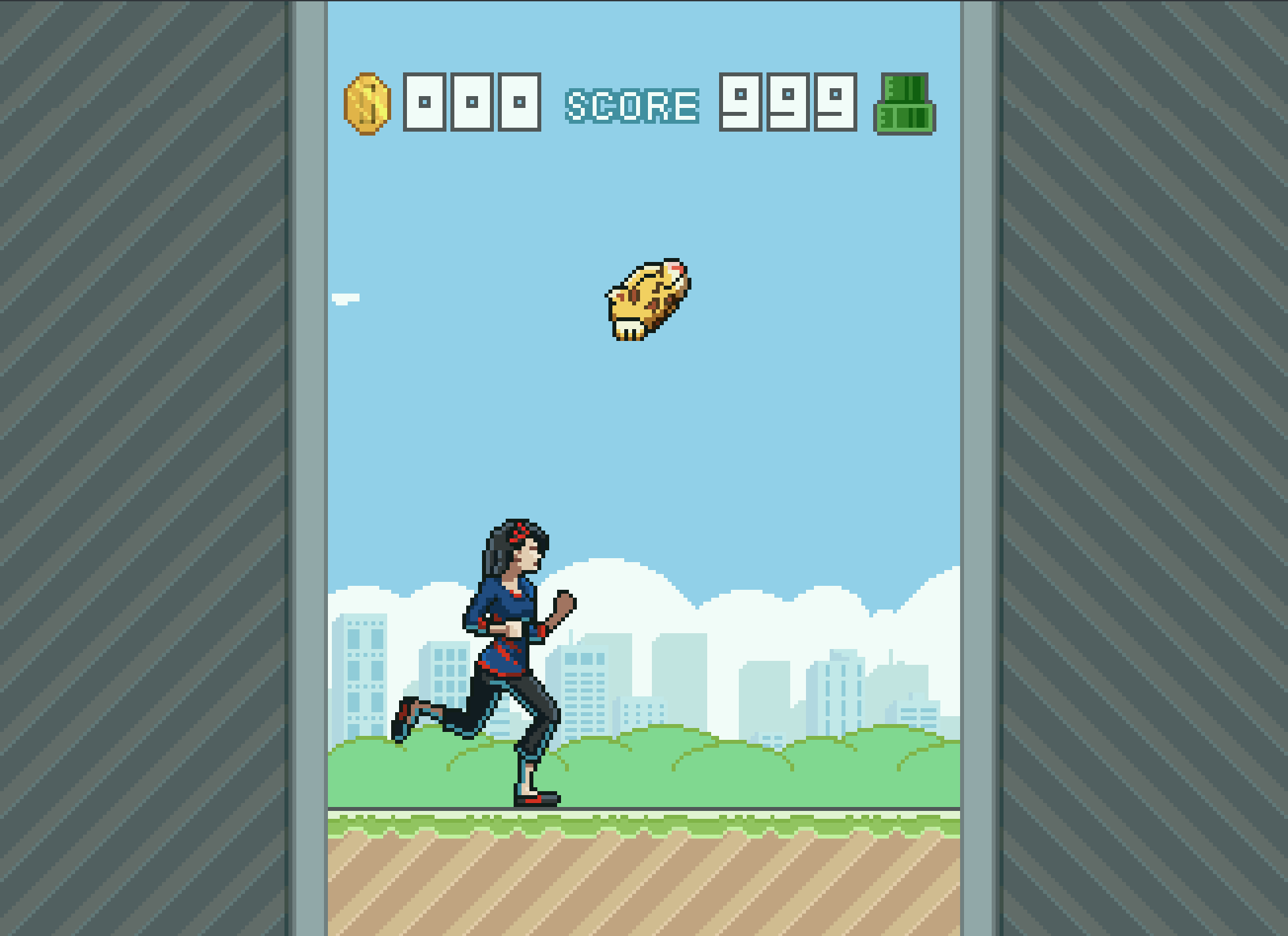
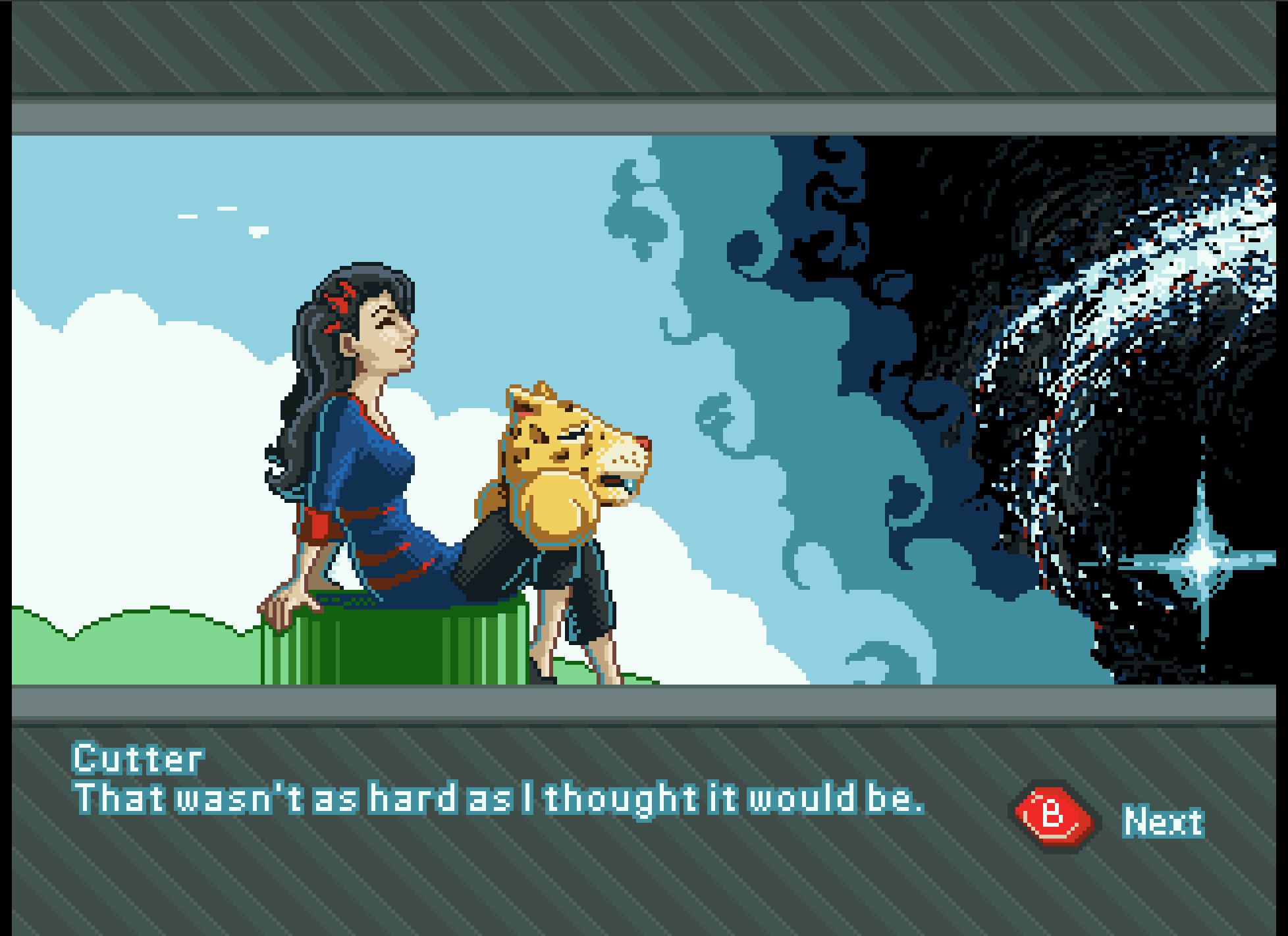
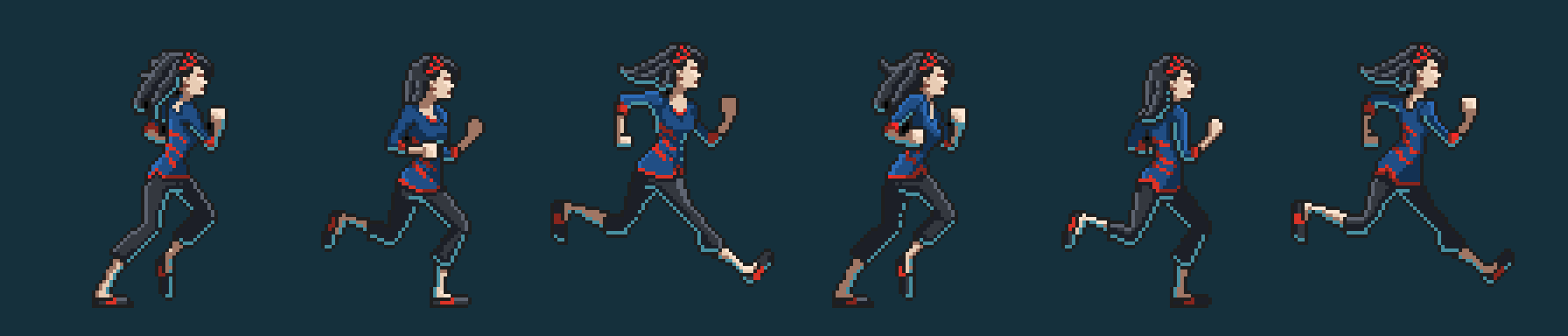
    Though few, painting sprites for this game was a highlight if the whole experience. Working with reduced color palettes and putting together simple animations like rotations of objects and the achievements, to more complicated animations like Cutter’s run cycle, all were a joy and remind me how much I love animation in general.

    We used the Gimp primarily for sprite work. I have been using the Gimp for nearly two decades now, and it is great support for paletted graphics with a more than adequate tool set. I did use Krita for Cutter’s run cycle animation because they had recently implemented a basic 2D animation tool set in Krita, but with the lack of palettes graphics support, I still needed ti pump those graphics through Gimp to prep them for Jag. Krita is supposed to have palettes graphics support in the near future, and I am looking forward to using Krita exclusively in my pipeline.

    With all that in mind, when I actually started putting together Flappy McFur, I was a bit lazy in figuring out how to do 8-bit paletted graphics. So, for a long time, I was dealing with performance issues, especially when music was implemented. It wasn’t until late in development that most of the graphics were converted to 8-bit paletted sprites for 16-bit sprites. This was a good switch though as it allowed us to do fade transitions easily.

    Box and Manual Art

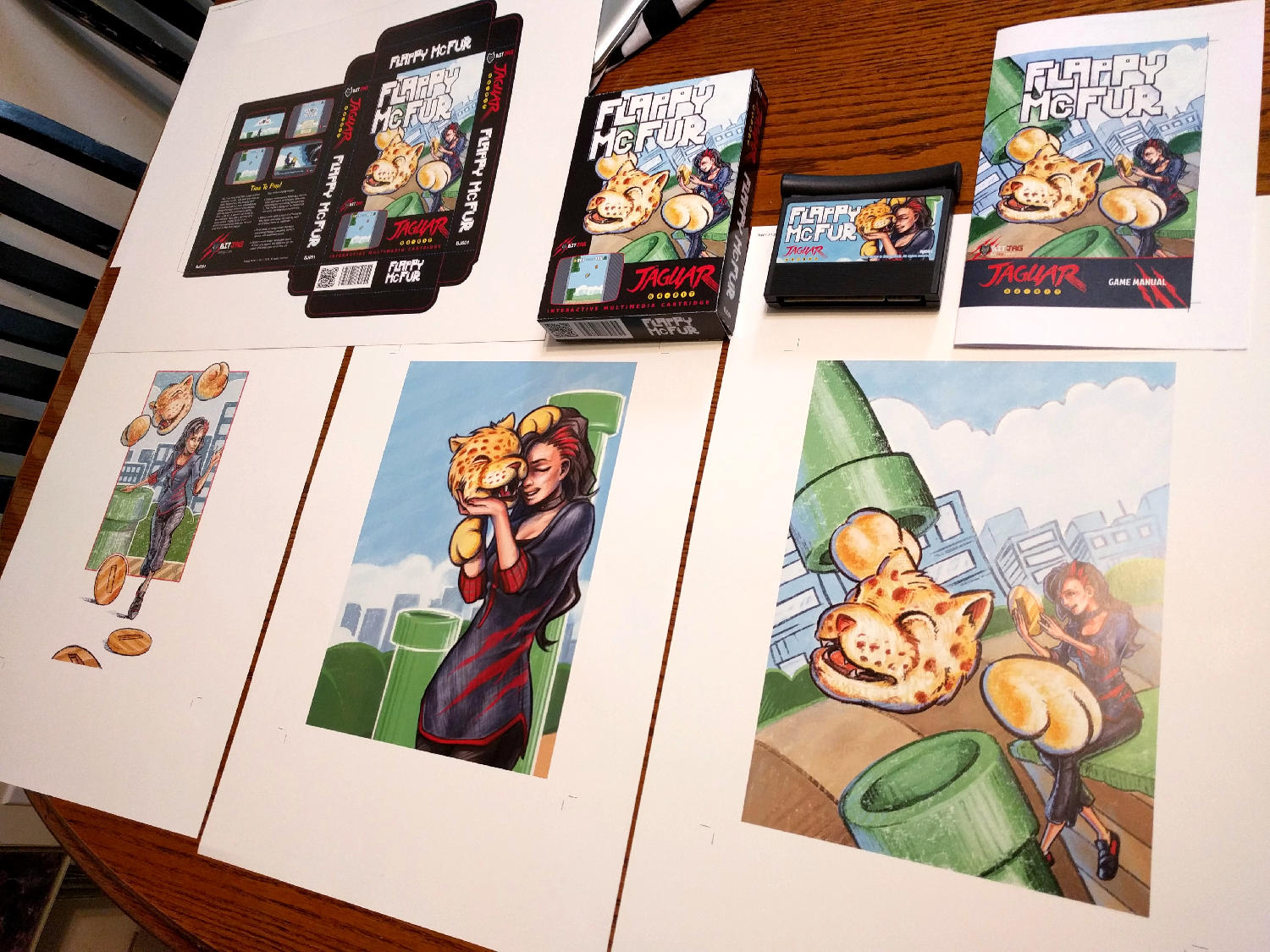
    I initially wanted to do more artwork for the game, but the 3 primary illustrations ended up working really well for our needs.

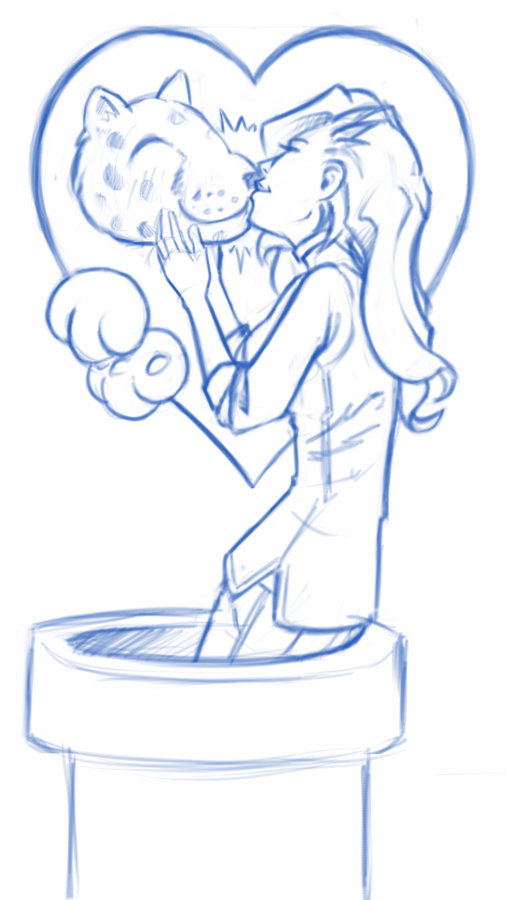
    The first illustration was used to establish the character relationship and heavily influenced the game in both tone and narrative. The colored pencil and crayon look of the artwork was intentional as well. It gave it an elementary, non serious feeling throughout, inviting everyone to come and pick up the controller and play.

    Video Content

    I tried to keep any video advertisement minimal since the beginning. Primarily because if how time consume it is, but also because of the uncertainty of actually releasing the game.

    When we decided to actually finish up the game and release, effort was spent to get a good video for advertising the game, and a good gameplay video. At the end of the day, I am not too sure how much these videos helped at the end if the day, but they were nice to have, and will be good to have for history’s sake.

    The release and marketing

    Newsletter

    In and effort to reward our mailing list subscribers, we made sure that everyone that had signed up knew about the game first, we also provided a small discount for them as well. The discount was taken advantage of by a handful of our subscribers, and is something that we will definitely do in the future.

    Press Release

    It was fun to actually learn how to put a press release together for news websites. I distributed to a handful of people, with little response. Again, this was good to get familiar with, and it serves a good historical purpose. You can read the press release here.

    AtariAge post

    We had a great response from the AtariAge community. With part of the press release and other details about the project, including videos, we began selling the moment the announcement hit the forum. AtariAge Forum Thread – http://atariage.com/forums/topic/258180-flappy-mcfur-homebrew-now-available-to-order/

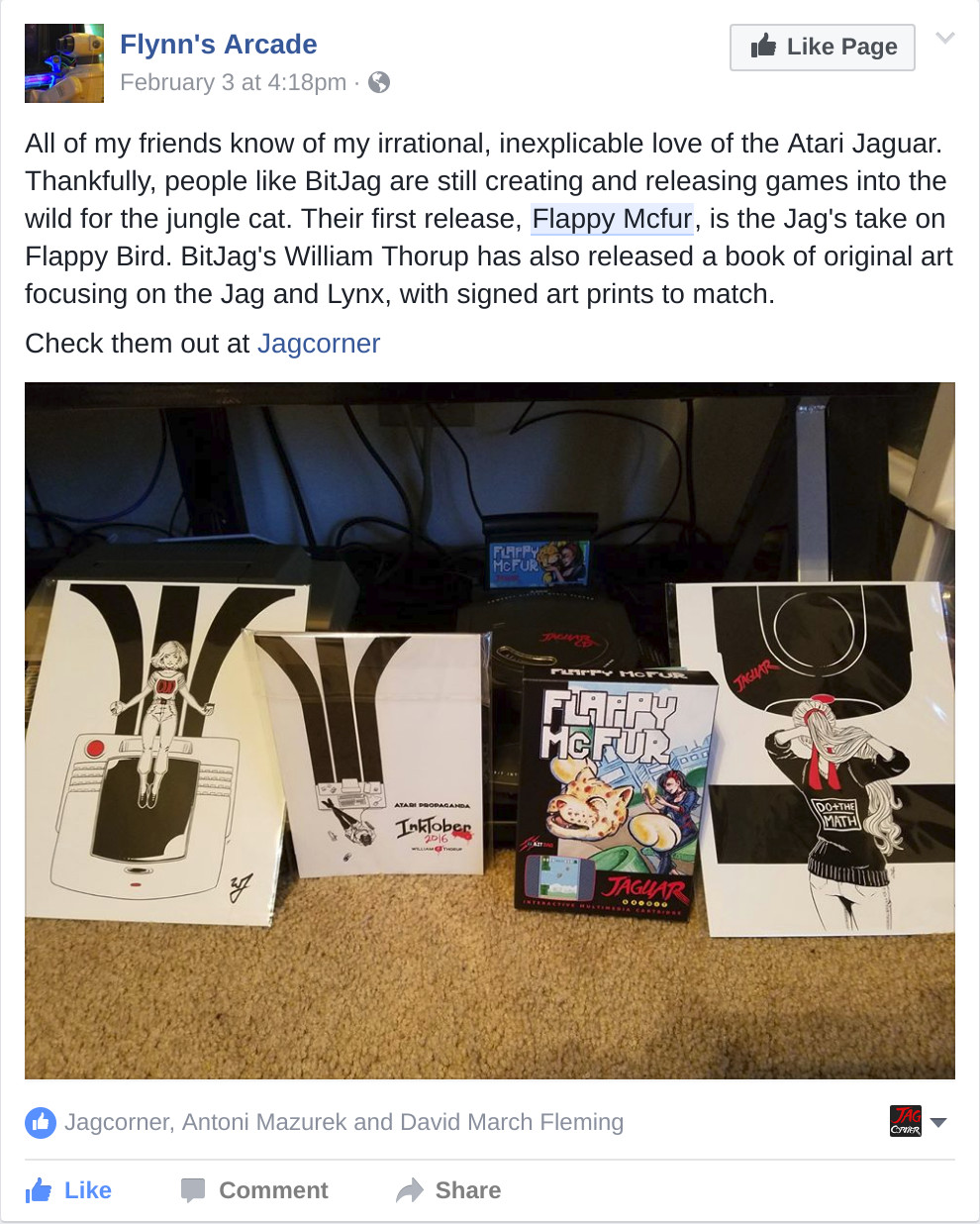
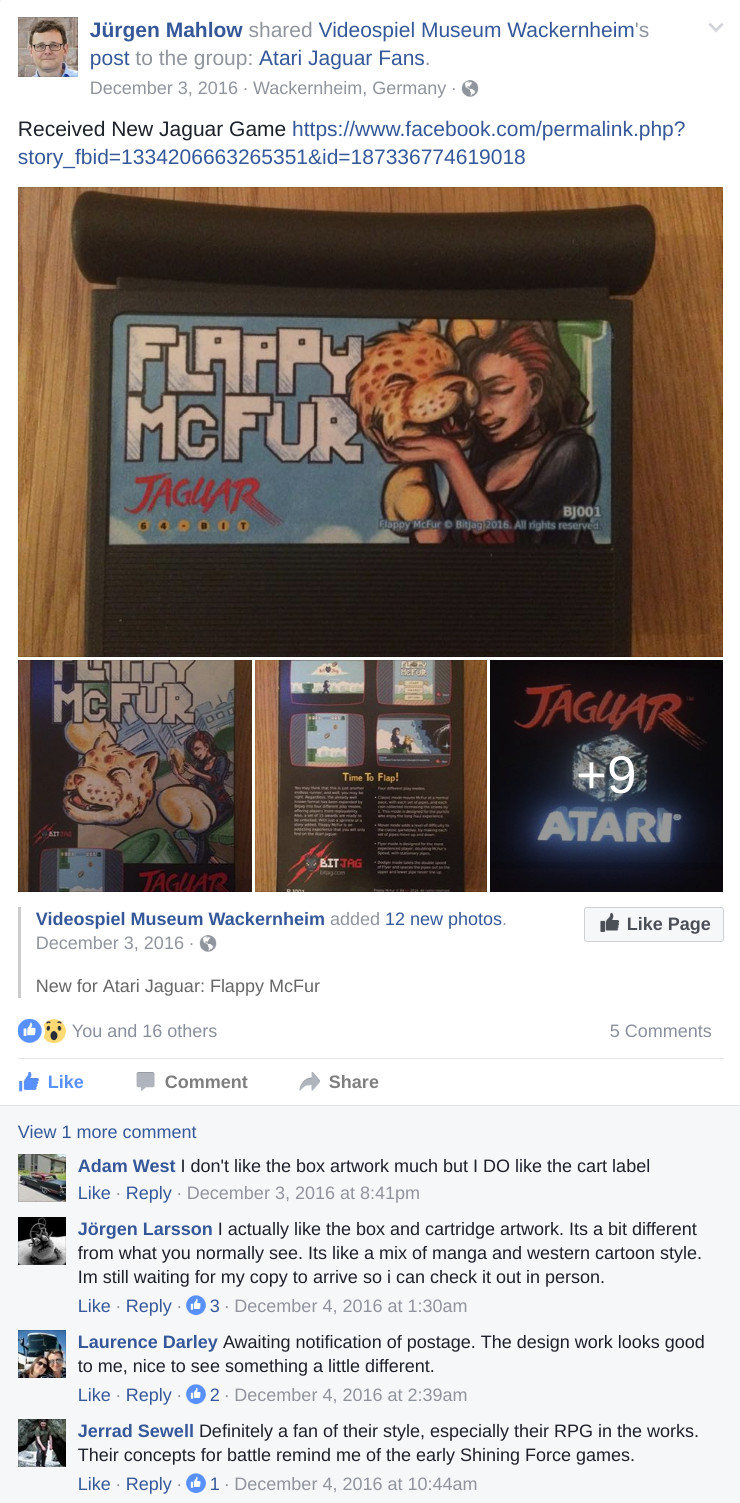
    Before people actually had the game in their hands, many of the comments were about the pixel art, and general support for the release. Responses to gameplay have been… mixed, maybe. Its hard to tell if people don’t want to say anything bad about it, or they are just a bit frustrated about its’ difficulty. Either way, below are a few reactions for the AtariAge forum thread.

    Hyper_Eye

    My wife and I enjoyed spending the evening playing Flappy McFur a couple nights ago. It’s certainly addictive. I found myself getting the controller back less and less. My wife and I probably haven’t played Jaguar together in 10+ years. She buys me Jaguar games as gifts and watches me open them. Maybe she’ll watch me play a bit. It was nice to actually play together. Thanks for the effort you put in to it!

    Swansea_Mariner

    Wow this game is hard, I just can’t get past pipe no. 9! I really like the dogger mode.

    Saturn

    Thank you (all) for this wonderful addition to the Jaguar library. Hope to see more.

    Reviews

    By way of reviews, we did have one website review and one YouTube review. Both favored the game. Thank you for the reviews! Links below.

    A small mention on the Retro New Roundup – https://youtu.be/FfeYMKsktFM?t=3m22s

    A more full written review on a more official news website – http://thegg.net/retro/atari-jaguar-gets-a-brand-new-homebrew-game-called-flappy-mcfur/

    A fairly thorough video review done by crusherbad64 – https://www.youtube.com/watch?v=5lo5AHXrhCU

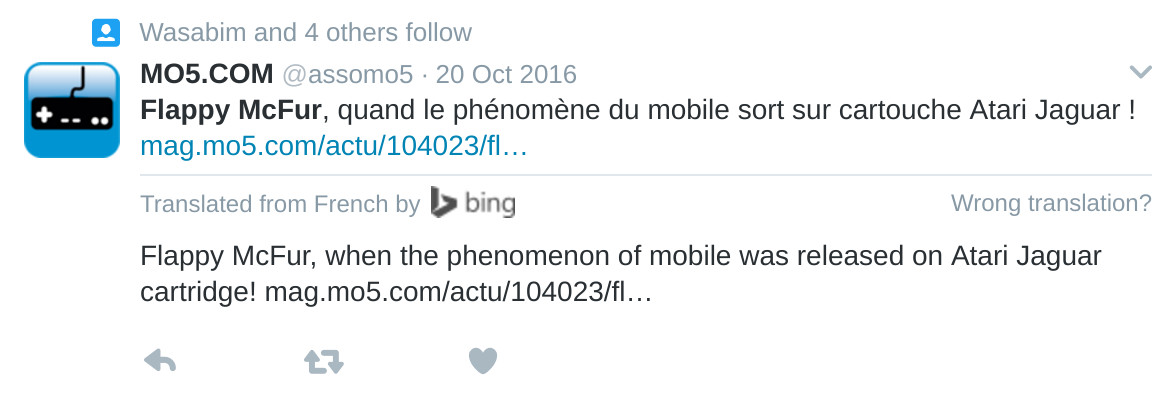
    A nice little mention of Flappy McFur on a French Jaguar fan blog – http://jagfan.canalblog.com/archives/2016/11/03/34517203.html

    Other Social Media Posts

    Links

    Flappy McFur BitJag Project Page – http://bitjag.com/project_5.html