William Thorup

Illustrator, Motion Graphics Designer, Animator, and VFX Artist

Tag: illustration

  • Cutter Portrait | Timelapse

    Cutter Portrait | Timelapse

    Over the last month or so I have been collecting my digital artwork and sketches into a collection of books. I will do a post specifically about this soon, but going through the process of laying out the last decade of my artwork has been thoughtful process.

    Something that became obvious quickly looking at my artistic habits over the years is that I love to do full color, highly rendered illustrations, but there has been a fear, doubt, something holding me back from doing more of that kind of work.

    So, in response to that, I have made what you might call a late New Year’s Resolution. Simple to paint more, as opposed to line drawings, and treat it as an education instead of “sell-able artwork”.

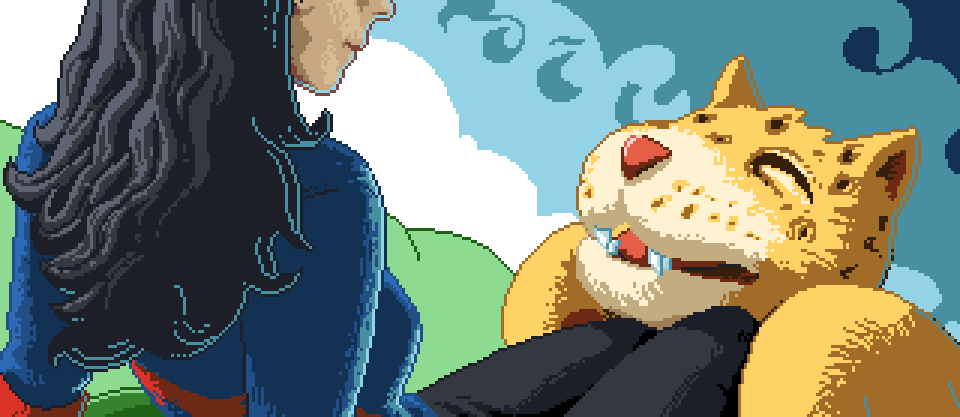
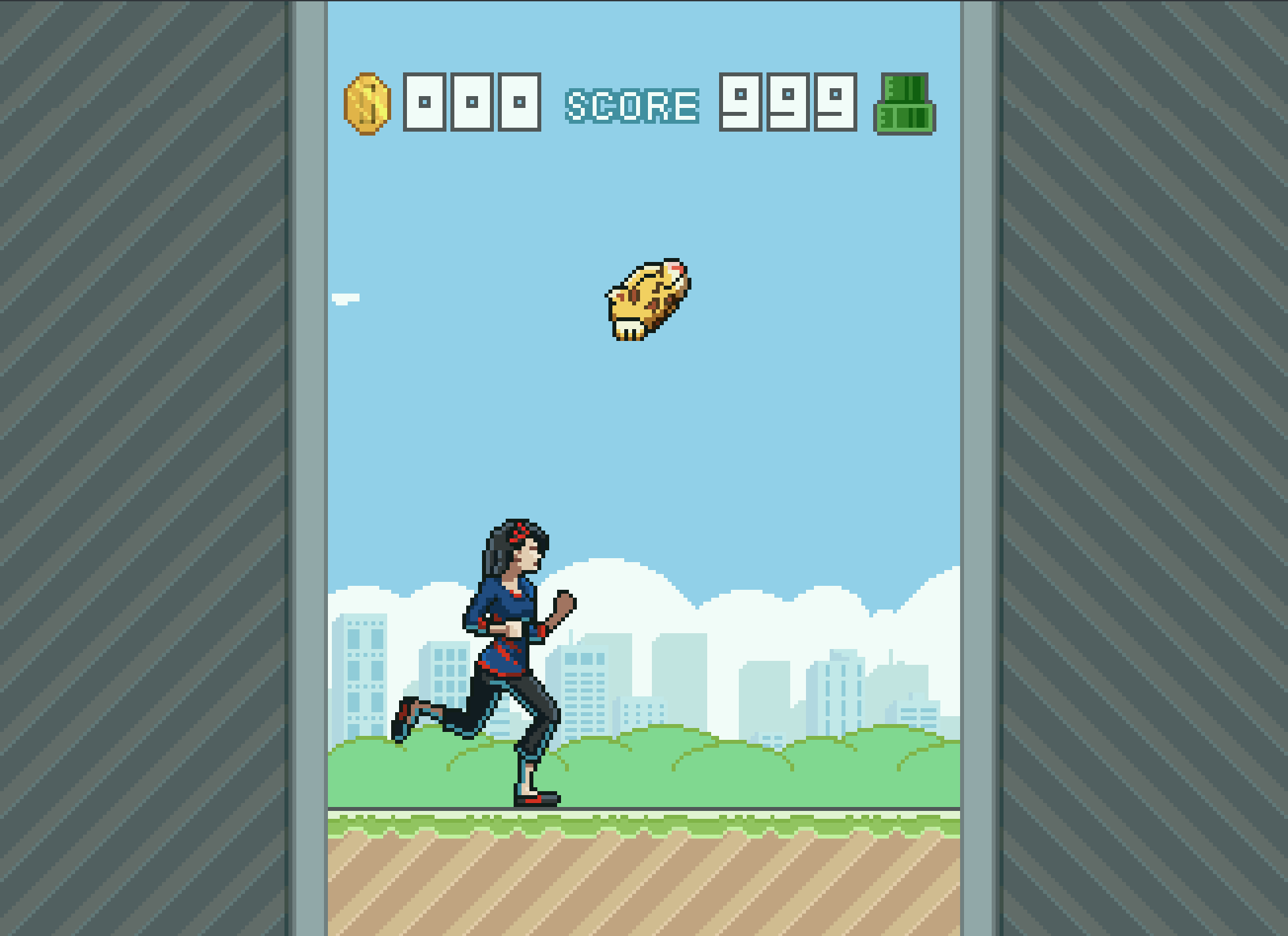
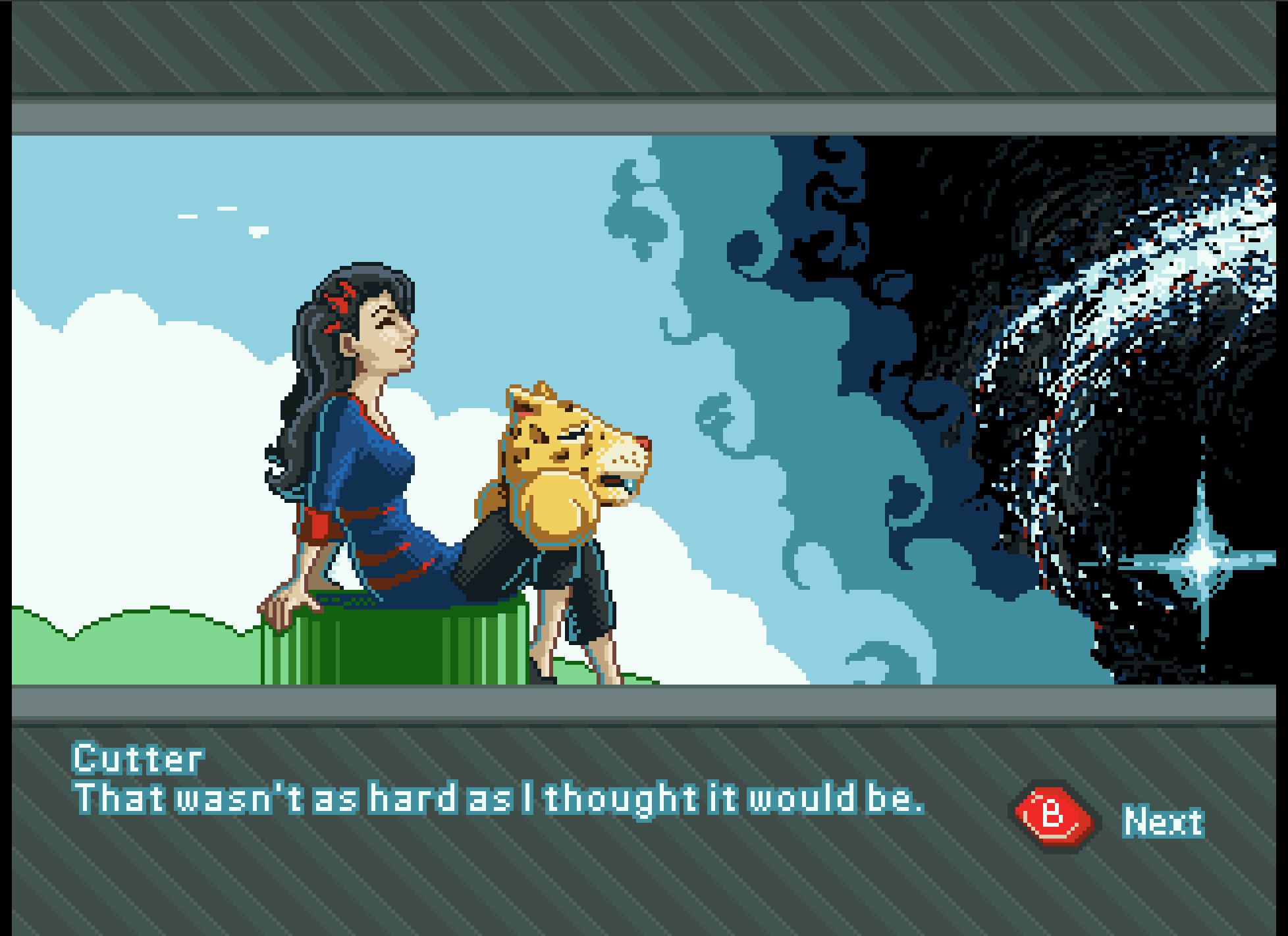
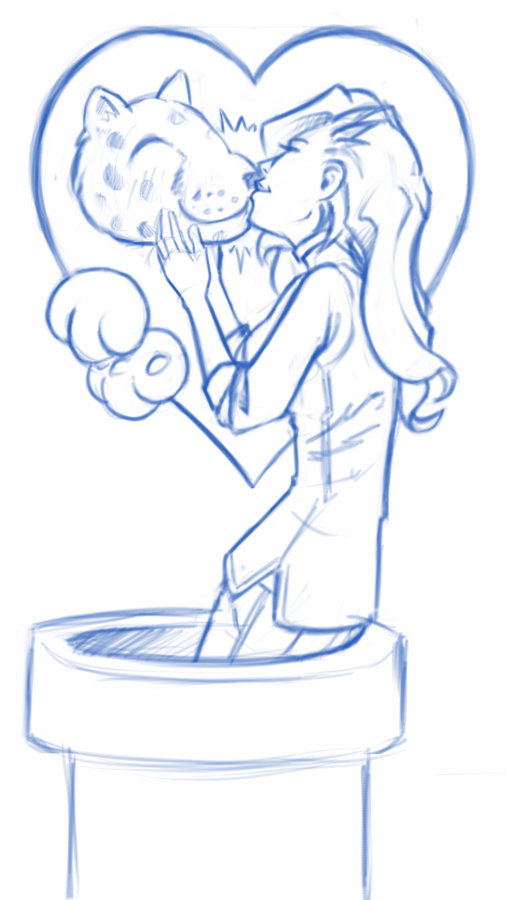
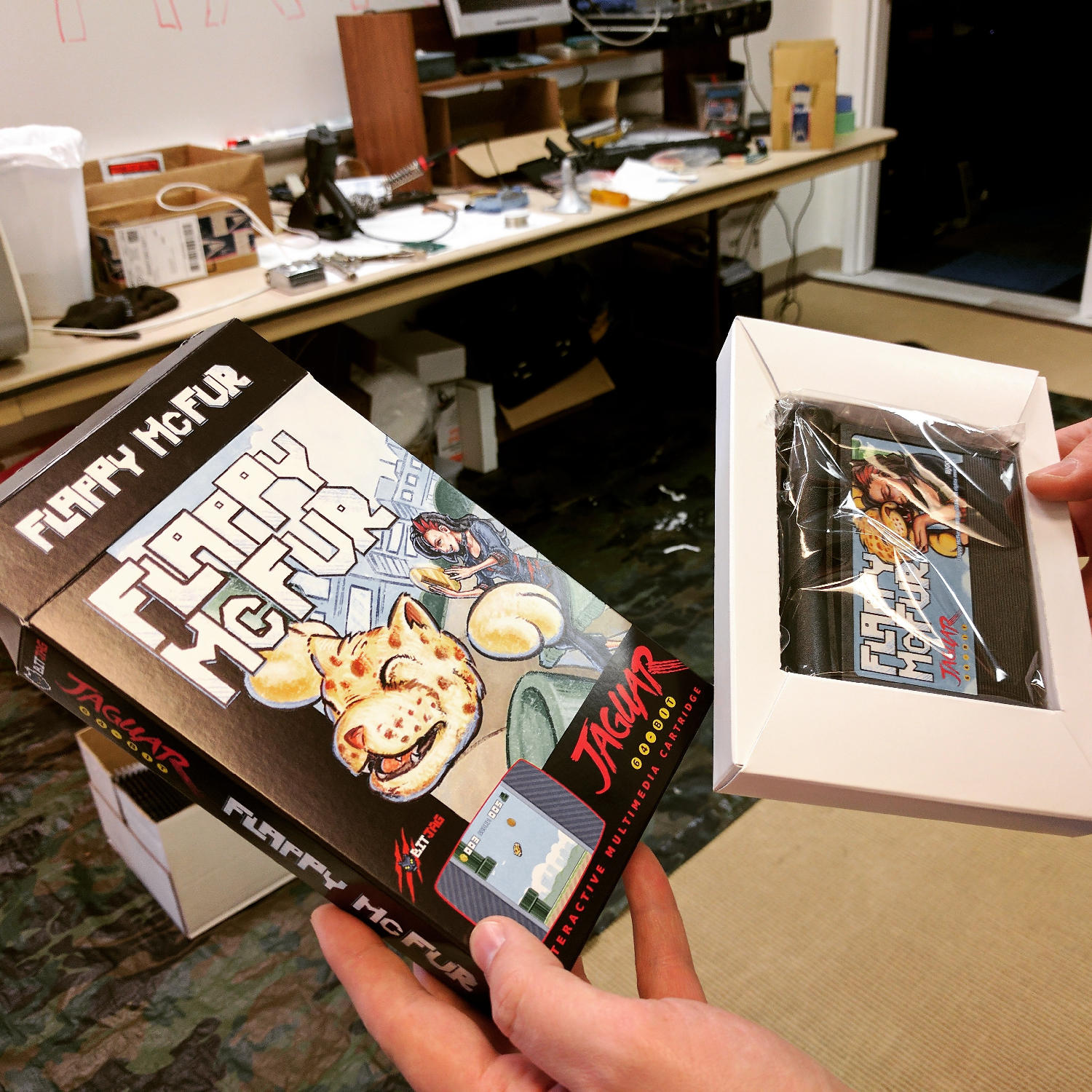
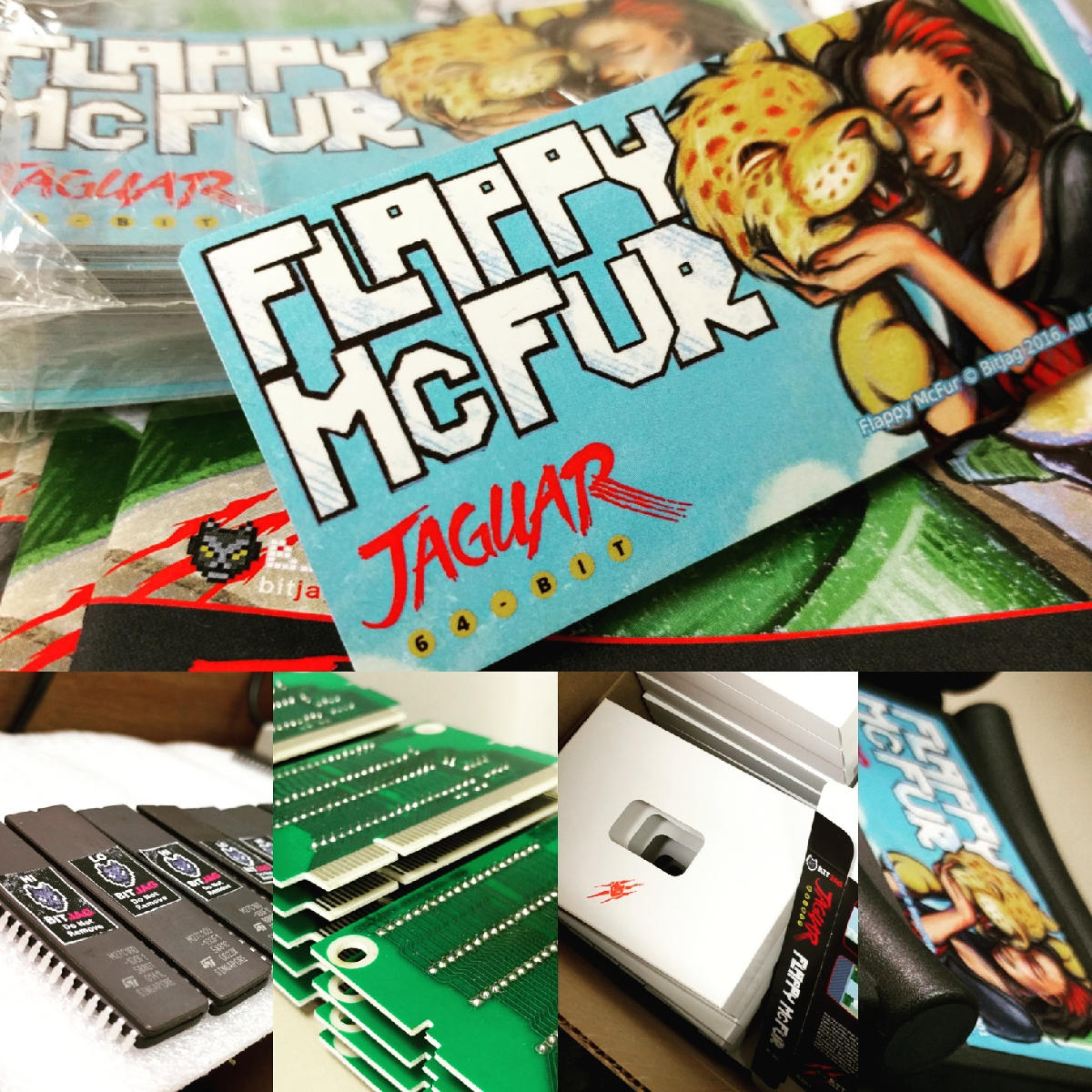
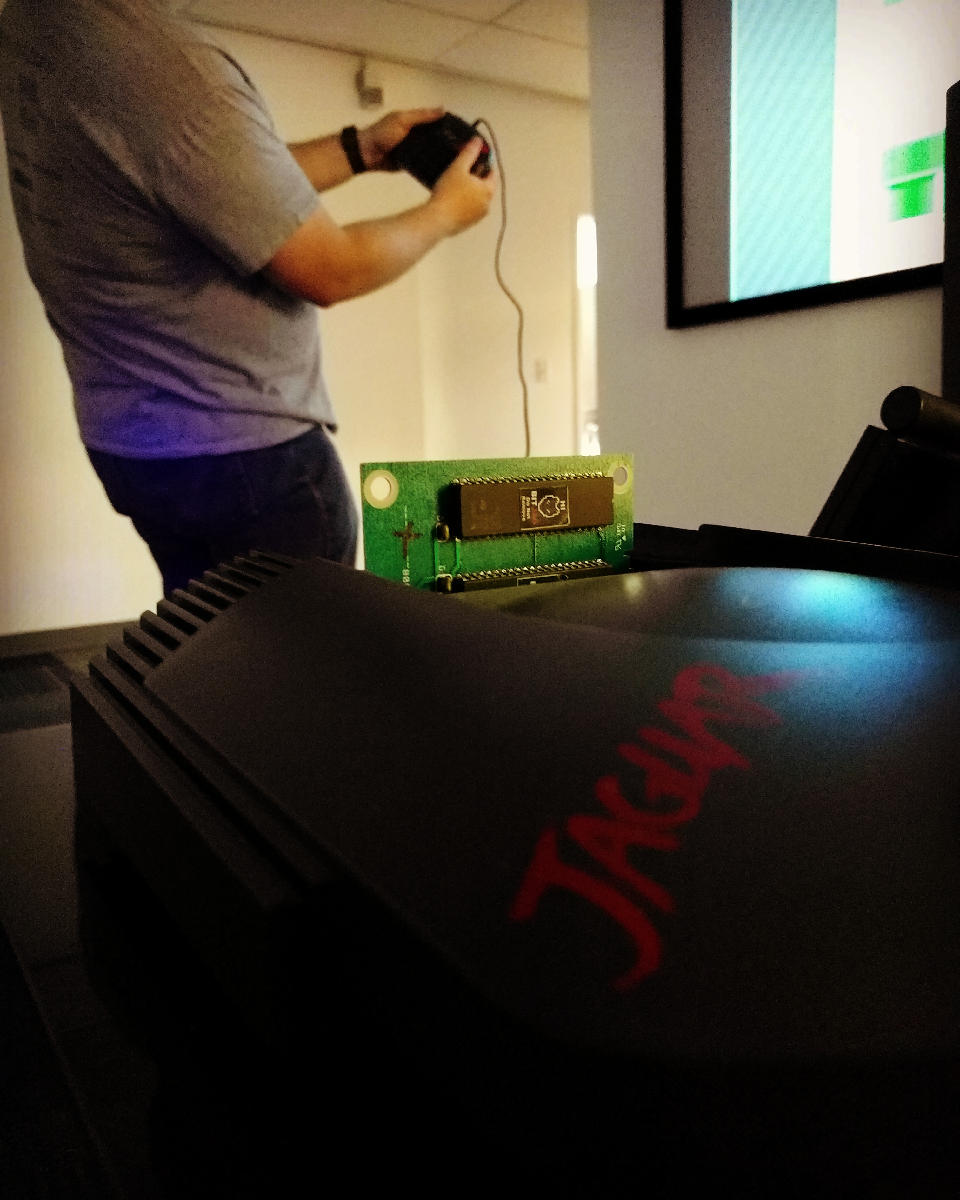
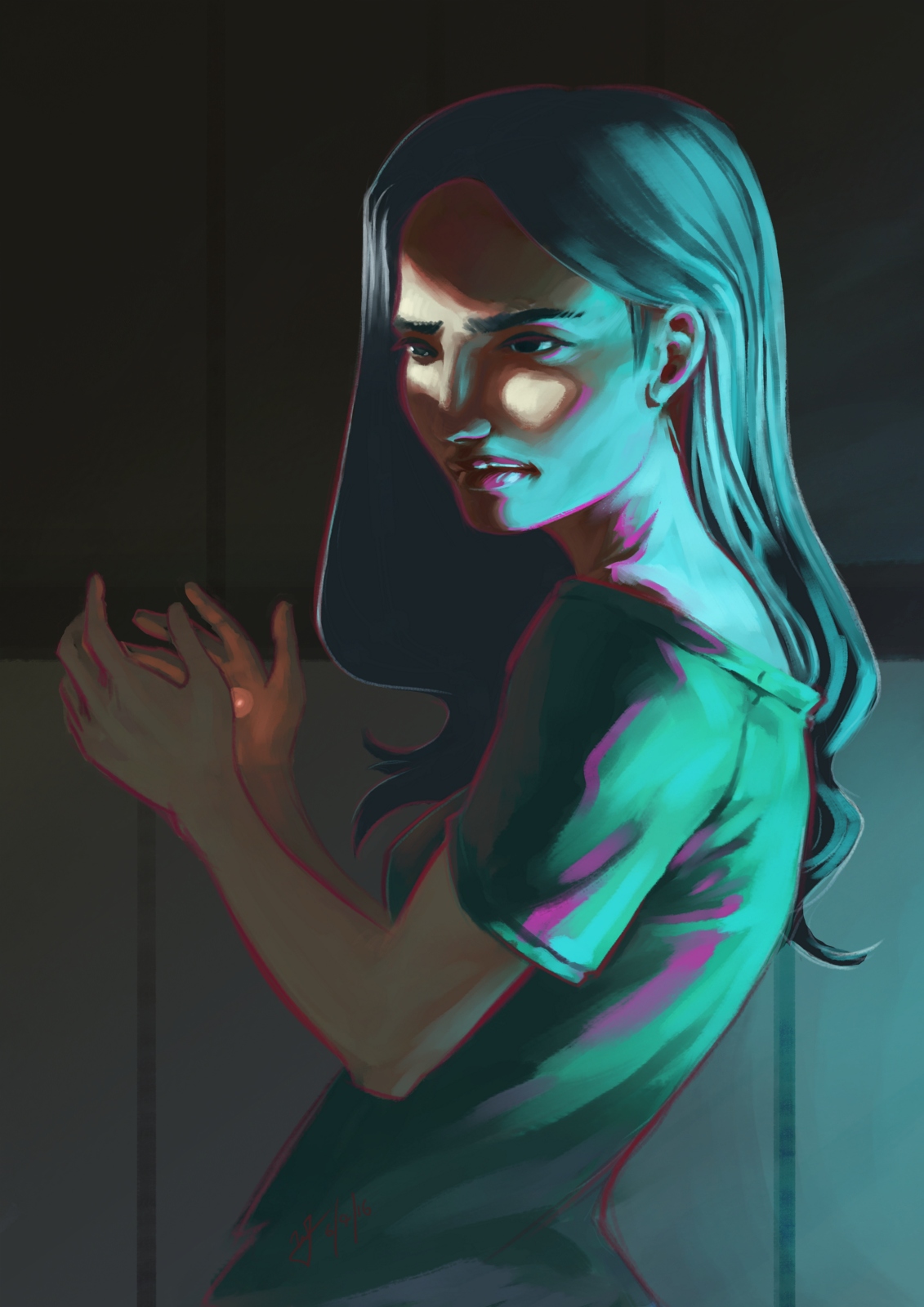
    In an effort to satisfy this goal, this portrait of Cutter, from BitJag’s Flappy Bird Clone, Flappy McFur, is the first fruits of that effort. Also, I recently re-coded Flappy McFur from the ground up, so this piece is a way to celebrate the nearing end of that work.
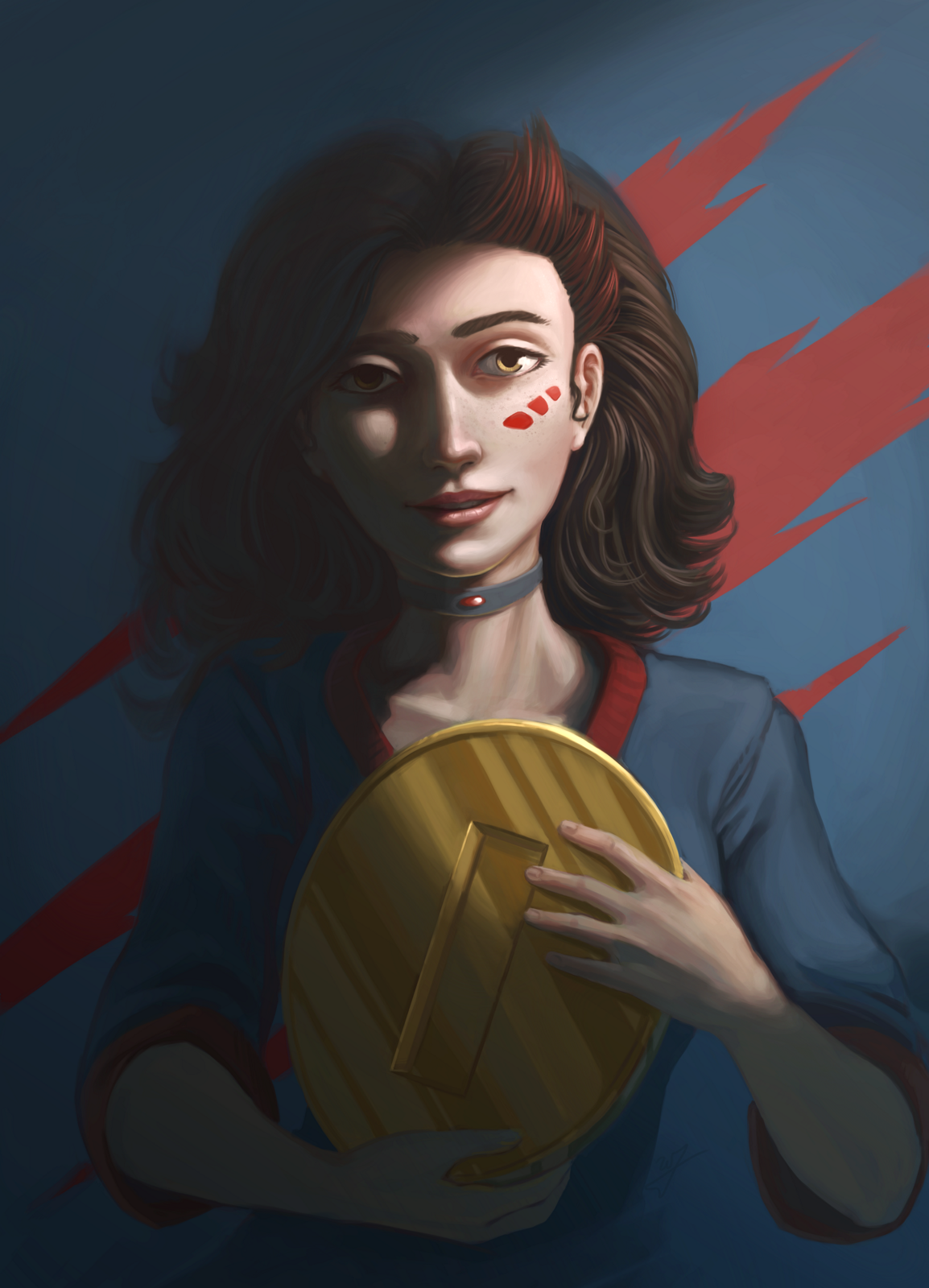
    Along with this, I want to setup some criteria to reexamine myself after I finish a piece. So, I’m approaching more time lapse videos for each piece I produce. I want to do a written examination through blog posts, focusing on specific things I learned or practiced, and how I might do things differently if I started over on the same piece. Lets do it.

    Things I Learned or Practiced

    Defining My Process

    I recently watched this video by Marco Bucci talking about painting greyscale and then moving into color after you have the value painting established. The primary idea that Marco presents that this process actually removes some of the benefits that can come to your artwork if you start with color from the start.

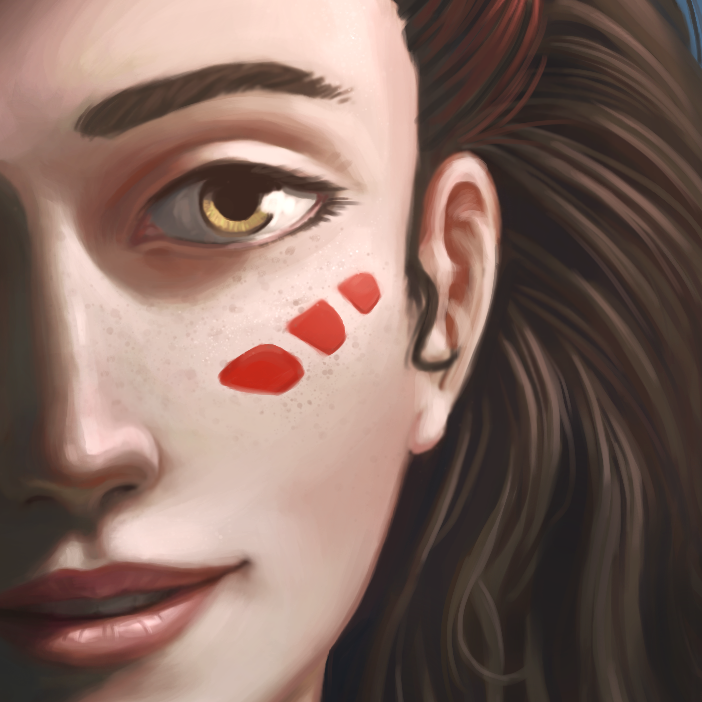
    Working in greyscale is something I have done in the past, and I plan on using this approach in the future. But he does make a convincing argument for why you should not do this all of the time. When starting this portrait of Cutter, I paid special attention how I pick colors, and how I could use a variety of colors in skin tones to enrich the piece. Especially for areas in shadow. Using a diversity of color in the shadows, along with ambient reflective color created more richness than I have experienced in my work before.

    Start By Anchoring Your Values

    If you watch the timelapse, you will see that I do make some dramatic value adjustments using some global color adjustments to brighten the image. I started this picture far too dark. What I learned from this is that when starting a piece, I need to keep in mind that whatever values I start with become the anchors for any new values that I introduce.
    This means that when starting a piece I need to determine one thing. If I have any direct lighting, I need to properly determine the mid tone for that light as first value that I add to the canvas. This approach can be applied to ambient lighting and any light in the piece.

    This anchor value will help determine the proper contrast between light and shadow that I may be looking for, for any future pieces that I work on.

    Work With Reference

    Probably the most embarrassing part of the timelapse is how many times I make adjustments to Cutter’s face. I have heard from many experienced artists that spending extra time on the face is natural, and important because that is what people typically focus on first when looking at artwork. I would like to hide behind this reasoning, but I don’t think it completely addresses why I came back to the face to adjust overall placement and shape of the face. What is really sad about it is, even though the end result came out good, I am still not completely happy with it. Why did this happen?

    First, proportions were off from the very beginning. And adjusting proportions later in the process is almost always more time consuming when compared to properly establishing proportions earlier in the process. I believe the root of this problem is because I am not practicing from reference enough.

    Even though Cutter doesn’t exist in real life, therefore there is not reference to work from for this piece, by practicing more from reference in my studies, my “imaginary” artwork with be better informed. Having an appropriately oriented visual library established in my mind, I can better extract from that well practice to better in form my ideas in my imagination.

    Conclusion

    Cutter’s portrait is attractive, but took longer than needed to paint, and shows a lack of foundation in my visual library. What are some things I can do to improve?

    The obvious solution is practice with reference. This will solve both the problems of appropriate proportions for whatever subject your are painting, and it will help me become more efficient in my painting process. Resulting in saving time, and creating more attractive pieces.
  • Battle Angel Alita | T-Shirt Design Contest

    Battle Angel Alita | T-Shirt Design Contest

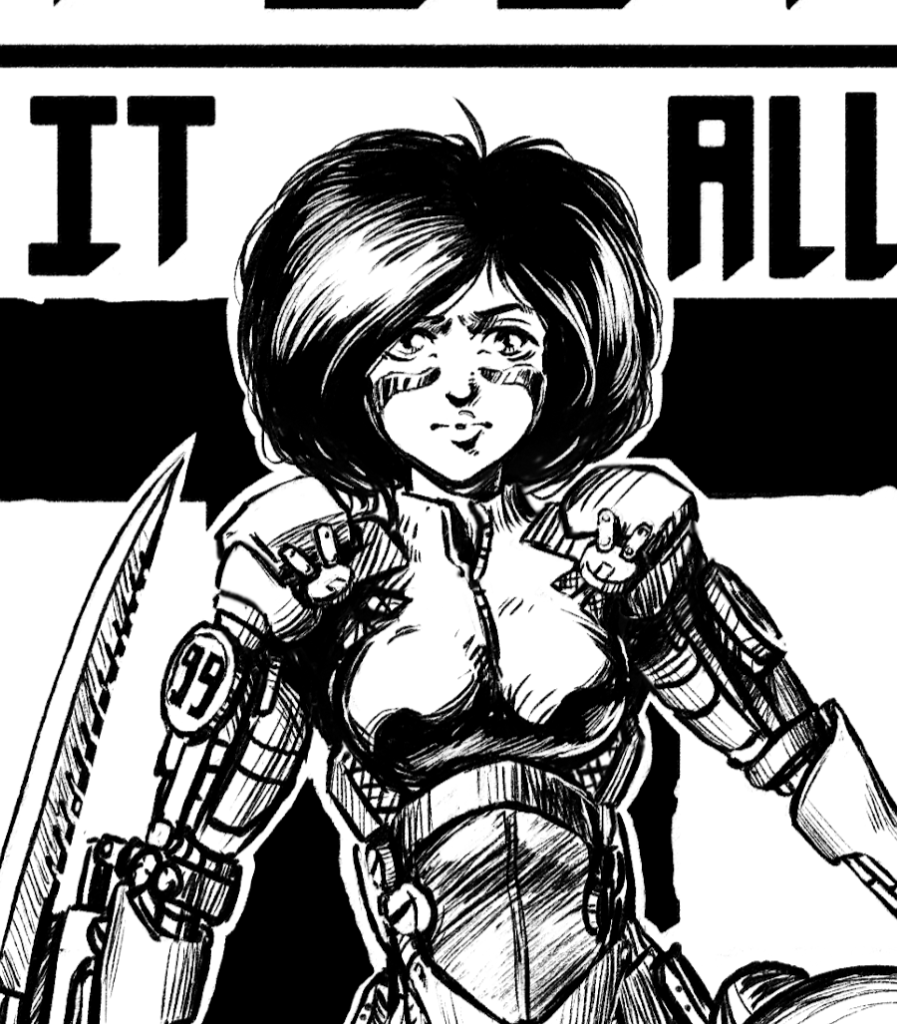
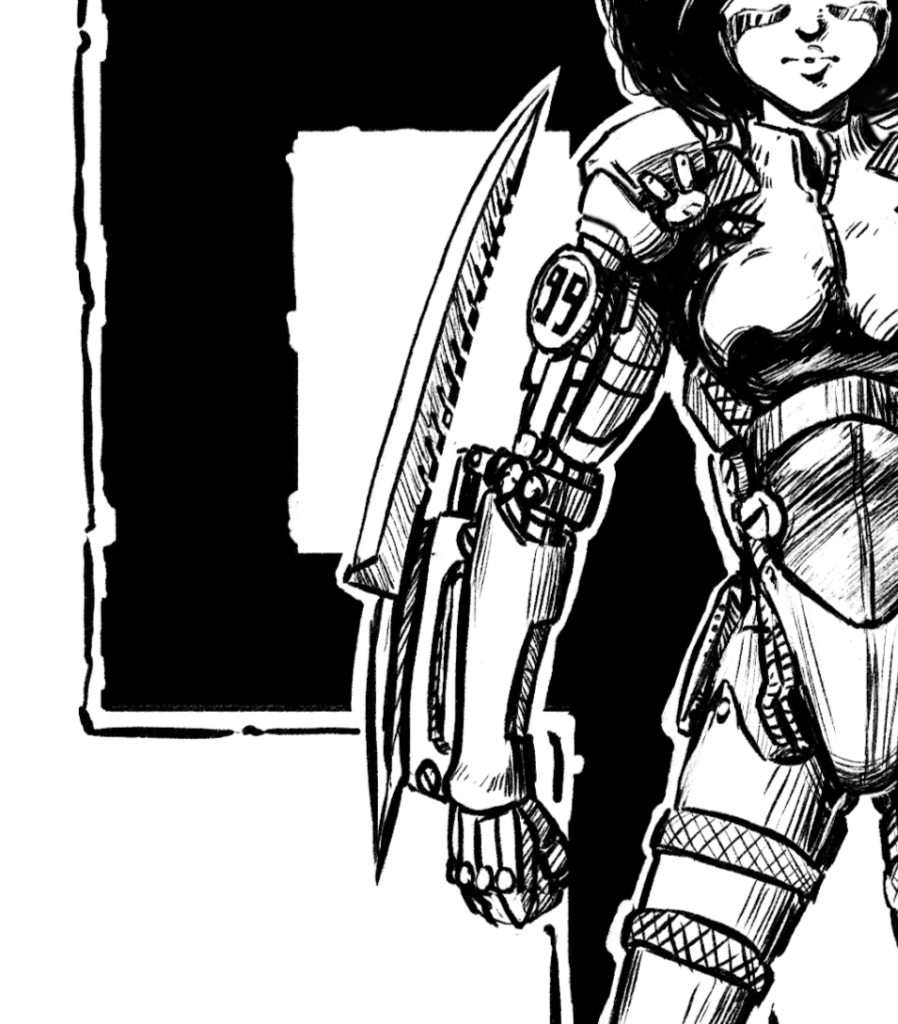
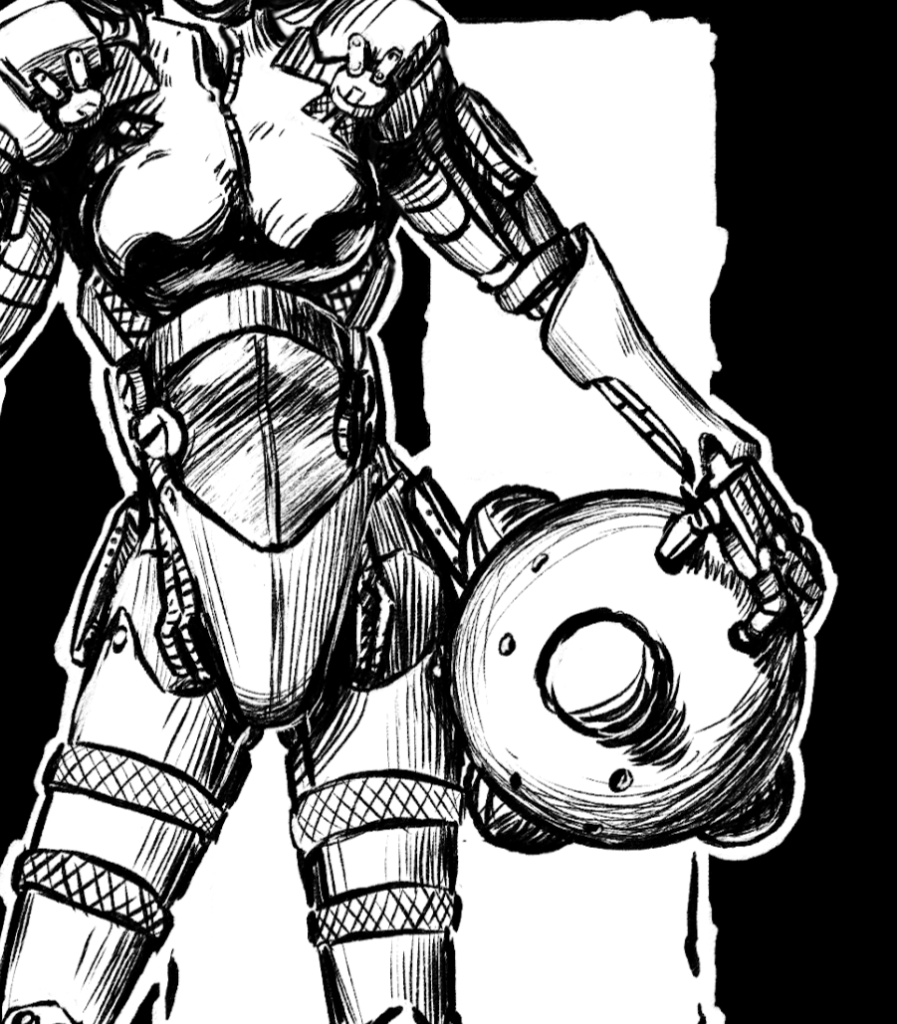
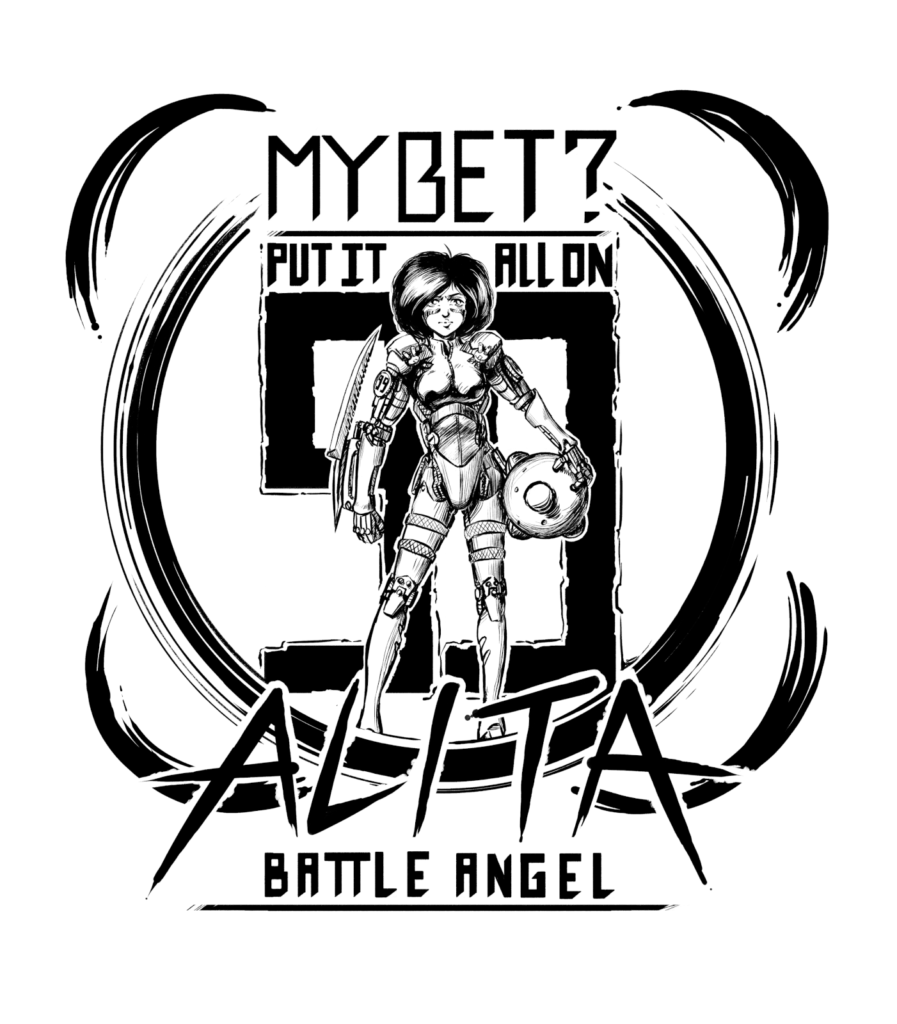
    My relationship with Battle Angel is an odd one. When I was young I saw the anime (which I definitely shouldn’t have had access to that young). Despite the violence and other… unsavory content, I really enjoyed the characters and the world that they inhabited. I found it cool, but strangely more relatable as I have gotten older, and had to deal with past mistakes and how face a future that was in part created from those mistakes.

    For those who don’t know anything about Battle Angel Alita. In a nutshell, a young cyborg woman is brought back to life, with no memory of her past life. As she takes in the future post apocalyptic cyberpunk world around her, she slowly takes her place and questions her place in that world. Yes, it’s basis is the amnesia trope, and yes, it fits the fascination pop culture had with post apocalyptic and cyberpunk themes.

    The way the original creator approaches these tropes is unique and causes the reader to question and face their past, and how that past influences our place in the spheres of influence that reside in throughout life. Most importantly it forces us to question the power we have and how we use that to help or hurt those around us.

    Back to my story. When James Cameron started talking about doing a Hollywood adaptation back in the early 2000’s, you can an imagine the teenager version of me being excited about this. Keep in mind this is long before Ghost In The Shell, Dragon Ball Z, Speed Racer, etc… Basically, before any of the half baked or awful adaptations we have been given over the past 2 decades. So, any news of a Hollywood adapted anime was pretty incredible for the time.

    It only took about 20 years, but the movie is just a few weeks away now. Seeing something like Battle Angel getting this kind of a treatment is still a bit unbelievable, considering how far off the beaten path this franchise is. And I am glad to contribute a small part to celebrating something that had a stronger impact on my life than I realized.

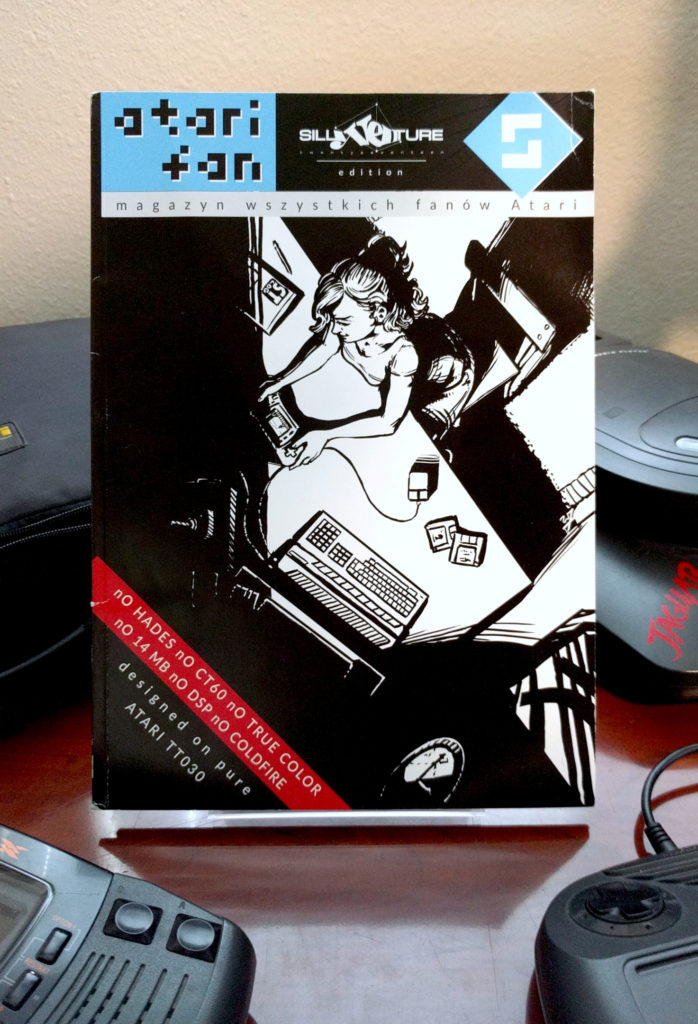
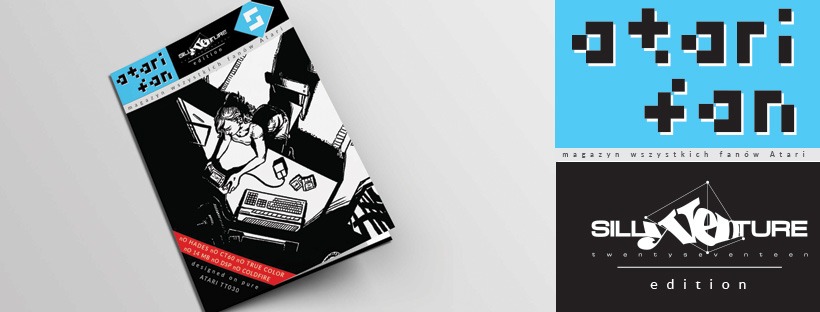
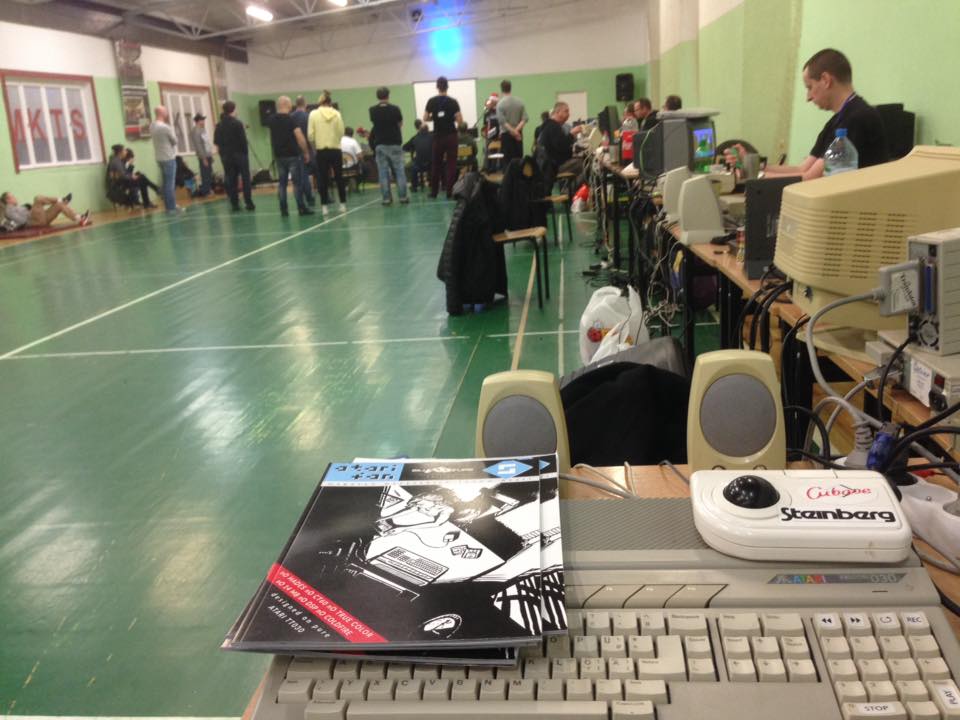
  • Atari Fan Magazine – Silly Venture Edition| Cover Illustration

    Atari Fan Magazine – Silly Venture Edition| Cover Illustration

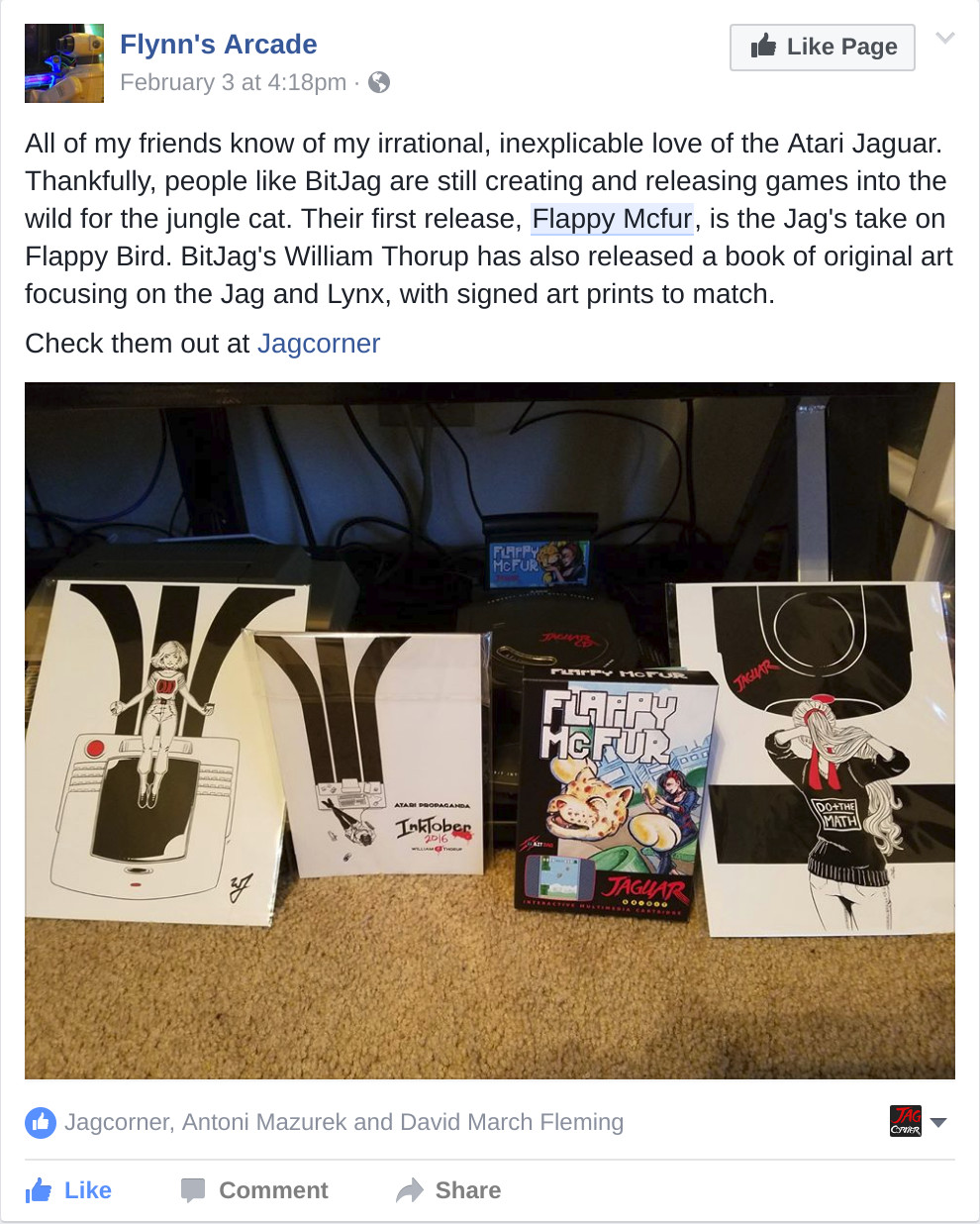
    It seems that the Atari Propoganda artbook from my 2016 book is still making the rounds in Atari circles. The specific piece was from Day 2 of Inktober 2016 called “Play Late Play Lynx”. Which features a young woman after a long day of work, illuminated by the light of her Atari ST monitor, as she takes a minute to enjoy playing the Atari Lynx. She might take some time to read some of the ST Log magazine she just got in the mail as well.

    Original Artwork Timelapse

    An individual each year puts together a magazine for Silly Venture reached out for permission to use one my illustrations. I did another pass on the artwork to correct a few things that would make the piece more attractive and sent it to the printers. Fortunately, I did all the original pieces near an A4 aspect ratio, so I didn’t need to add or take away from the piece as a whole. This made it a drag and drop effort for the layout artists for this Polish language magazine.

    I didn’t have anything featured inside the magazine, but it’s good to see this artwork still resonating with people in the “classic” Atari community years, after the initial release of the Atari Propoganda Collection in 2016.

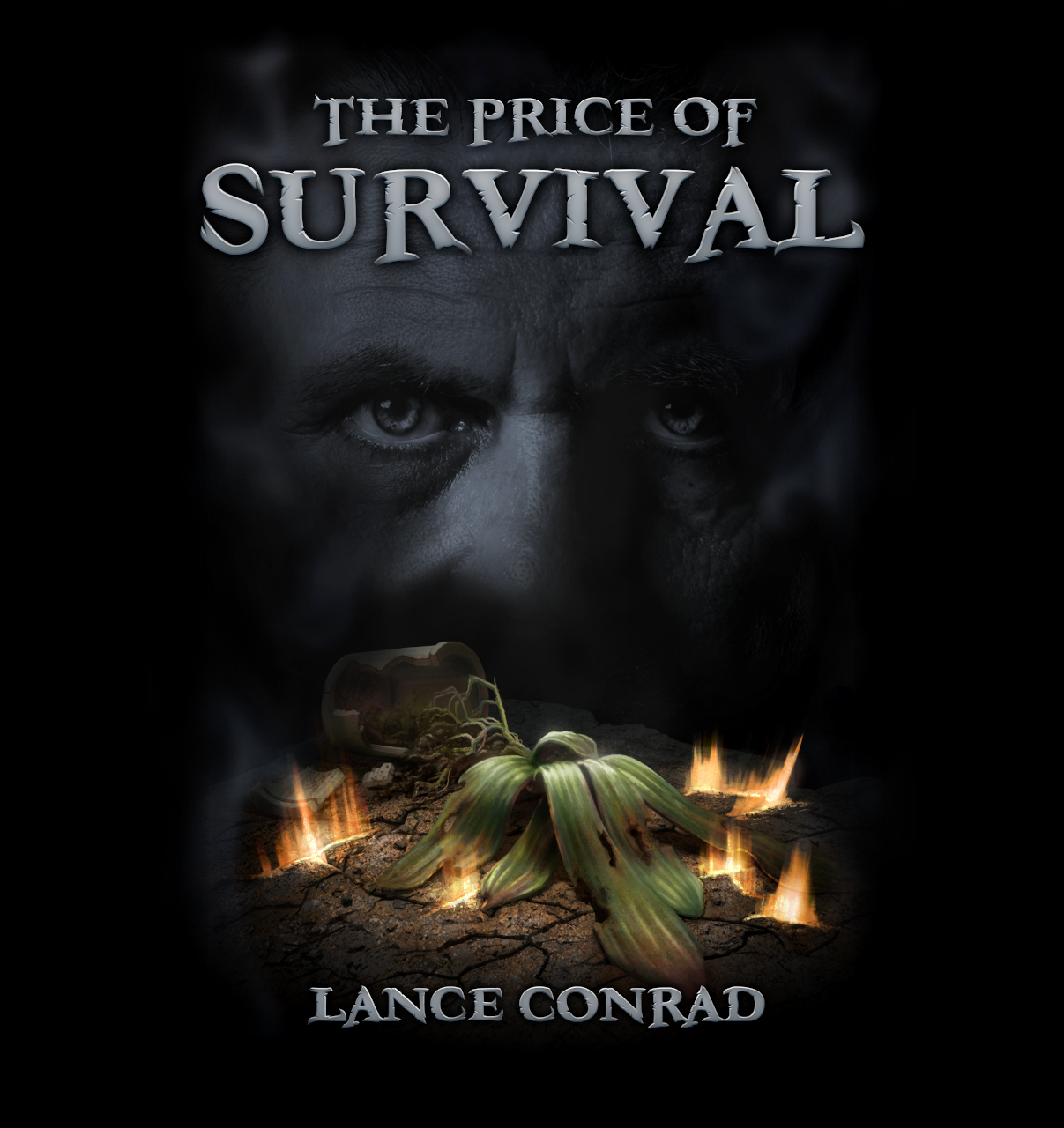
  • Book Cover Illustration| The Price of Survival

    Book Cover Illustration| The Price of Survival

    Lance Conrad is a talented, popular and highly motivated author that I have come know and consider a friend through my work at Thor Media. He has written several books that fit neatly into young adult fiction, and he recently commissioned me to work on the fourth book in his “The Price of…” series.

    Be sure to take the time to look at his other books for comparison, and consider adding his work to your library or to the library of someone you know who might be interested in his work.

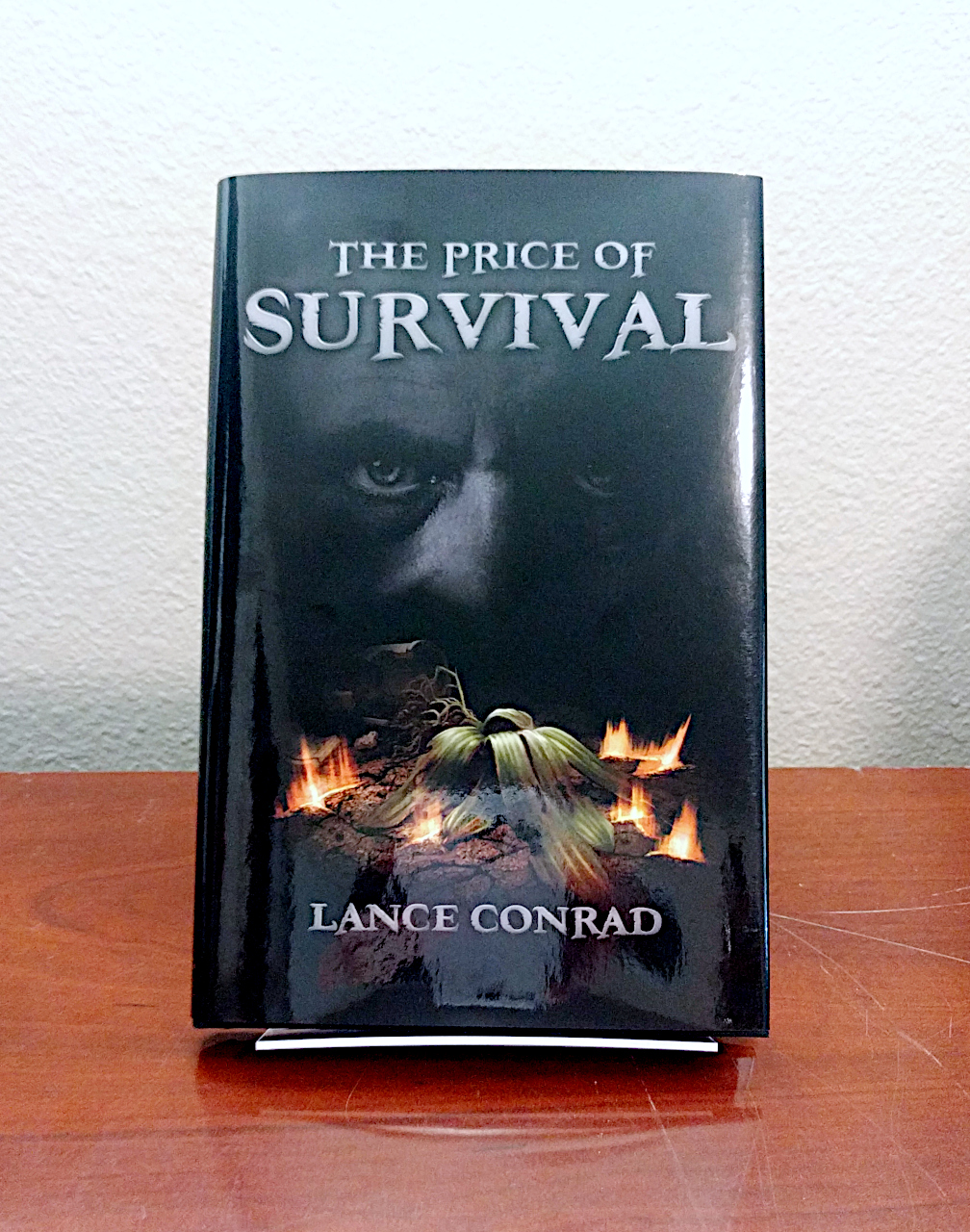
    Final Book Cover
    Title Text Was Rendered Out Of Blender
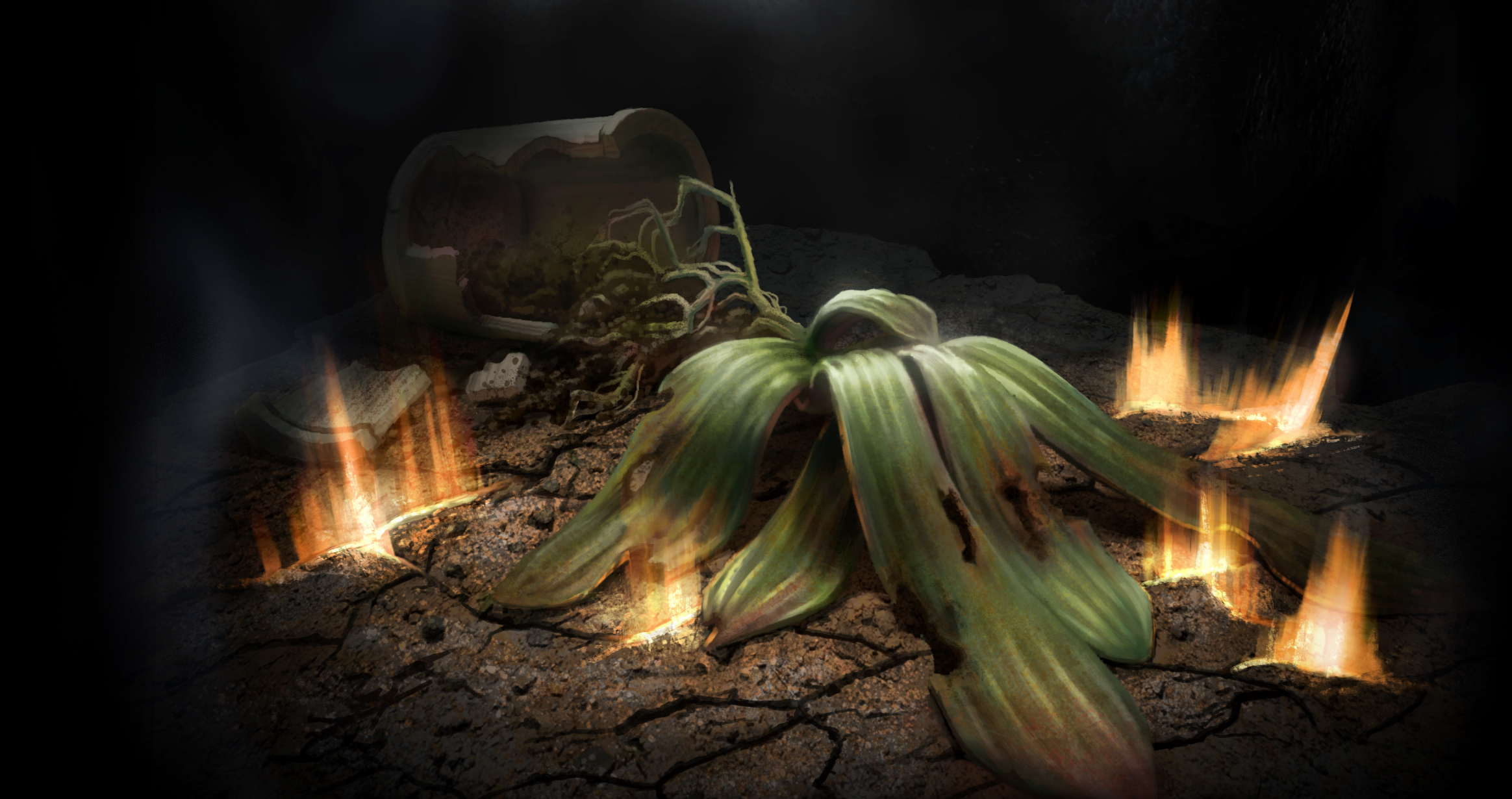
    Plant Illustration & Final Image Composite Was Done In Krita

    The Prompt

    This project could be considered a rescue in that he had already commissioned another artist to work on the cover. I don’t want to go into detail on this initial cover and instead just say that it didn’t meet the quality of the covers for previous books Lance had published. The quality of the initial artist made it unacceptable for me and some of Lance’s other friends in the close circle that were reviewing his book. We didn’t want the quality of his writing to be held back by a poor book cover. I am glad we caught this before the book was sent off to the printers.

    The approach to the finished cover was relatively simple since another artist had already laid out what Lance didn’t want the book cover to look like. Along with the common visual composition used for all the books in the series, a face/pair of eyes along with a key item/element used in the story, getting started was easy enough. The basic prompt was to have an older man, who visually looked like they had seen allot, for the background, on black, with a potted plant that had been damaged by war/explosions.

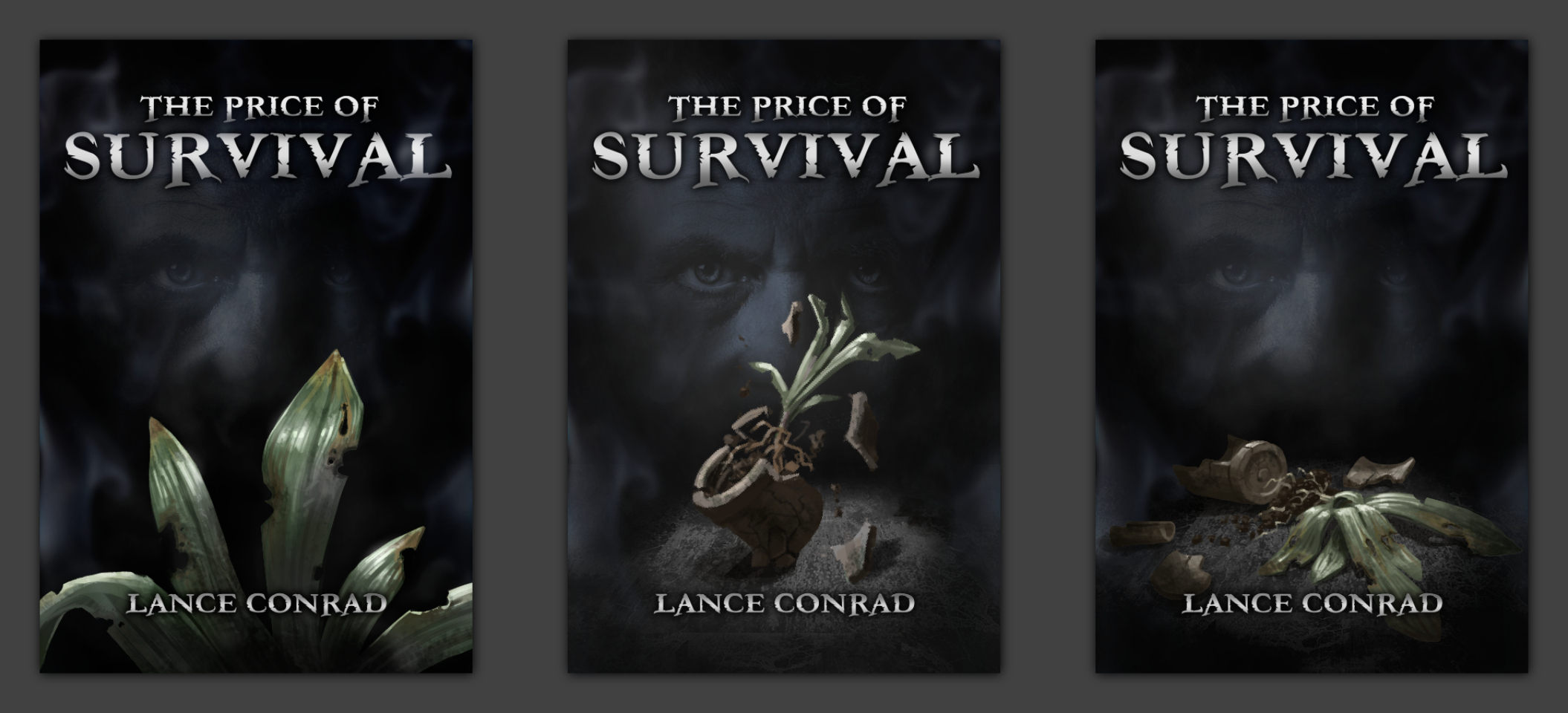
    Small Thumbnail Paintings Of Possible Covers
    Final Product

    Production

    Again, it was fairly easy to narrow down exactly what would work for Lance with just a few new thumbnails of possible covers. Then, after he picked which one he liked most, I took the chosen thumbnail and put several hours of rendering for the final image. Afterwards I followed the layout for his previous books to keep this book consistent with the rest of the books in the series, and then prepped the final file to the printers specifications.

    Wrap Up

    Both Lance and I were happy with the final result. This cover matches well with previous books in the series, considering the really quick turn around time of a about a week, it is attractive and mysterious enough to get people to pick it up and take a gander.

    This is my first book cover illustration outside of my own publications, and the opportunity to collaborate with a talented author to create the outfit that his writing will be dressed in to make a good first impression is an important task for both the writer and artist. I feel that this project helped stress the importance of a healthy collaborative relationship between artists in order to avoid creating content that would be potential embarrassing if not harmful to any of the artists involved.

  • Family Gaming with Atari | Traditional Art Commission

    Family Gaming with Atari | Traditional Art Commission

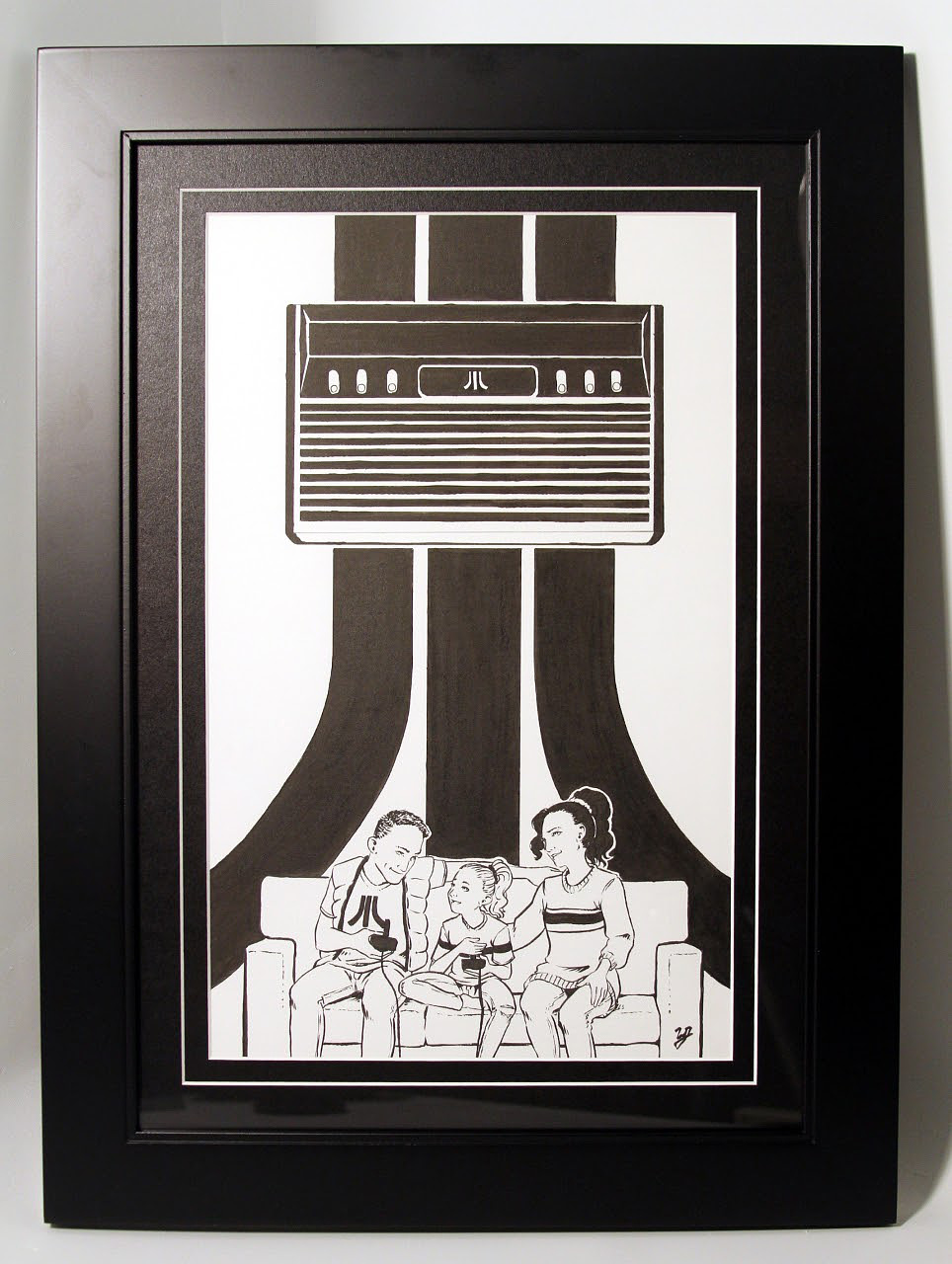
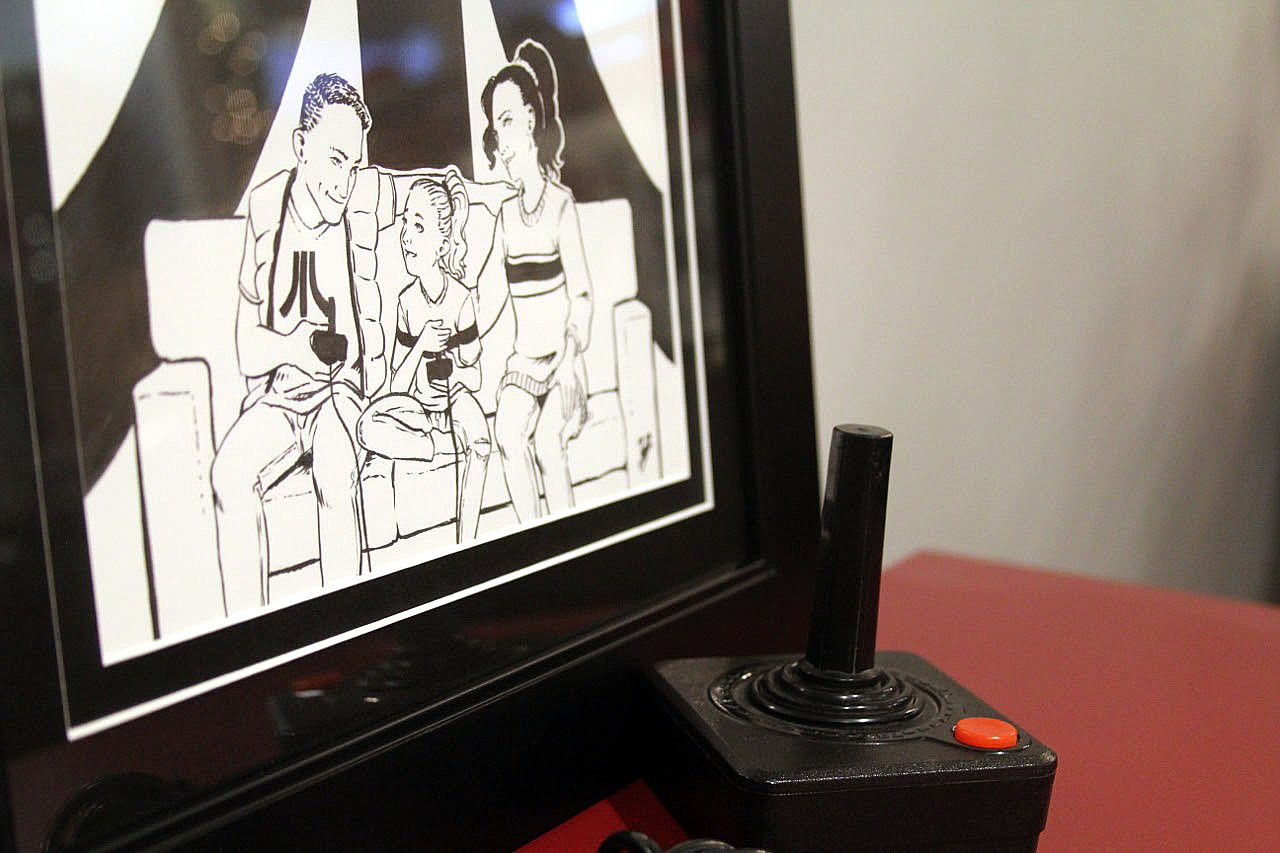
    Traditional art commissions are always memorable, growing experiences. With the bit of extra attention that my Inktober 2016 | Atari Propaganda artwork has been bringing, I have had several people reach out about art commissions. This one in particular is one that I would like to write about because it was such a positive experience for both me and the client.
    Subject Matter

    First, the Atari theme has been such an amazing experience for me this year. Taking time to think about these consoles that I have quite a bit of nastolgia for, putting them to abstract and realistic situations, with only female subjects is incredibly gratifying. It has provided me with an opportunity to stretch myself with the ink medium, composition, drawing people, research (80’s and early 90′ clothing specifically) and applying that research. But I have to admit, this year for Inktober was much harder than last, and with commissions on top of that, I really got a feel for how hard I can push myself at this point in time.

    …the process of drawing, mounting, framing, and shipping the final work was a great experience.

    Being Willing to Start Over

    I actually lost money on this commission. This is definitely something that happens from time to time. In this case, I didn’t do enough in the planning and thumbnail stage of the piece. So, when I approached the first version, I felt my technique was good, and the overall composition was good as well, I didn’t get the likenesses of the subjects to a point that I was comfortable with. Because this is ink we’re talking about, that means starting from scratch. So I started over, essentially doubling my time on the piece.

    Making sure you have enough time to work (2 weeks minimum) on a piece like this, along with studying your subjects thoroughly, will help ensure that this doesn’t happen again. Regardless, even with the do-over, the process of drawing, mounting, framing, and shipping the final work was a great experience.

    …this project will feel like a head stone for it all.

    Schedule Affects Everything

    This is my main takeaway from this experience. Because I am still working at Thor Media, finding time to actually sit down for a solid block of time is difficult. With this one, I ended up telling Thor Media I wasn’t going to come in for a couple of days, and then I turned off my phone. In the future I would like to avoid this, and, like what I mentioned before, two weeks should be a minimum for a project like this. I am certainly going to stick with this requirement.

    A Landmark

    With all the Atari stuff that I have involved myself with lately, like Inktober and releasing/selling Flappy McFur, this project will feel like a head stone for it all. I have other projects coming up, but this one was so positive and memorable, I will always consider it a hallmark for this period of my career. The client was happy about the final result as well. Here is what he said in the STatariART group on Facebook:

    Friends,
    For Christmas, my wife commissioned William Thorup to do a custom drawing of my family: he did a brilliant job and captured my daughter and me playing 2600! Absolutely lovely piece, perfect in detail, and totally captures the 80s feel. Mr. Thorup definitely gets it.
    Atari Never Die!
    -The Last Atarian

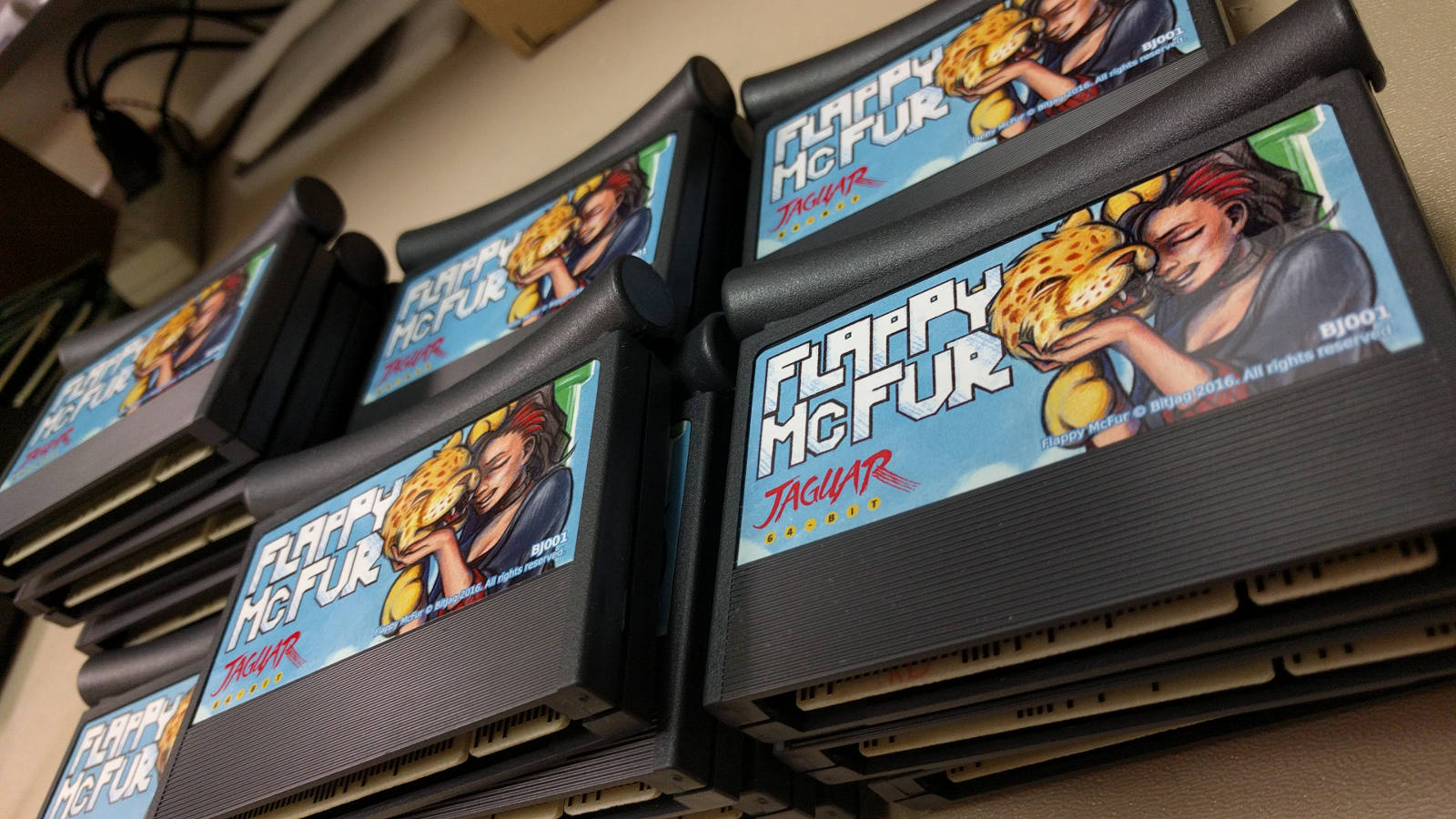
  • Tales of a Jaguar Head | Flappy McFur Atari Jaguar Homebrew

    Tales of a Jaguar Head | Flappy McFur Atari Jaguar Homebrew

    Three years of learning. Three years of programming. Three years of drawing. And it all should have taken three weeks. Flappy McFur is finally in the hands of the masses, or at least the 80 or so individuals that were actually interested.

    The beginning

    Atari Jaguar programming has been something that my brother and I have been interested for years, and ever since returning from my church mission from Taiwan, I have made it a primary goal.

    With the formation, branding, and online presence establishment, all that was left was for me to learn a bit of programming, and start making games. To help facilitate the programming learning curve, we took on a request from Paul Westphal to put together a demo specifically for his booth at the Portland Retro Gaming Convention.
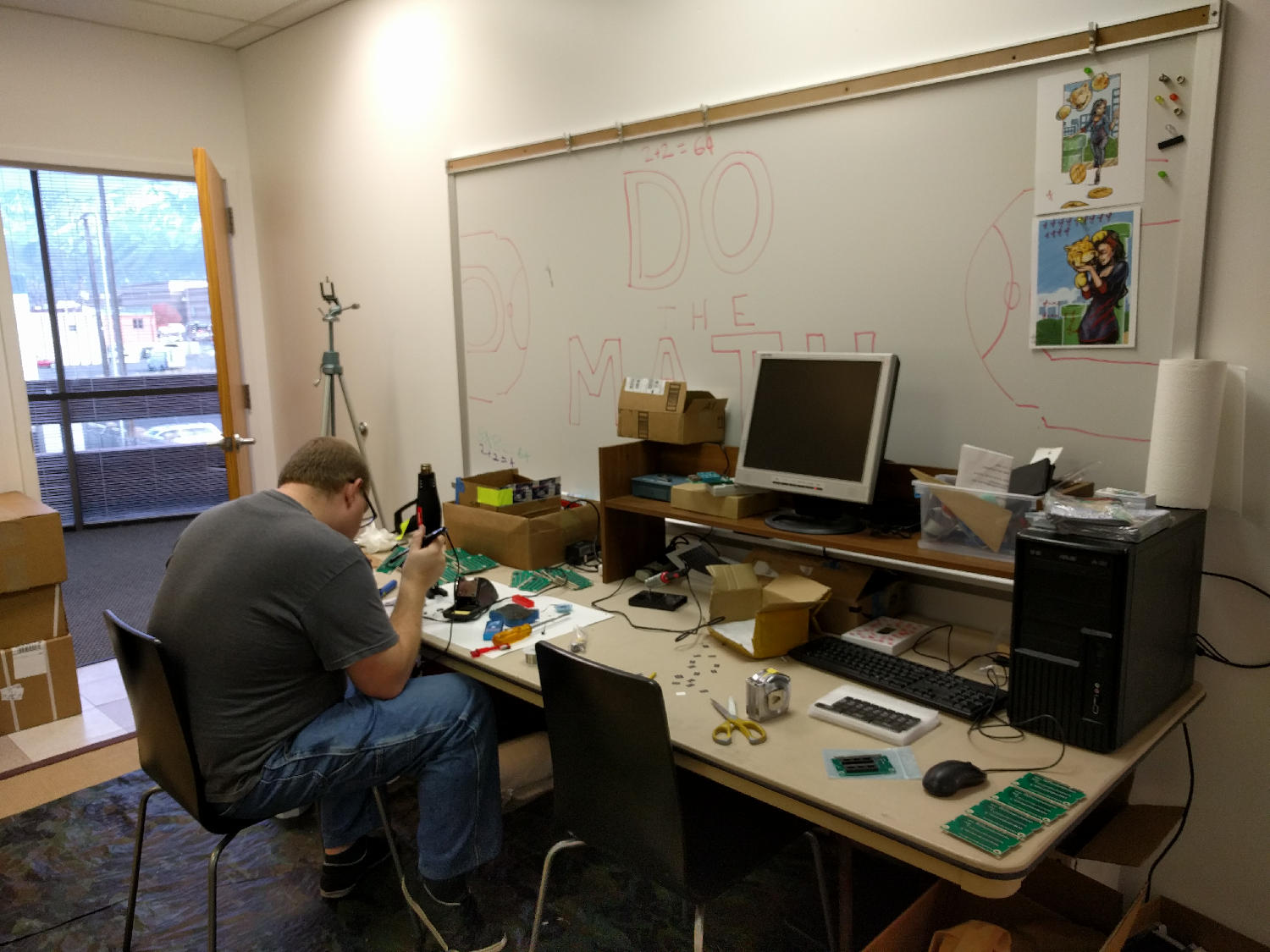
    Programming at this time wasn’t completely foreign to me, but C programming was. So this little demo was a great opportunity to start my C coding adventure, and it led well into Flappy McFur.
    Development

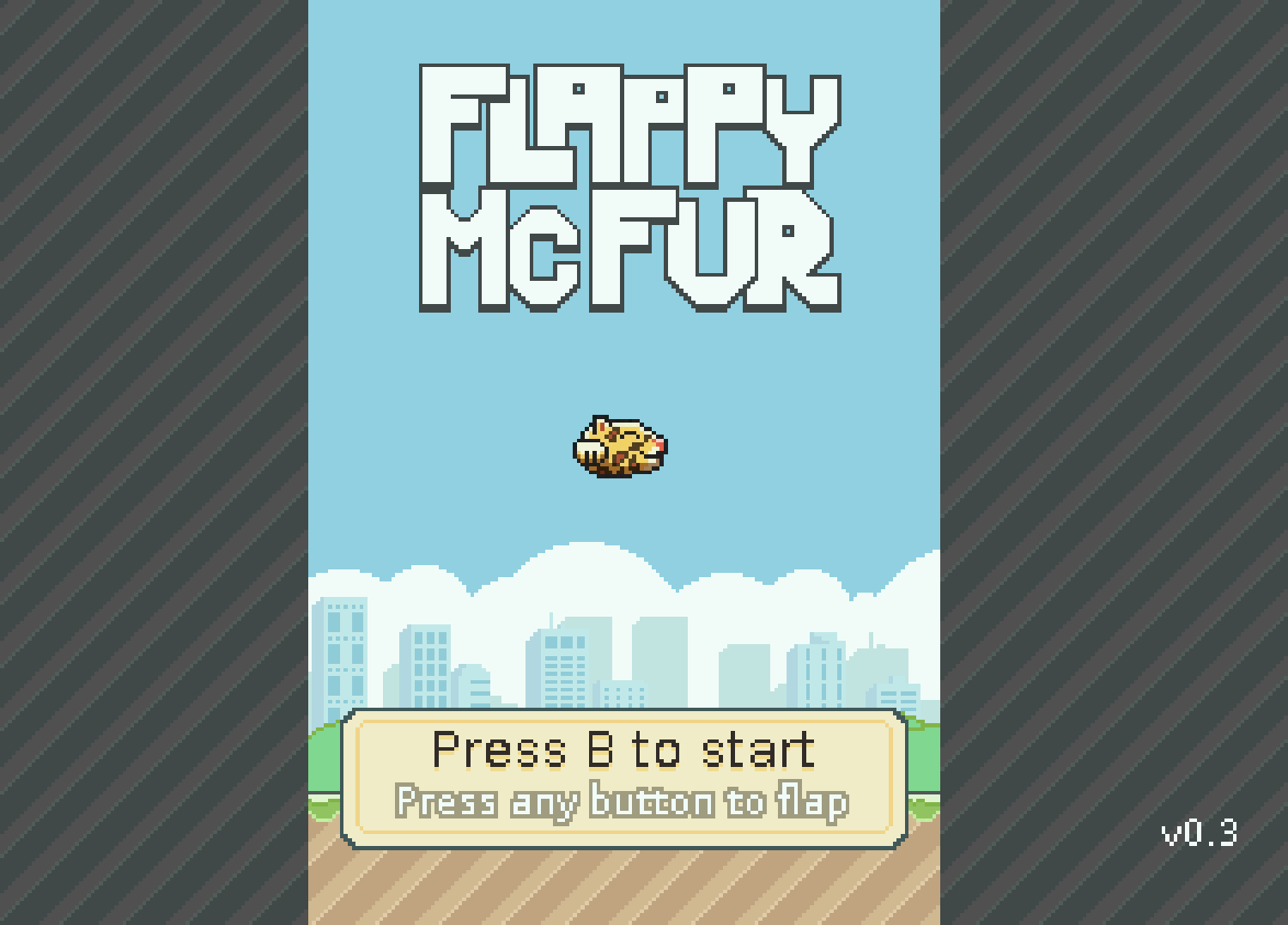
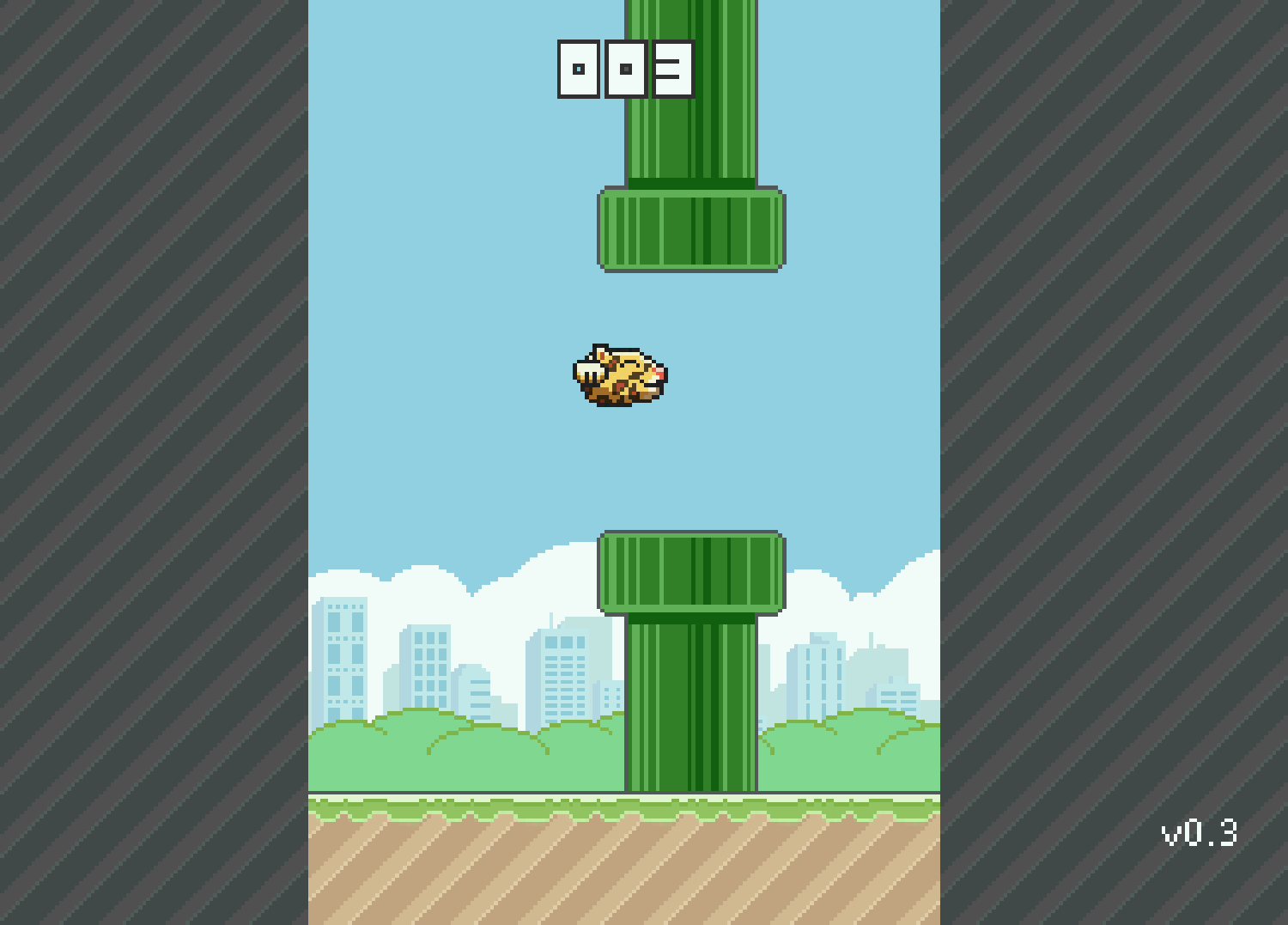
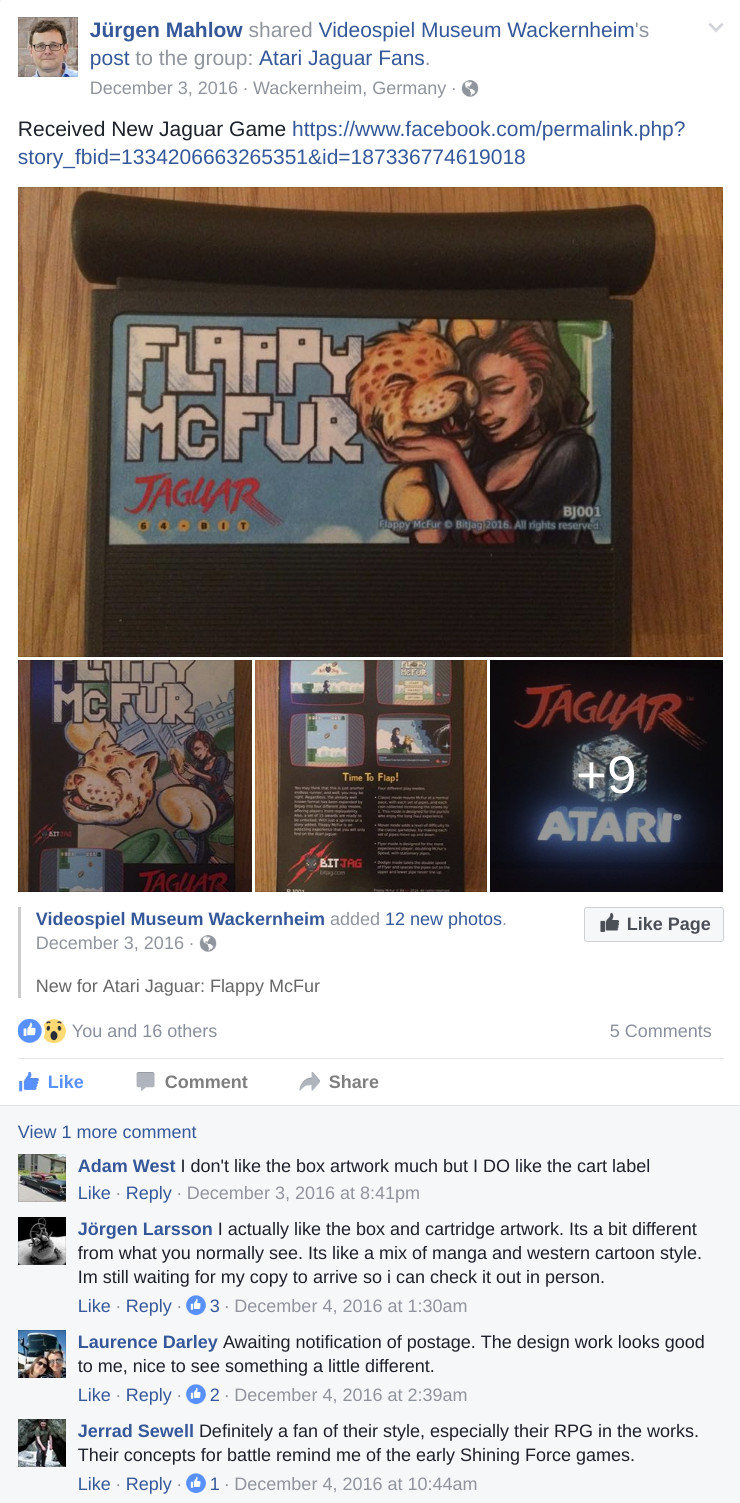
    Version 0.3 was the first fruit of my efforts, and the fruits were bearable. The gameplay was there, but it was far from enjoyable. McFur moved around more like a horizontally locked fly than a disembodied Jaguar head falling in style. But, the core gameplay was there, and this little demo was well received by those out there who look out for anything new for the Jag.

    After the demo though, there was polish. I planned out menu systems, with a simple achievement system. Worked out four different play modes that changed the speed of the game and how the pipes behaved. With Bryce’s help, a simple text engine was implemented to facilitate menus, and he also implemented the save code system. All of this along with an end game made Flappy McFur a much more noticeable product and a more enjoyable experience overall, with a bit of depth to the gameplay.

    Development also included some play testing. Usually I would setup our Jag-In-A-Box at family parties, Draw Nights with friends, or just let all the nieces and nephews have a go at it. It was interesting to see how some people caught into the gameplay really well, while others found it impossible. It made balancing the difficulty a bit of a challenge, this is one reason why the additional play modes were added. To try and accommodate a wide spectrum if players.

    Even though the game overall is fairly simple, there was a massive learning curve for me to overcome. Overcoming that learning curve has had its payoff though, and I feel much more prepared to takle our next project.

    Art

    Sprites and Palettes

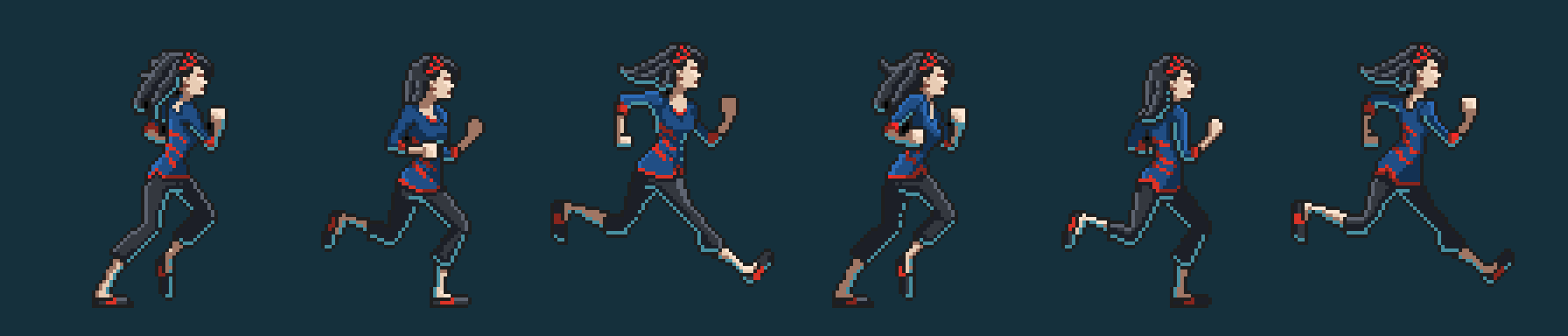
    Though few, painting sprites for this game was a highlight if the whole experience. Working with reduced color palettes and putting together simple animations like rotations of objects and the achievements, to more complicated animations like Cutter’s run cycle, all were a joy and remind me how much I love animation in general.

    We used the Gimp primarily for sprite work. I have been using the Gimp for nearly two decades now, and it is great support for paletted graphics with a more than adequate tool set. I did use Krita for Cutter’s run cycle animation because they had recently implemented a basic 2D animation tool set in Krita, but with the lack of palettes graphics support, I still needed ti pump those graphics through Gimp to prep them for Jag. Krita is supposed to have palettes graphics support in the near future, and I am looking forward to using Krita exclusively in my pipeline.

    With all that in mind, when I actually started putting together Flappy McFur, I was a bit lazy in figuring out how to do 8-bit paletted graphics. So, for a long time, I was dealing with performance issues, especially when music was implemented. It wasn’t until late in development that most of the graphics were converted to 8-bit paletted sprites for 16-bit sprites. This was a good switch though as it allowed us to do fade transitions easily.

    Box and Manual Art

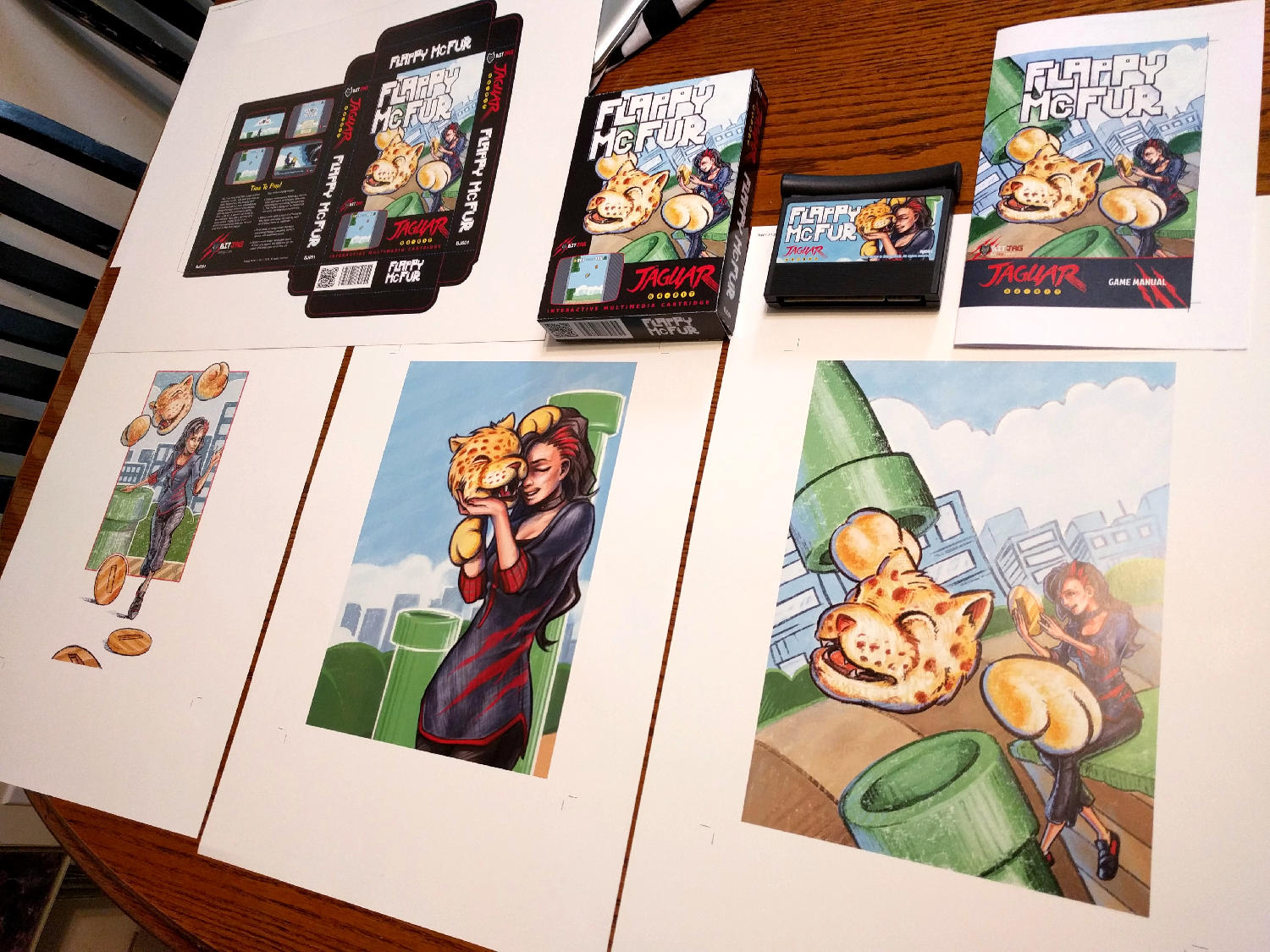
    I initially wanted to do more artwork for the game, but the 3 primary illustrations ended up working really well for our needs.

    The first illustration was used to establish the character relationship and heavily influenced the game in both tone and narrative. The colored pencil and crayon look of the artwork was intentional as well. It gave it an elementary, non serious feeling throughout, inviting everyone to come and pick up the controller and play.

    Video Content

    I tried to keep any video advertisement minimal since the beginning. Primarily because if how time consume it is, but also because of the uncertainty of actually releasing the game.

    When we decided to actually finish up the game and release, effort was spent to get a good video for advertising the game, and a good gameplay video. At the end of the day, I am not too sure how much these videos helped at the end if the day, but they were nice to have, and will be good to have for history’s sake.

    The release and marketing

    Newsletter

    In and effort to reward our mailing list subscribers, we made sure that everyone that had signed up knew about the game first, we also provided a small discount for them as well. The discount was taken advantage of by a handful of our subscribers, and is something that we will definitely do in the future.

    Press Release

    It was fun to actually learn how to put a press release together for news websites. I distributed to a handful of people, with little response. Again, this was good to get familiar with, and it serves a good historical purpose. You can read the press release here.

    AtariAge post

    We had a great response from the AtariAge community. With part of the press release and other details about the project, including videos, we began selling the moment the announcement hit the forum. AtariAge Forum Thread – http://atariage.com/forums/topic/258180-flappy-mcfur-homebrew-now-available-to-order/

    Before people actually had the game in their hands, many of the comments were about the pixel art, and general support for the release. Responses to gameplay have been… mixed, maybe. Its hard to tell if people don’t want to say anything bad about it, or they are just a bit frustrated about its’ difficulty. Either way, below are a few reactions for the AtariAge forum thread.

    Hyper_Eye

    My wife and I enjoyed spending the evening playing Flappy McFur a couple nights ago. It’s certainly addictive. I found myself getting the controller back less and less. My wife and I probably haven’t played Jaguar together in 10+ years. She buys me Jaguar games as gifts and watches me open them. Maybe she’ll watch me play a bit. It was nice to actually play together. Thanks for the effort you put in to it!

    Swansea_Mariner

    Wow this game is hard, I just can’t get past pipe no. 9! I really like the dogger mode.

    Saturn

    Thank you (all) for this wonderful addition to the Jaguar library. Hope to see more.

    Reviews

    By way of reviews, we did have one website review and one YouTube review. Both favored the game. Thank you for the reviews! Links below.

    A small mention on the Retro New Roundup – https://youtu.be/FfeYMKsktFM?t=3m22s

    A more full written review on a more official news website – http://thegg.net/retro/atari-jaguar-gets-a-brand-new-homebrew-game-called-flappy-mcfur/

    A fairly thorough video review done by crusherbad64 – https://www.youtube.com/watch?v=5lo5AHXrhCU

    A nice little mention of Flappy McFur on a French Jaguar fan blog – http://jagfan.canalblog.com/archives/2016/11/03/34517203.html

    Other Social Media Posts

    Links

    Flappy McFur BitJag Project Page – http://bitjag.com/project_5.html

  • Books and Machines | Illustration

    Books and Machines | Illustration

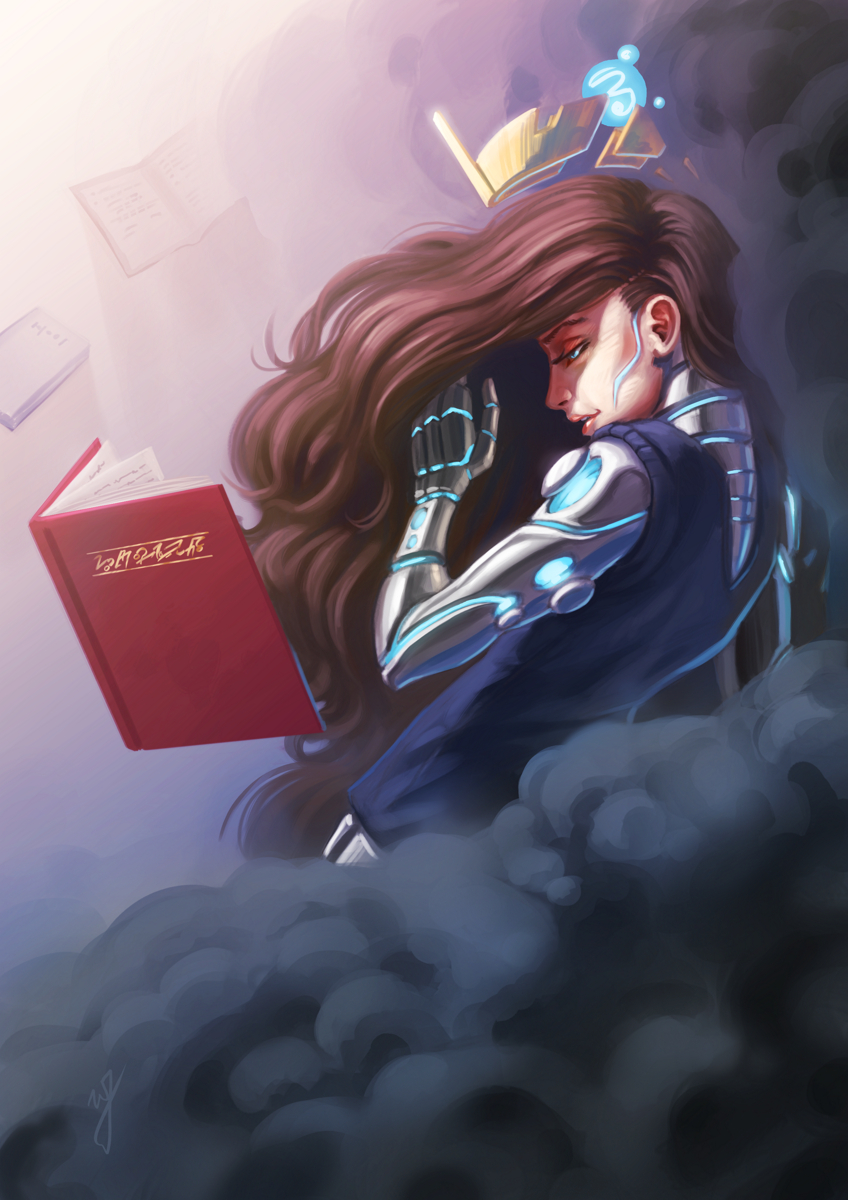
    I wanted to finish one more piece before Inktober begins. I started this one over two months ago for one of the Krita forum challenges, “Futuristic Princess”. I got the sketch done at that point, but couldn’t find the motivation to finish it at the time.

    machines_and_books_web

    books_and_machines_close_ups

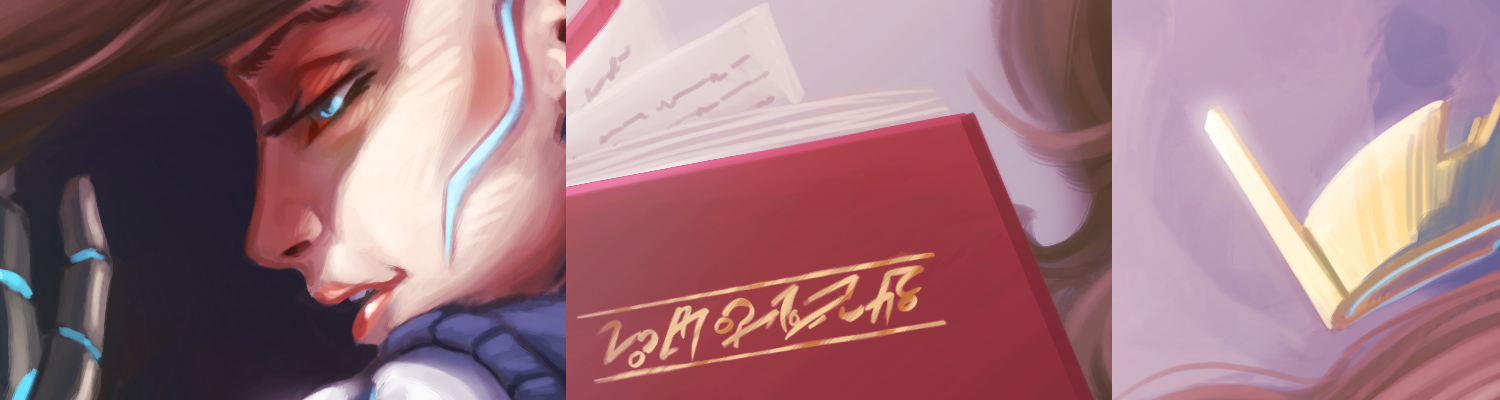
    After reviewing some of my sketches and unfinished work, I decided to finish this one over the past couple days. The color scheme has been floating around in my head since I started the sketch, and I really like how it came out in the end. The depth in the clouds was fun, and also playing around with the metal materials of the characters arm and back.

    I am glad that I was able to finish this one before Inktober, and I plan on submitting this for the Krita Kickstarter art book. I just need to figure out what black and white piece I want to submit along with this piece.

  • Flow | Krita Kickstarter T-Shirt Challenge

    Flow | Krita Kickstarter T-Shirt Challenge

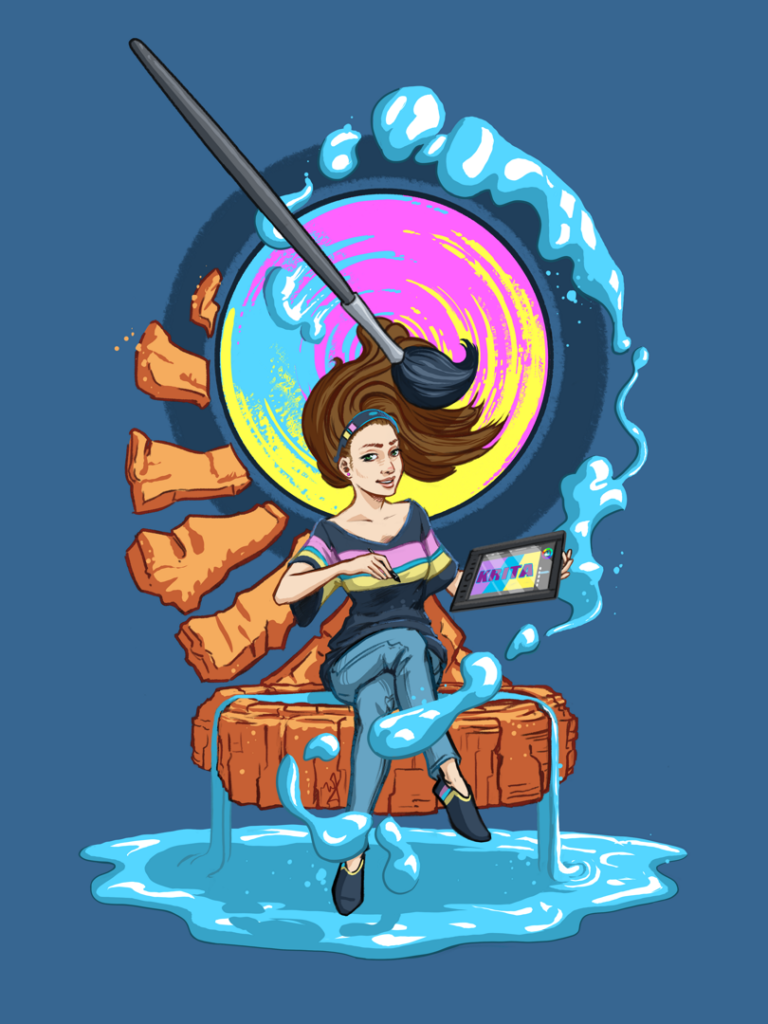
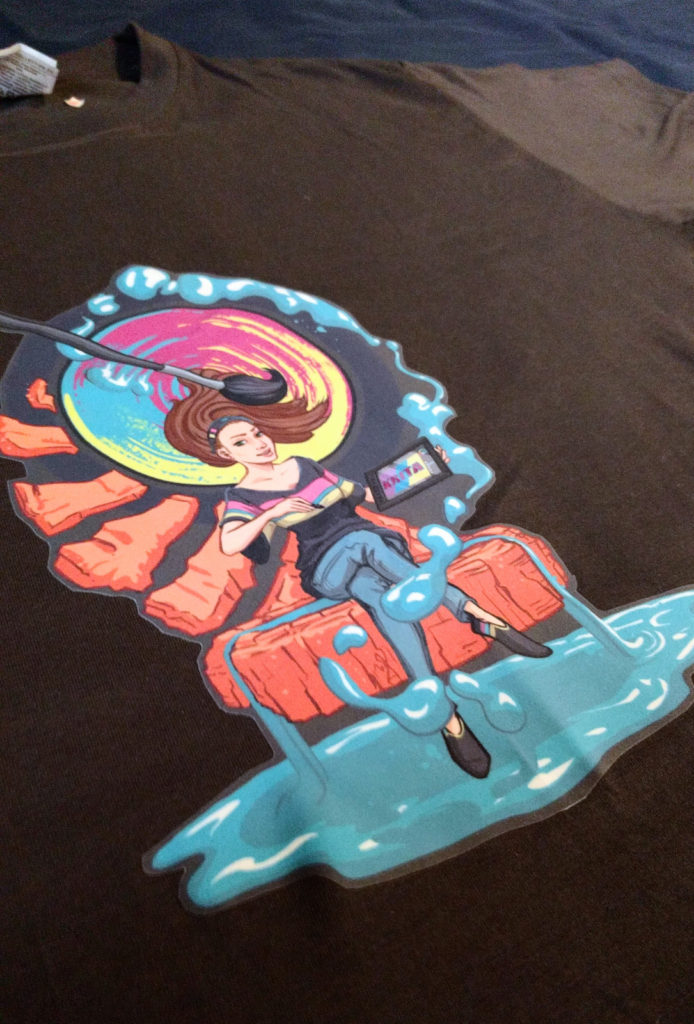
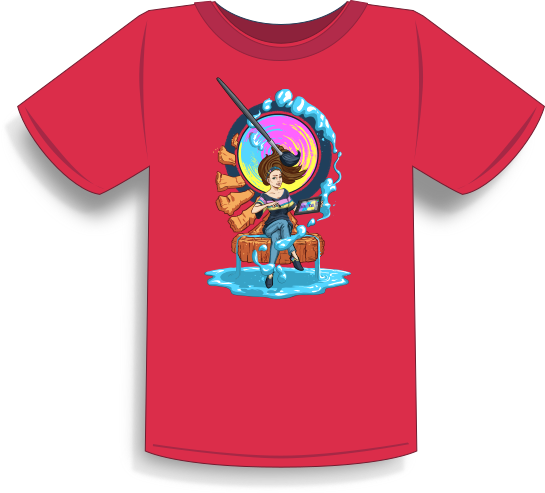
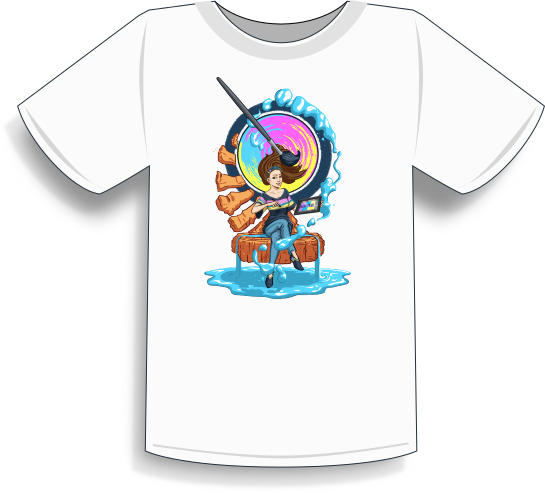
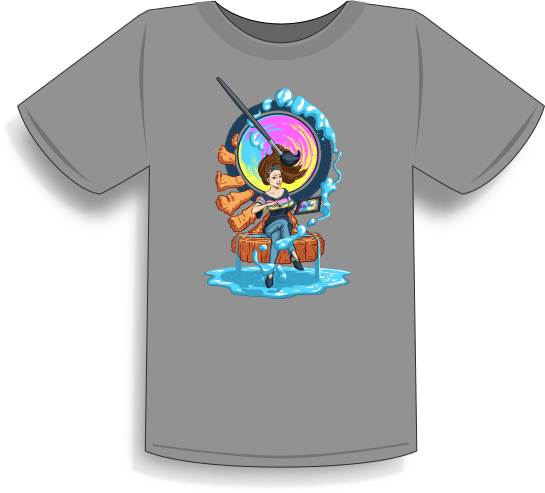
    The people who support Krita pulled off another amazing Kickstarter this year. And in a way, they are allowing everyone to contribute on an artistic level as well. This is where my next illustration comes in.


    This year, along with new features for the next version of Krita, the group behind Krita is producing a book filled with art from various artists that use Krita. They are taking submissions currently, but this is for a future post. This post is about the T-Shirt design challenge on the Krita forum. This is something that I could not simply pass up.

    With this much freedom I wasn’t sure how to start.

    The topic was “Flow”, and nothing else. With this much freedom I wasn’t sure how to start. So taking to the great library that is Google, I started doing searches for the word “Flow”. Synonyms, images, music, etc… all to draw inspiration from. I eventually started thinking about my home here in Utah, and challenged myself to think of the things that are generally attractive that could relate to “Flow”. This led me to the most unlikely of places when someone things of the word “Flow. Southern Utah, a dry desert, and almost the exact antithesis of the word “Flow”.

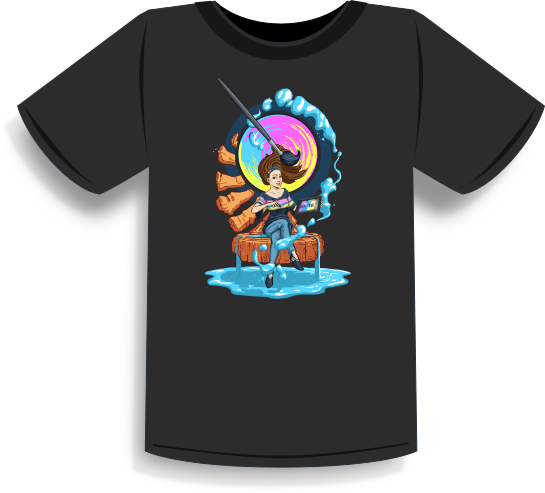
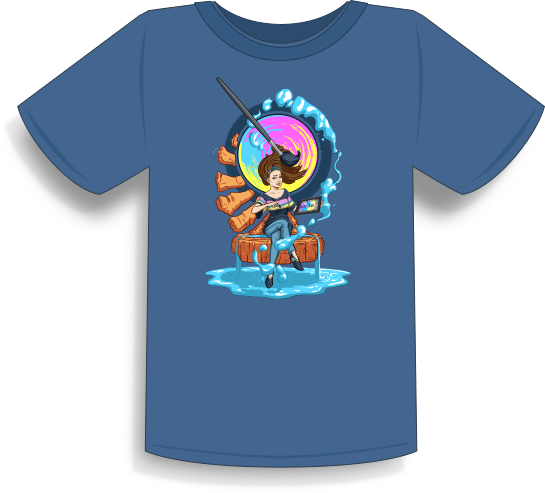
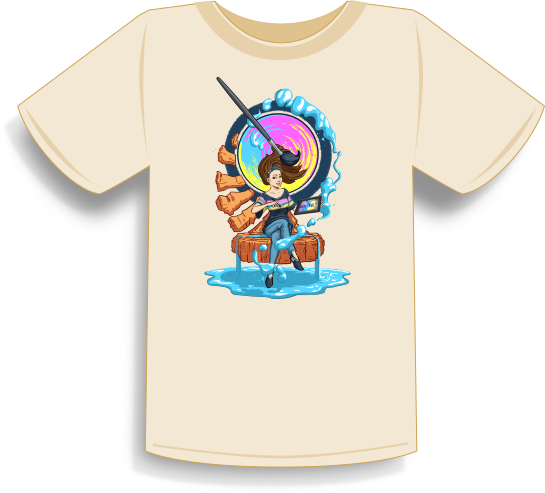
    The reason why I was brought to this place was the color of the rocks. For those of you who aren’t familiar with Southern Utah, the rock can be very red in places. This went well with some of the other notes I had written down at this point for the painting, which included the colors from Krita’s logo. The red of the rocks of Southern Utah would provide a good and attractive contrast to the blue floating paint I already had in mind before I had put pencil to paper.

    …I realized that message wasn’t in the detail of the rock, but instead in the very nature of the rocks

    But this was the catalysis to a greater idea, and one that I think is what brought the painting together in it’s last stages. If you watch the time lapse video, you will see this in action, but I first draw the rocks with detail, and symmetrically. This looked “Okay” but it didn’t seem to fit, but soon after spending a while drawing detail into these rocks, I realized


    that message wasn’t in the detail of the rock, but instead in the very nature of the rocks. The juxtaposition of the rock against the flowing nature of paint was the key, as I discovered a way to include the rocks in a more harmonious way than before. By focusing on the silhouette and the visual movement of the rock, instead of the rocks themselves.

    So now the flow of the paint, and the flow of the rock, mirror each other, matching the “S” curve of the woman, and just tying everything together in a neat little package.

    At the time of writing this, voting has opened for challenge, and even if I don’t get the most votes, I am still very proud of the piece, and the troubleshooting opportunity that it presented.
  • Time to Work | Illustration

    Time to Work | Illustration

    Working with some different brushes in Krita, and pushing myself a bit with some different kind of lighting challenges. This piece was also a bit inspired by the The Art of Loish, a recent Kickstarter art book I received.

    6-9-16_time_to_work_web

    I really enjoy Loish’s style, with her use of a stark outline colors to break her subjects away from the rest of the painting. She also shows a clever use of color in general, and again, very appealing all around. Some of the elements in my painting were inspired by these things, in the sense of picking an interesting palette to work with, and a unusual lighting setup to help push those colors a bit.

  • Regret in Creation | Myst Fan Art

    Regret in Creation | Myst Fan Art

    Mysterium, the Myst convention, is making its way to my hometown this year, and they had open submissions for art for their convention book. I caught wind of this just a few days before submissions were due, but I couldn’t miss the chance to show a little Myst fandom.


    creation_and_regret_web

    (SPOILERS AHEAD in the next paragraph, no spoilers after this next paragraph)
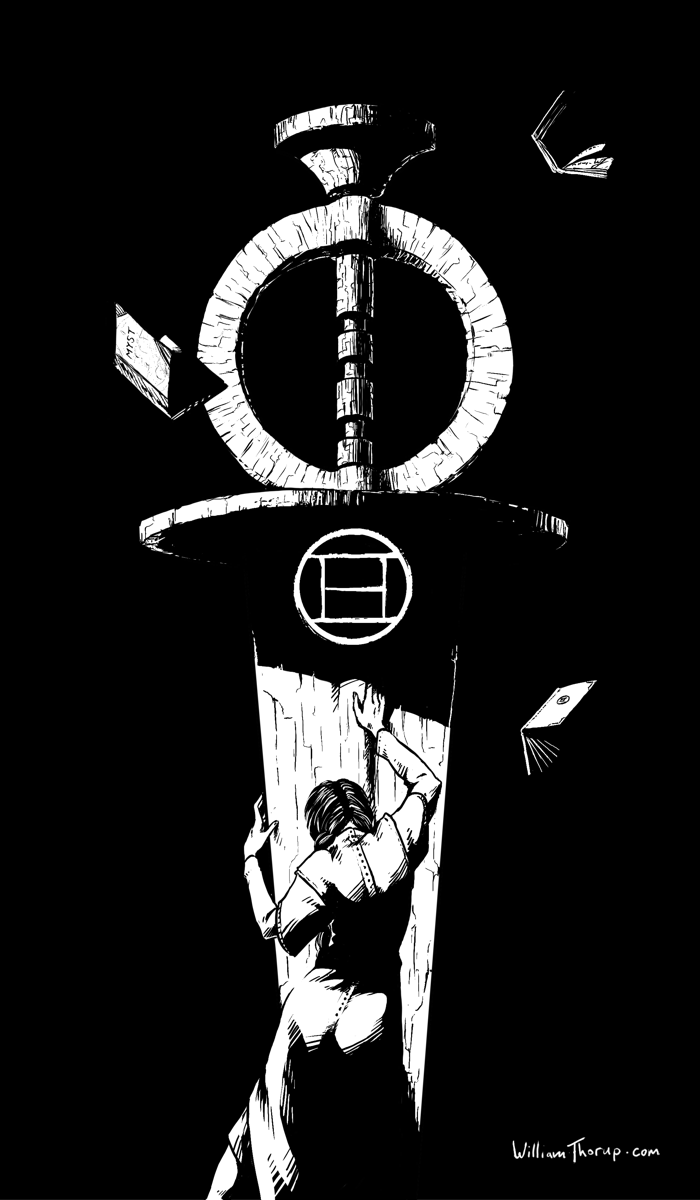
    This pieces features Catherine in a state of remorse for the burden of being able to create ages (worlds that are created by writing books, which you can then enter into), but unable to save them. The Moiety Dagger is a symbol of the group that she helped in Riven (Age 5), and despite her efforts, the age still fell apart. Even though she did not write the Riven age, she must feel the burden that any world she creates has the potential to fail, with the loss of life.

    I have very fond memories of this game, as I used to watch my oldest sister play it, along with with a few of my other siblings, when I was young. I was always fascinated by the environments, and the immersive sense of foreboding that engulfs the game. As I got older, and was able to solve some of the puzzles, the game became even more immersive for me, and I was hooked. I soon played Riven, and Exile (Myst III) and the experience was further enhanced by better audio better graphics, more acting, and an even more engrossing story.


    The story is simply awesome. Taking steam-punk elements and god-like powers of creating worlds and people, with the premise of absolute power corrupts absolutely and what do you do when it does corrupt, is fascinating, and makes for a unique adventure with every game. This includes the three novels as well, well written, and a must read for Myst fans.


    regret_in_creation_close_1


    A may do a few more illustrations based on the some of the other thumbnail sketches future.