William Thorup

Illustrator, Motion Graphics Designer, Animator, and VFX Artist

Category: All

  • Books and Machines | Illustration

    Books and Machines | Illustration

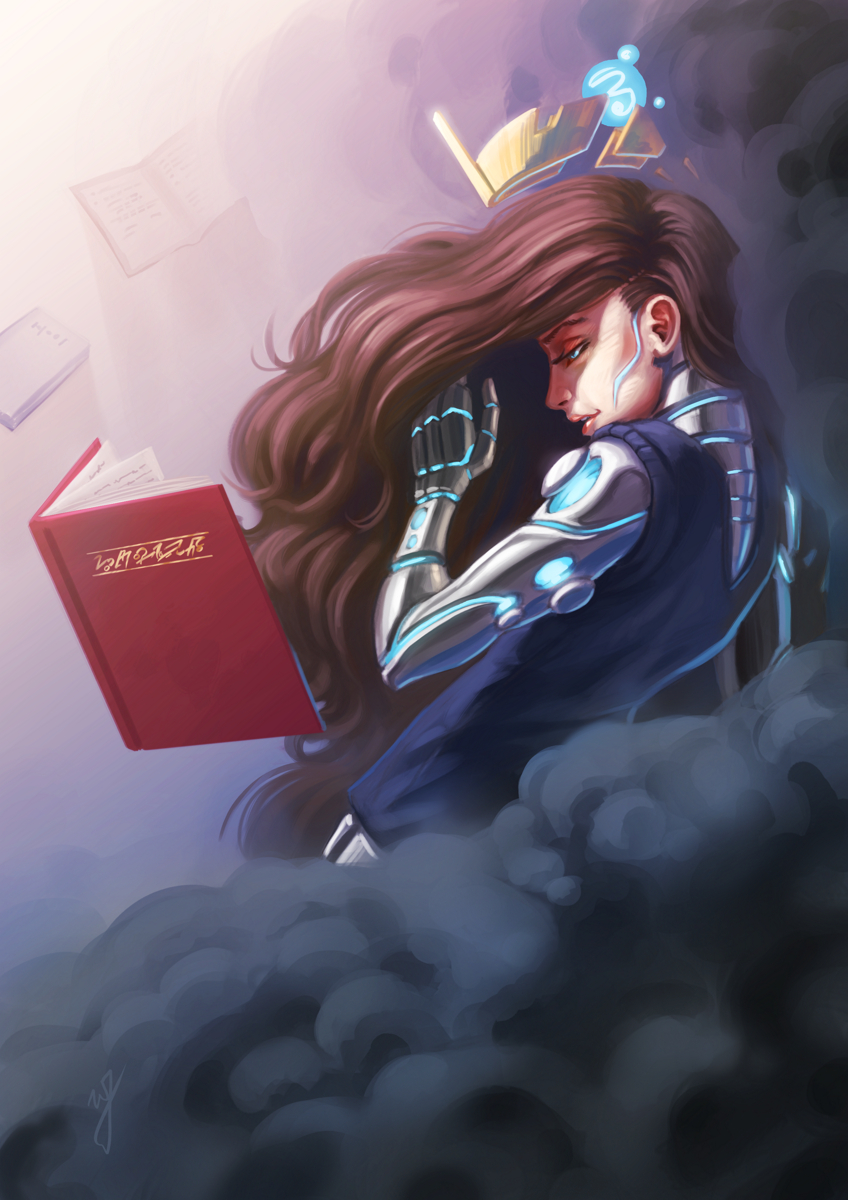
    I wanted to finish one more piece before Inktober begins. I started this one over two months ago for one of the Krita forum challenges, “Futuristic Princess”. I got the sketch done at that point, but couldn’t find the motivation to finish it at the time.

    machines_and_books_web

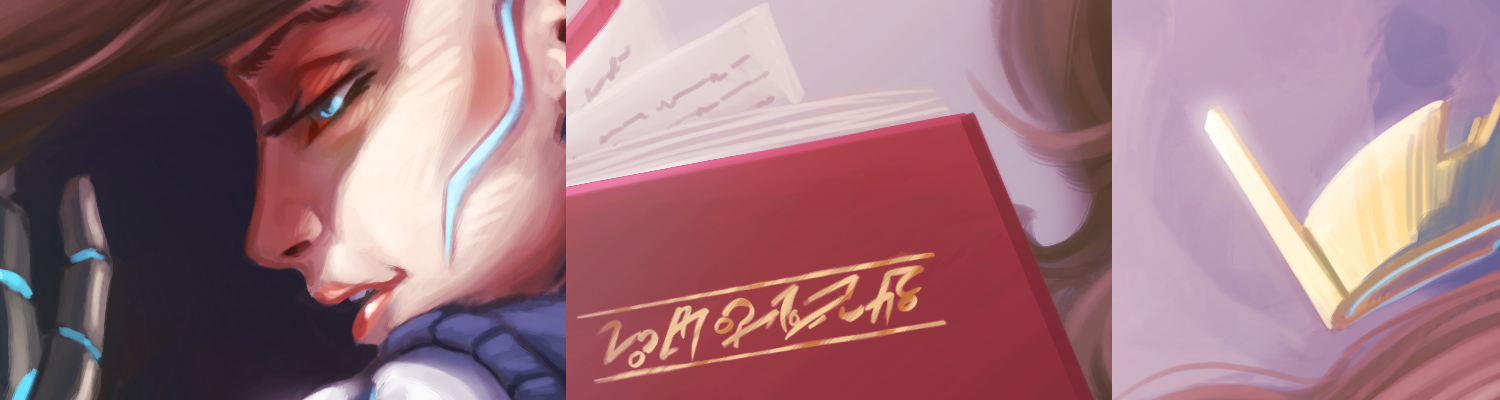
    books_and_machines_close_ups

    After reviewing some of my sketches and unfinished work, I decided to finish this one over the past couple days. The color scheme has been floating around in my head since I started the sketch, and I really like how it came out in the end. The depth in the clouds was fun, and also playing around with the metal materials of the characters arm and back.

    I am glad that I was able to finish this one before Inktober, and I plan on submitting this for the Krita Kickstarter art book. I just need to figure out what black and white piece I want to submit along with this piece.

  • All Curls | Illustration

    All Curls | Illustration

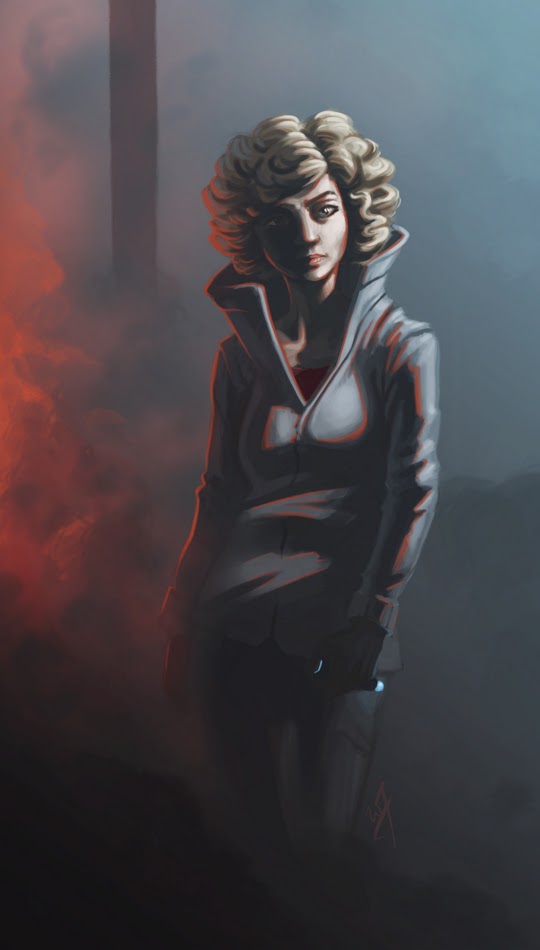
    Was up late last night watching Gotham and drawing, and I liked how Selina Kyle’s hair is so curly. Decided to give blonde curls a try, with a more desaturated palette. And this is what 4 hours and a late night turned into.

    6-23-16_all_curls

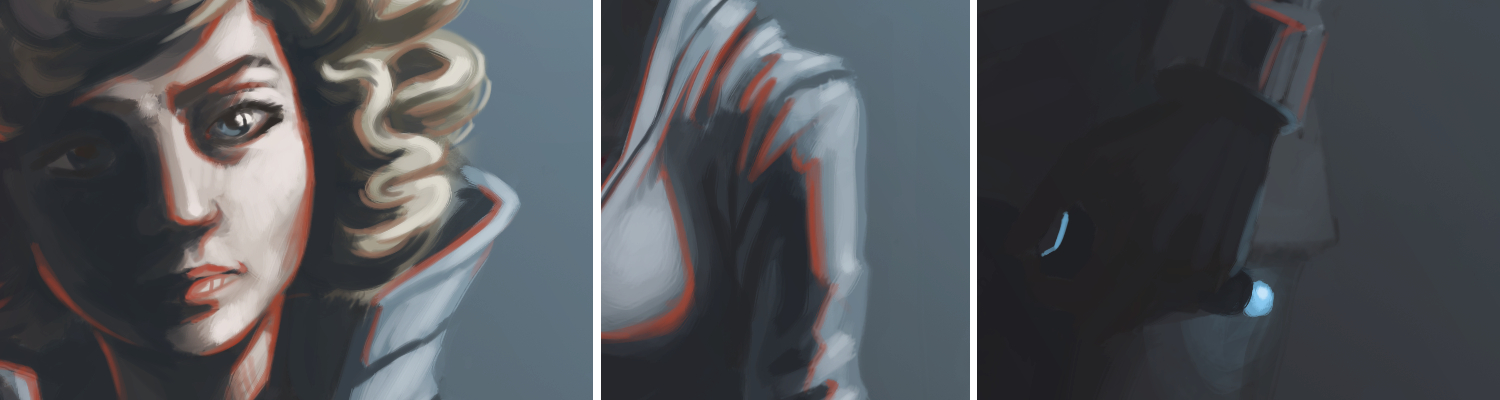
    I haven’t been doing allot of digital painting, and allot more digital drawing recently. I am always surprised with what I can pull off with my rendering skills when I actually do some painting in Krita. I am not saying this to brag, instead because I don’t paint a whole lot recently, it is a pleasant surprise to see improvement in that area. Makes me think what I would be able to do if I were more consistent with my practice.

    all_curls_close_ups

  • Bidding for a Kickstarter Job | Illustrations & Article

    Bidding for a Kickstarter Job | Illustrations & Article

    Working with Kickstarter, and people who wish to start a campaign, can be difficult. What rewards are you going to provide, how do you get people to take interest in the campaign, how does everyone get there rewards at the end of the day, and how does everyone who worked on on the campaign get paid. The questions go on.

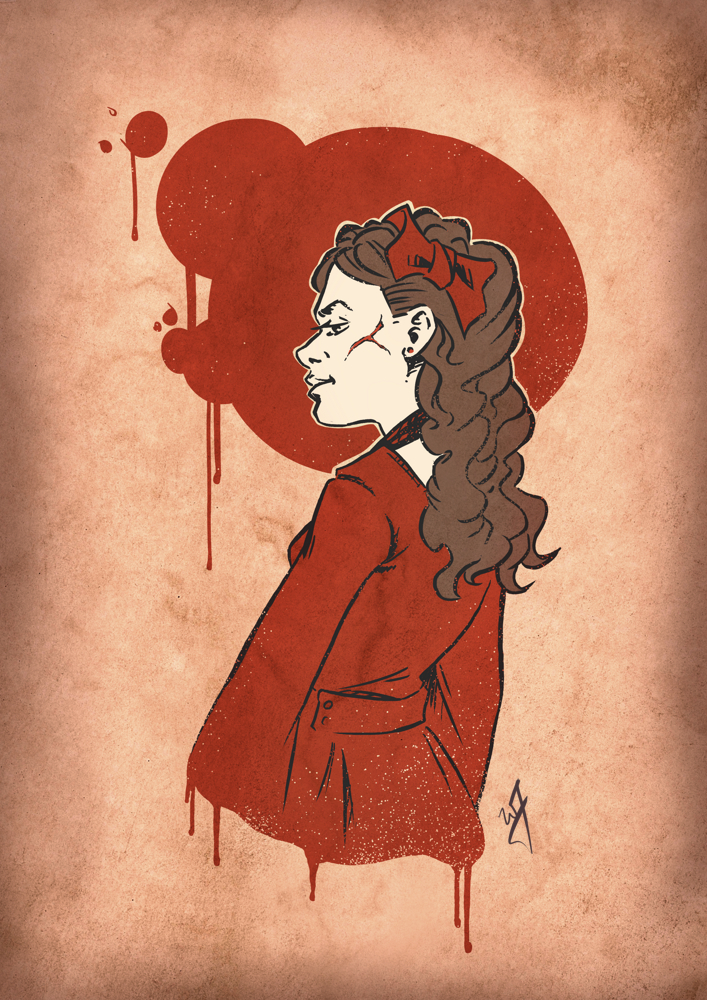
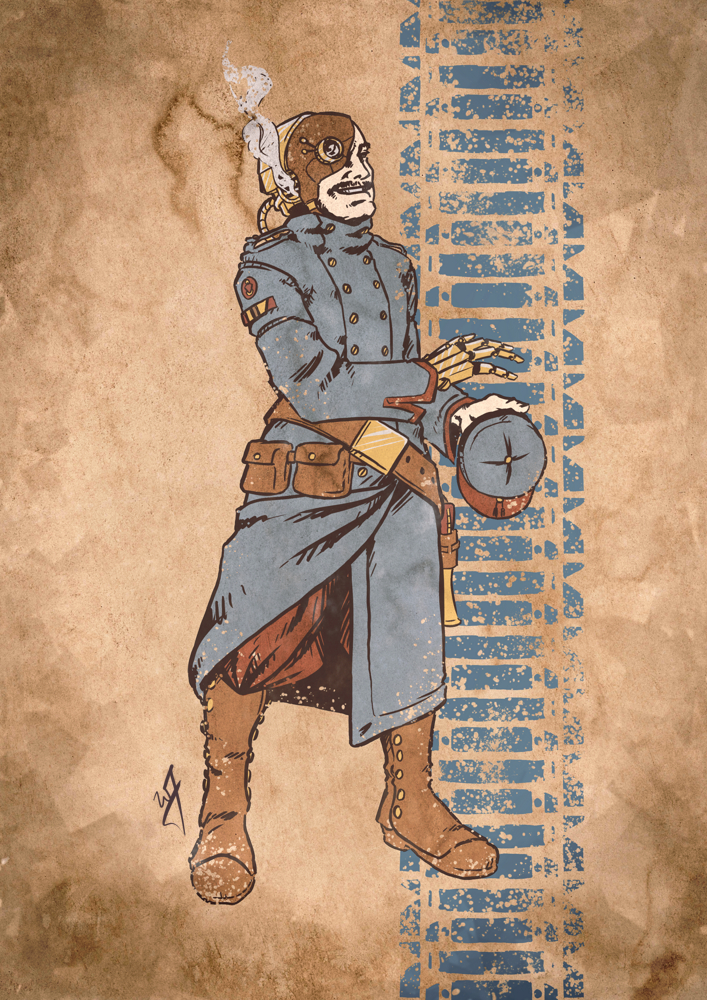
    I had the opportunity to vie for the position as an illustrator for an upcoming Kickstarter campaign (unfortunately I can’t share more details, because I am under a non-disclosure). I didn’t get the job unfortunately, but I would like to share my experience so others who are looking to do this kind of work may have a bit of wisdom before diving in.

    no_blood_required_1_web

    Protecting Your Work

    The creator of the product, after showing me the specifics about the product, was very open with me about how he was shopping for artists to work on his project. He asked that I, along with others, would need to submit some examples of the art he was looking for.

    Naturally, when the campaign creator stars seeing all of these different character concepts will begin to hone down on the look he is going for. This is a great thing to do as a producer, but it does raise a few concerns for the artist. What if I don’t get the job, but the campaign organizer obviously uses your ideas, but with another artist, or, blatantly copies your works. What should you do to prevent and discourage this?

    “This will ensure that your work remains your own until you say otherwise.”

    First, rights to use your artwork can only be laid out with properly signed paperwork. Without paperwork they do not own anything about your artwork until you sign over the intellectual property of your artwork, or, you license the use of your artwork to them for a specific purpose. Communicate early on when working with a campaign organizer, that paperwork is required before they can use your artwork for anything, and preferably before you start moving forward with any art creation. This includes should include before prototypes of the product can be made with your work on it and marketing material that may include your artwork.

    What do you do to protect your work before paperwork. Add a watermark to your image that you send to them. It should include your name (or business name), the year, and a copyright symbol. And if there won’t be paper work for a while, I would add a message to the watermark that says “For Preview Purposes Only”. This will ensure that your work remains your own until you say otherwise, and discourage others from stealing your work. It sends a message that you are serious about your doing, that your work has value, and you are looking for an honest relationship.

    Working with other Artists on a Campaign

    It was pretty obvious that the campaign organizer I was working with had done very little planning for the Kickstarter campaign, or for a future business that may spawn from the Kickstarter. This isn’t necessarily a bad thing, and doesn’t mean they don’t know how. In fact, I am very thankful that this was the case, as it was an opportunity for both me and this individual to really explore what we wanted from the Kickstarter and beyond.

    With that in mind, here are a few questions to ask the Kickstarter Campaign owner/creator in order to better know where they might stand.

    • What is your campaign goal?
    • Who else will be gaining from the campaign funds directly? (partners, spouse advisory, close friends, etc…)
    • How will you be fulfilling campaign backer rewards?
    • After the campaign is funded and backer rewards are fulfilled, what are you planning on doing to do with your new product?

    There are more questions that can be asked, but these few will help you quickly determine how far along the planning is. Confusing answers or no answers to these questions could be a red flag for you, try to find someone you trust to talk about these answers with, to help determine how much of a risk your taking on if you do get the job.

    The Value of Art In Relation to Mechanics

    In the book illustration world, the artist along with the writer almost always receive a percentage of sales from the publisher. The percentage varies, and in this story the exact percentage doesn’t matter much. What matters is that the business world, publishers, artists, and writers alike all understand that art holds an importance in selling a product, both in marketing and in the user experience of the product. I included this concept in what I expected to receive monetarily for my work.

    “You work is not just a pretty picture, but can and should work with and improve the overall user experience.”

    At this point, I had already submitted my sample artwork, and they loved it. After this great feedback, they requested my costs. I sent them a base production cost along with an expected royalty based off of net sales of the Kickstarter product, out side of the Kickstarter campaign (future sales through distribution channels other than Kickstarter). The response I received was disappointing.

    The point of contention was the royalty. At first, the reasoning for them not wanting to give a royalty was because they considered me an non-established artist, and that asking for a royalty was inappropriate on my part. For anyone who might be wondering if valid train of though, it usually isn’t. They continued to try and talk me out of it, with the partially valid idea that I don’t bring much value to the Kickstarter, because I don’t have a large social media following. In the end I learned that this is what they were really looking for in the end, someone with an online following.

    This part of the story taught me three things. First, by sticking to my guns about the royalty, I was able to draw out what the campaign organizer was looking for, someone with an online following. This was definitely a part of the bill I couldn’t fill, and it was clear to both of us that I wouldn’t work out for his plans.

    A Kickstarter includes backer rewards that will include your artwork on other giveaways other than the product itself. This could be signed prints, your signature on on the product, unique artwork for specific backers, etc. Just remember if your artwork is going to be prominent on the product, it will probably be prominent elsewhere, and there isn’t any reason why you shouldn’t get a kickback for that.

    The third thing I learned, after counseling with other business professionals, research, and just my gut feeling, is that the value of my work can, and probably should, extend beyond just the cost of production. You work is not just a pretty picture, but can and should work with and improve the overall user experience. Not to mention it’s use in marketing materials to help sell the product. Anyone who doesn’t understand this on some level, is someone I don’t want to work with.
    tanks_and_steam_1_web

    Pricing Yourself

    What you should charge your client is always a difficult question to answer. Keep in mind I am talking about the base production cost to produce the art, or the time it takes to actually draw your pictures. When pricing yourself out, here are a few tips.

    “Getting a good sense of this information allows you to ask informative questions, and formulate an informative decision…”

    Research was a great starting point. Now you won’t find much about making artwork for a Kickstarter, but, there is standard pricing for illustration work. Everything from book covers, to card games, to children’s books. Getting a good sense of this information allows you to ask informative questions, and formulate an informative decision on how much your worth. My biggest help when finding an answer to this was getting on forums, and talking with people you who might have expectations for pricing out art, and other artists. Don’t be afraid to shoot a message to other artists that have been pricing themselves out for years.

    As for technically how I came up with a number. Doing the sample pieces actually helped out allot. Because I had done the few example pieces, I learned what the campaign organizer was looking for in a final piece, and how long it took me to create it. At this point it was a matter of counting how many paintings I needed to do for the project, multiplying that by my hourly rate, and then adding a bit on top to account for revisions, and variable research time. Don’t forget your research time.

    If the client doesn’t like your honestly calculated numbers, you have a few options. Standing your ground is what I would suggest. It tells yourself and the client that your work has value, and that you want to establish an honest relationship. This is a situation good for everyone.

    The other option is to lower your price. If you lower your prices, after calculating a number that is truly fair according to what you know, and you get the job, you will now be working with the knowlege that you aren’t being paid what you are worth. This will effect your work, most likely negatively. Your establishing, consciously or sub-consciously for both you and the client, that you aren’t actually worth the money that you think you are worth. This situation is not good for anyone or the project itself.

    Client’s will sometimes come back with comments like,”Well, this other artist is only asking for half of what you want.” If you believe that you are giving what the client wants, then this isn’t a competition with other artists, and they are saying this to drive your price down. Also, at this point things become very subjective, if they can afford every artist that has submitted artwork, they will end up picking the artist they like best. Comments like this also usually mean they like your artwork, but they don’t like the price. If they like your work, they should like your price, unless they simply don’t have the budget to afford you. In that case they should find someone else, or scale back the amount of work they need done if possible, in order to afford your work.

    no_blood_required_4

    If You Don’t Get the Job, What Do You Do?

    Ah… The best part. Dealing with rejection. My best piece of advice is to explore the experience. That is the primary reason why I am writing this article. It is an opportunity to reflect on what you learned, what future expectations should be, share what you learned with others, and a take a chance to enjoy the process.

    The work you might have done for free doesn’t have to go to waste. Include it in a portfolio targeted at similar Kickstarter projects, and go find more work. With your new found experience the next fish should be easier to catch.

    Conclusion

    Overall the experience was great for me, and I believe it was good for the campaign organizer as well. It helped me better appreciate the value of my work, how to communicate that value to others, and what to look out for when it comes to forming partnerships for specific type of project. I hope that this helps someone out, let me know if you have any questions or comments.
  • Atari ST | SatanDisk Partition Loss Fix/Modification

    Atari ST | SatanDisk Partition Loss Fix/Modification

    So I have had my SatanDisk for about a year now, and it has been an absolute joy to use. Transfering files to and from my Atari ST to a modern computer is a snap. It allows me to work on my pixel art easily (I need to post some of this some day…), and allows me to back up my programming work easily as well. If you are still and avid Atari ST owner, I highly suggest at least getting this. There are some better options out there now (like UltraSaTan and CosmosEX), but this one is so simple to use, and relatively cheap to get.

    With all that it has going for it though, there is one thorn I haven’t been able to pull out since the day I bought it. Seemingly random partition table loss on the SD card, making data hard to restore without using a hex editor. Sometimes the partition table becomes corrupted when I power everything down, or forget to power off the SatanDisk before pulling the SD card. All I know for sure is that it is happening, and I am not the only one who has had an issue with it.

    When I set out to see if others were having a similar issue as I was, information was sparse. Most people were complaining about a flaky DMA chip (way over my head kind of stuff), but all these users were dealing with STe and Mega ST’s, I am still using my lowly 520ST. Then when poking around Jookie’s site (the creator of the SatanDisk, there was a listing in the Download section about someone else having the same problem as me, and on the 520ST.

    After examining the two pictures included in the fixes ZIP file, I soon realized that the SatanDisk I had bought from this seller on Ebay (seller: darekp324 ) was using a different PCB layout than the original schematics. This is the main reason why I am doing this post, to help those who may have bought the same model of SatanDisk I did. This mod keeps the SatanDisk from ruining the partition table on the SD Card. Lets get started.


    Tools and Supplies

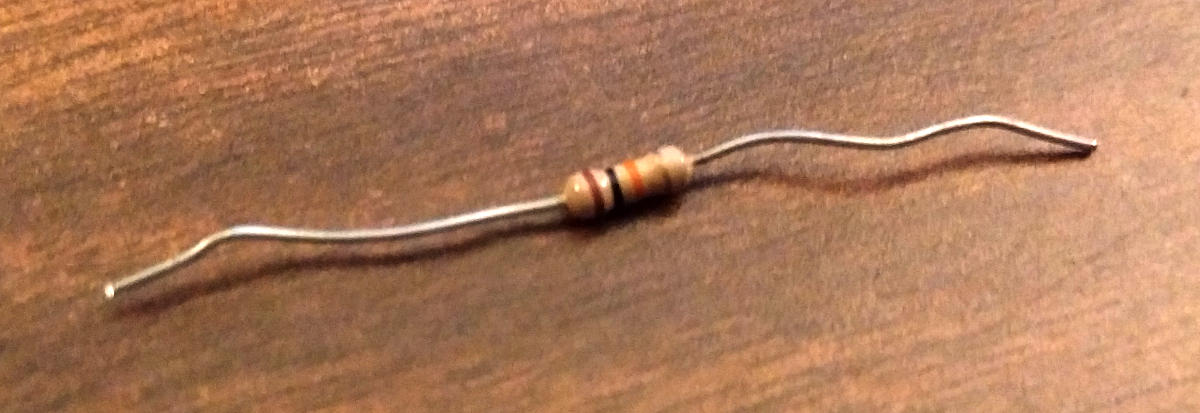
    You will need your trusty soldering iron and some solder. A pare of wire snips, and a 10K ohm resistor (colors: brown, black, orange, gold). A small flat head screw driver and a hammer.

    resistor_10kohm

    10K ohm Resistor

    Opening the Case

    The maker of this particular SatanDisk decided that a permanently sealed 3D printed case was the solution to encasing this wonderful device unfortunately. And if you are worried about damaging it a little bit, then this isn’t the tutorial for you. We will need to take the top and bottom layers of the case off.

    Put the case on it’s side and using the the flat head screw driver, find a point to split the case open about 1/2 cm from the top of the case. A couple taps of the hammer on the screw driver should begin to drive the layers apart. Now just work your way around the edges, separating the top from the rest of the case. Do this for the bottom of the case as well.

    Soldering Points

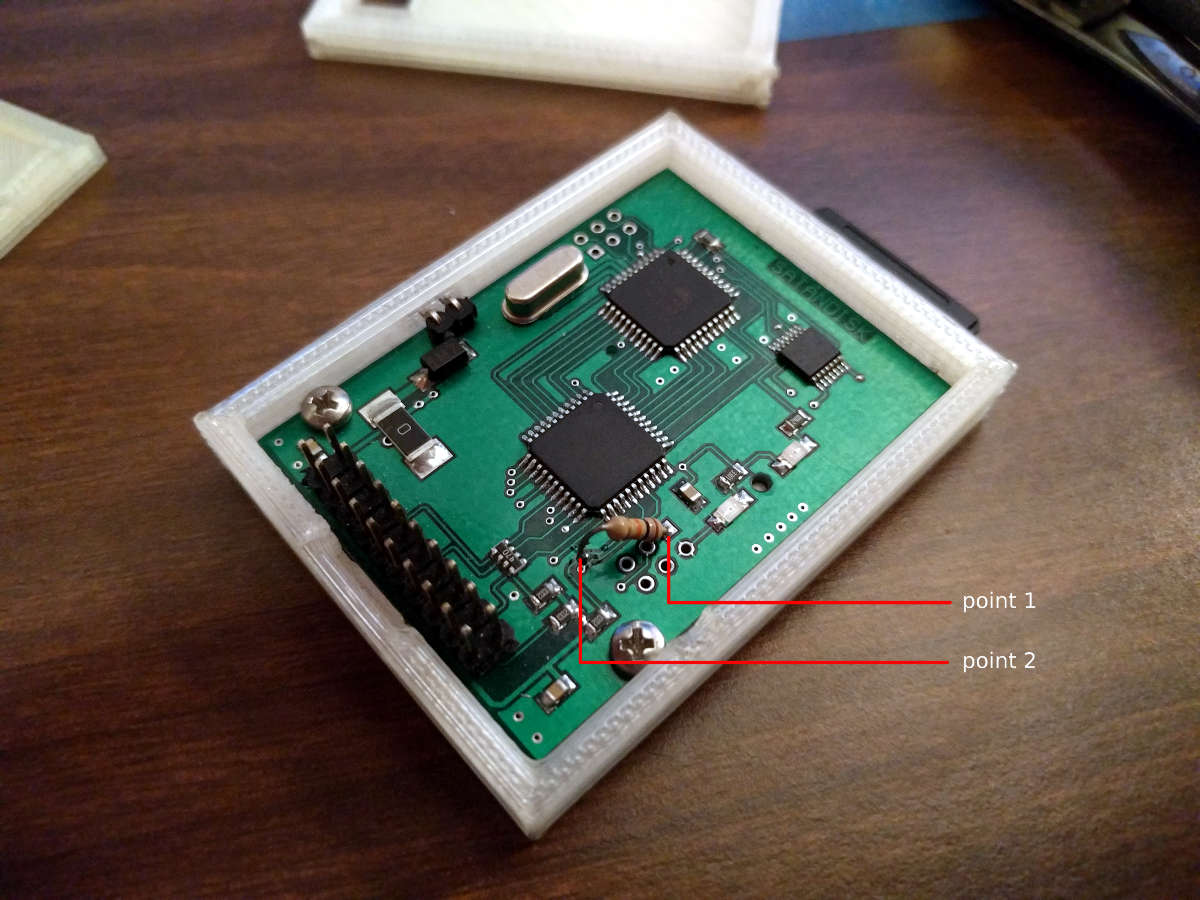
    This is where you will save a bit of time, about 10 minutes, because I was able to determine where to attach the resistor after following a few traces. Here is a picture. Solder at the points marked. Point 1 is a through-hole, and you will be soldering on the back, while point 2 is on the top surface of the PCB and will require very little solder to attach your resistor to it.

    satandisk_diagram

    Click to Enlarge

    After soldering your resistor, you will be done. I just used some tape to put the case back together, or move it to a different case, and you are good to go.


    Fairly easy, and I hope it saved you a bit of time. I have tested it somewhat thoroughly. Pulling out the SD card while everything is powered on, power cycling the SatanDisk, etc… and the partition table lived through it all. Please let me know if it didn’t work for you, so I can reassess where the resistor needs to be soldered. Time to go play some Rodland.

  • Flow | Krita Kickstarter T-Shirt Challenge

    Flow | Krita Kickstarter T-Shirt Challenge

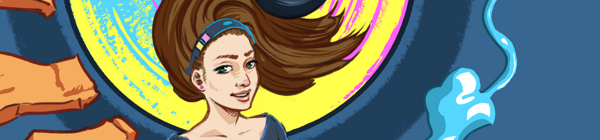
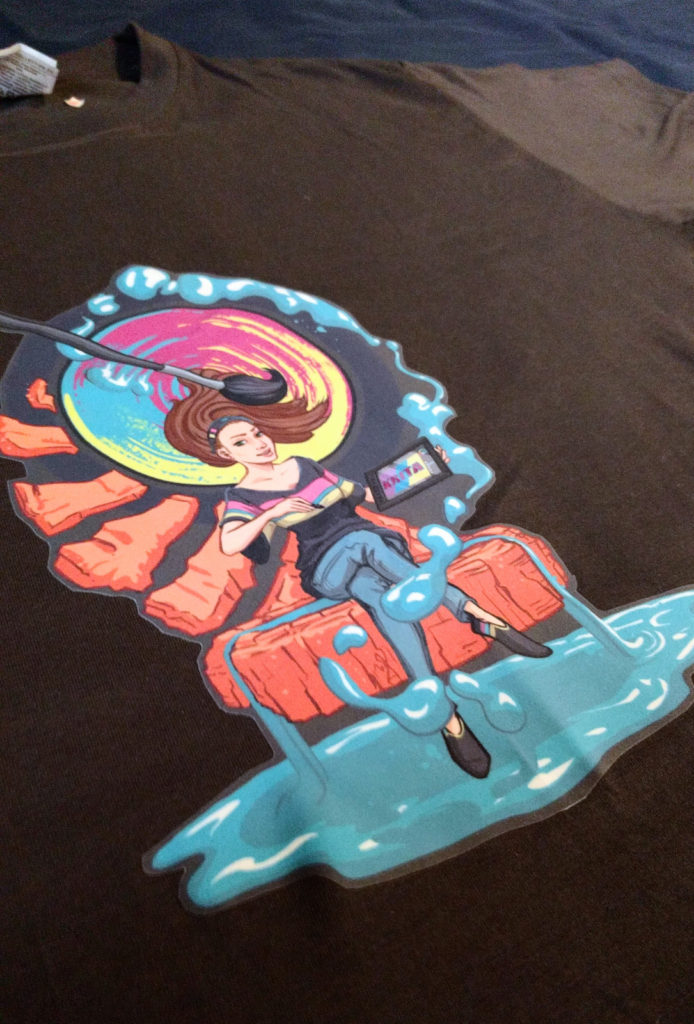
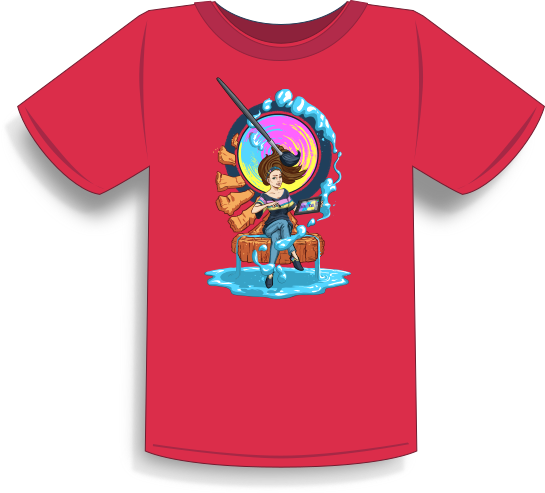
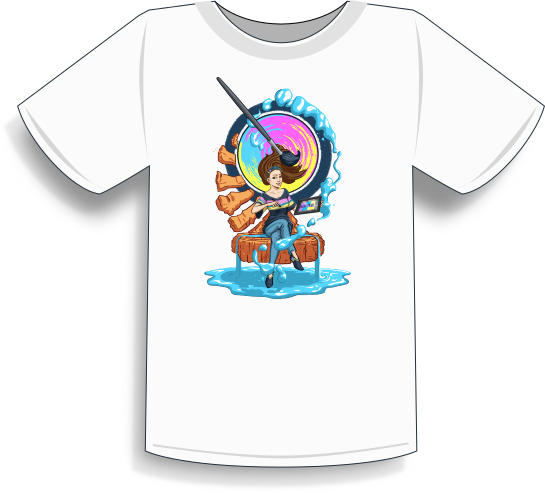
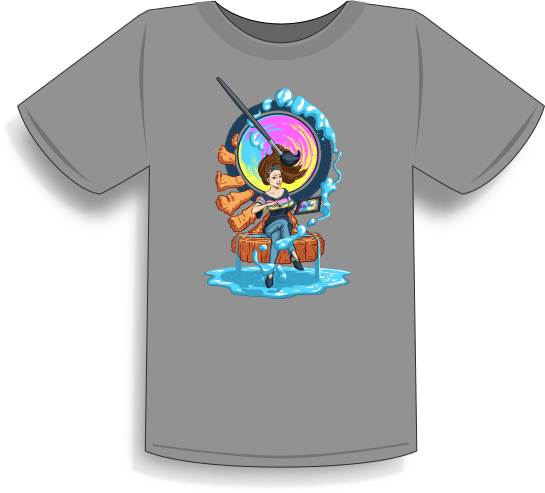
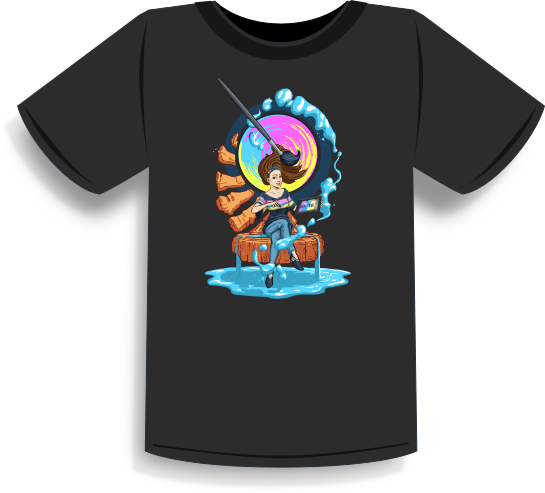
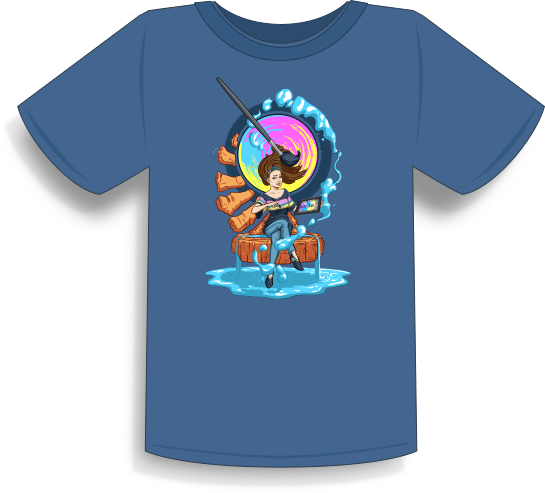
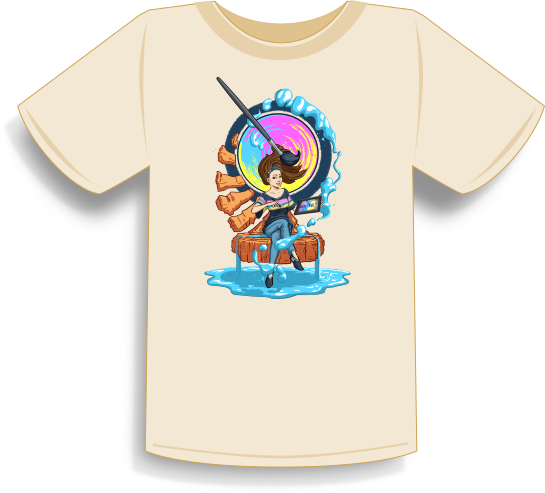
    The people who support Krita pulled off another amazing Kickstarter this year. And in a way, they are allowing everyone to contribute on an artistic level as well. This is where my next illustration comes in.


    This year, along with new features for the next version of Krita, the group behind Krita is producing a book filled with art from various artists that use Krita. They are taking submissions currently, but this is for a future post. This post is about the T-Shirt design challenge on the Krita forum. This is something that I could not simply pass up.

    With this much freedom I wasn’t sure how to start.

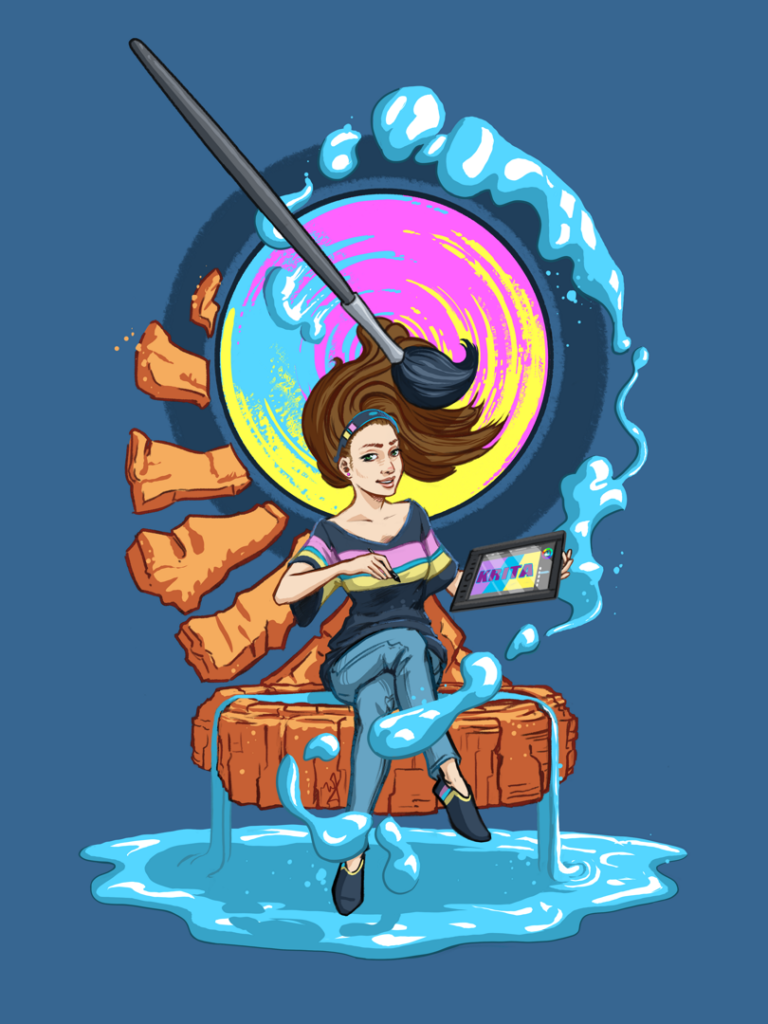
    The topic was “Flow”, and nothing else. With this much freedom I wasn’t sure how to start. So taking to the great library that is Google, I started doing searches for the word “Flow”. Synonyms, images, music, etc… all to draw inspiration from. I eventually started thinking about my home here in Utah, and challenged myself to think of the things that are generally attractive that could relate to “Flow”. This led me to the most unlikely of places when someone things of the word “Flow. Southern Utah, a dry desert, and almost the exact antithesis of the word “Flow”.

    The reason why I was brought to this place was the color of the rocks. For those of you who aren’t familiar with Southern Utah, the rock can be very red in places. This went well with some of the other notes I had written down at this point for the painting, which included the colors from Krita’s logo. The red of the rocks of Southern Utah would provide a good and attractive contrast to the blue floating paint I already had in mind before I had put pencil to paper.

    …I realized that message wasn’t in the detail of the rock, but instead in the very nature of the rocks

    But this was the catalysis to a greater idea, and one that I think is what brought the painting together in it’s last stages. If you watch the time lapse video, you will see this in action, but I first draw the rocks with detail, and symmetrically. This looked “Okay” but it didn’t seem to fit, but soon after spending a while drawing detail into these rocks, I realized


    that message wasn’t in the detail of the rock, but instead in the very nature of the rocks. The juxtaposition of the rock against the flowing nature of paint was the key, as I discovered a way to include the rocks in a more harmonious way than before. By focusing on the silhouette and the visual movement of the rock, instead of the rocks themselves.

    So now the flow of the paint, and the flow of the rock, mirror each other, matching the “S” curve of the woman, and just tying everything together in a neat little package.

    At the time of writing this, voting has opened for challenge, and even if I don’t get the most votes, I am still very proud of the piece, and the troubleshooting opportunity that it presented.
  • Time to Work | Illustration

    Time to Work | Illustration

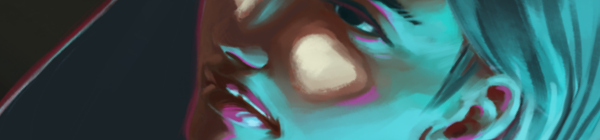
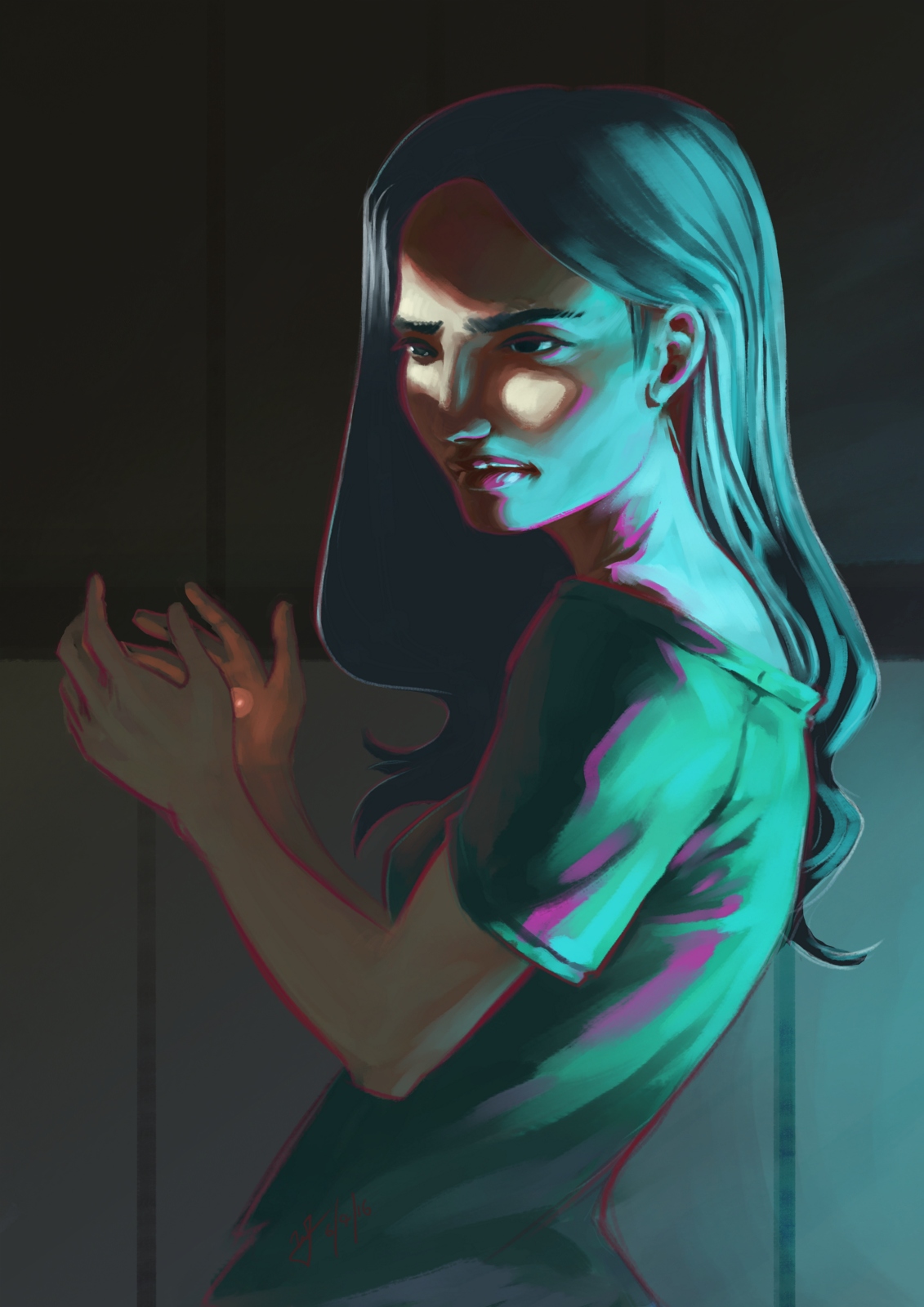
    Working with some different brushes in Krita, and pushing myself a bit with some different kind of lighting challenges. This piece was also a bit inspired by the The Art of Loish, a recent Kickstarter art book I received.

    6-9-16_time_to_work_web

    I really enjoy Loish’s style, with her use of a stark outline colors to break her subjects away from the rest of the painting. She also shows a clever use of color in general, and again, very appealing all around. Some of the elements in my painting were inspired by these things, in the sense of picking an interesting palette to work with, and a unusual lighting setup to help push those colors a bit.

  • Regret in Creation | Myst Fan Art

    Regret in Creation | Myst Fan Art

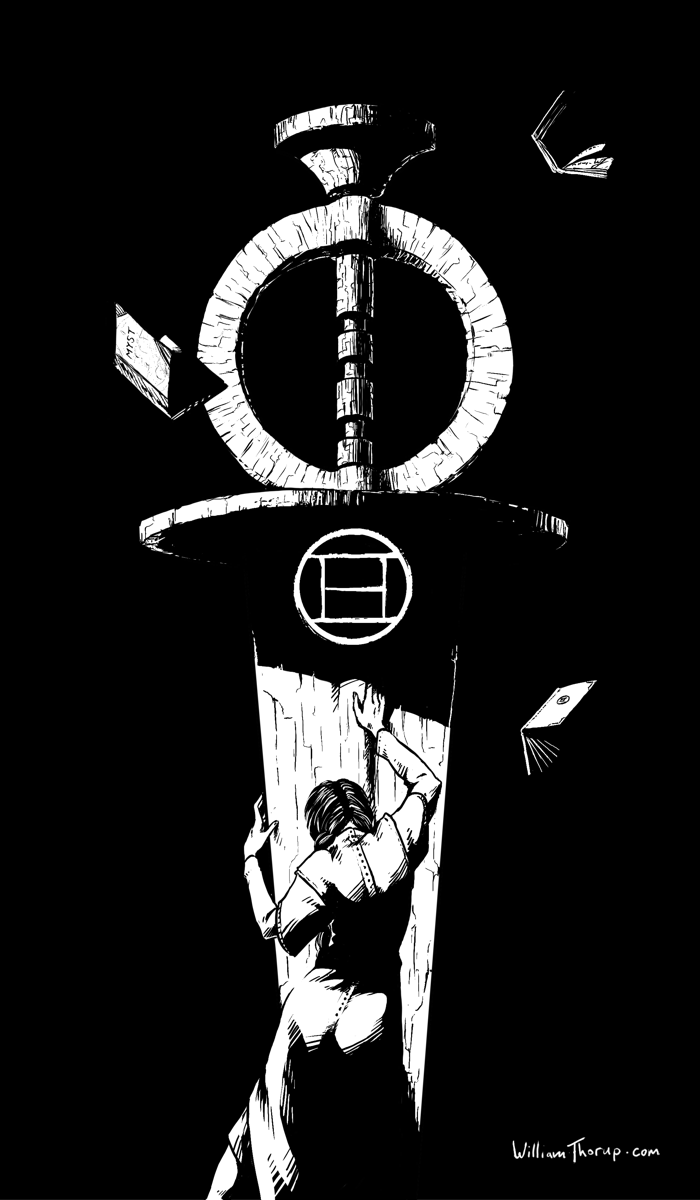
    Mysterium, the Myst convention, is making its way to my hometown this year, and they had open submissions for art for their convention book. I caught wind of this just a few days before submissions were due, but I couldn’t miss the chance to show a little Myst fandom.


    creation_and_regret_web

    (SPOILERS AHEAD in the next paragraph, no spoilers after this next paragraph)
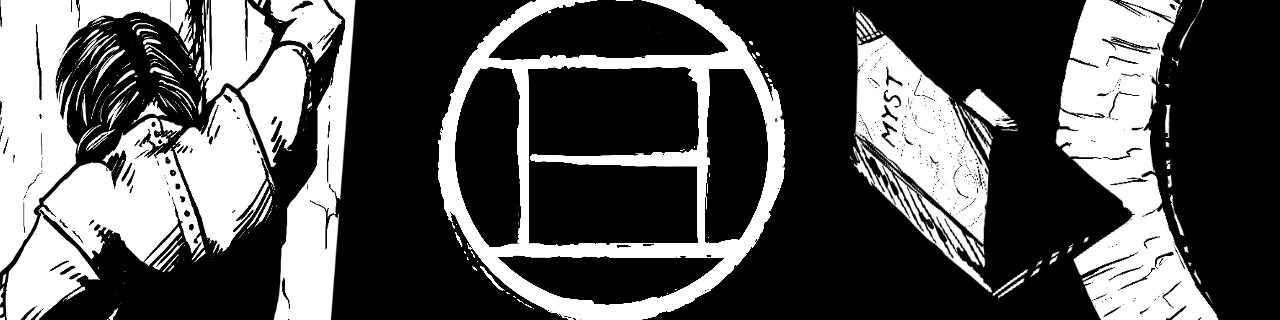
    This pieces features Catherine in a state of remorse for the burden of being able to create ages (worlds that are created by writing books, which you can then enter into), but unable to save them. The Moiety Dagger is a symbol of the group that she helped in Riven (Age 5), and despite her efforts, the age still fell apart. Even though she did not write the Riven age, she must feel the burden that any world she creates has the potential to fail, with the loss of life.

    I have very fond memories of this game, as I used to watch my oldest sister play it, along with with a few of my other siblings, when I was young. I was always fascinated by the environments, and the immersive sense of foreboding that engulfs the game. As I got older, and was able to solve some of the puzzles, the game became even more immersive for me, and I was hooked. I soon played Riven, and Exile (Myst III) and the experience was further enhanced by better audio better graphics, more acting, and an even more engrossing story.


    The story is simply awesome. Taking steam-punk elements and god-like powers of creating worlds and people, with the premise of absolute power corrupts absolutely and what do you do when it does corrupt, is fascinating, and makes for a unique adventure with every game. This includes the three novels as well, well written, and a must read for Myst fans.


    regret_in_creation_close_1


    A may do a few more illustrations based on the some of the other thumbnail sketches future.

  • Mean Old Goblin King | Labyrinth Fan Art | It’s Not Fair

    Mean Old Goblin King | Labyrinth Fan Art | It’s Not Fair

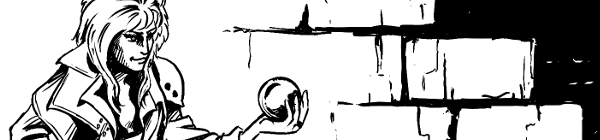
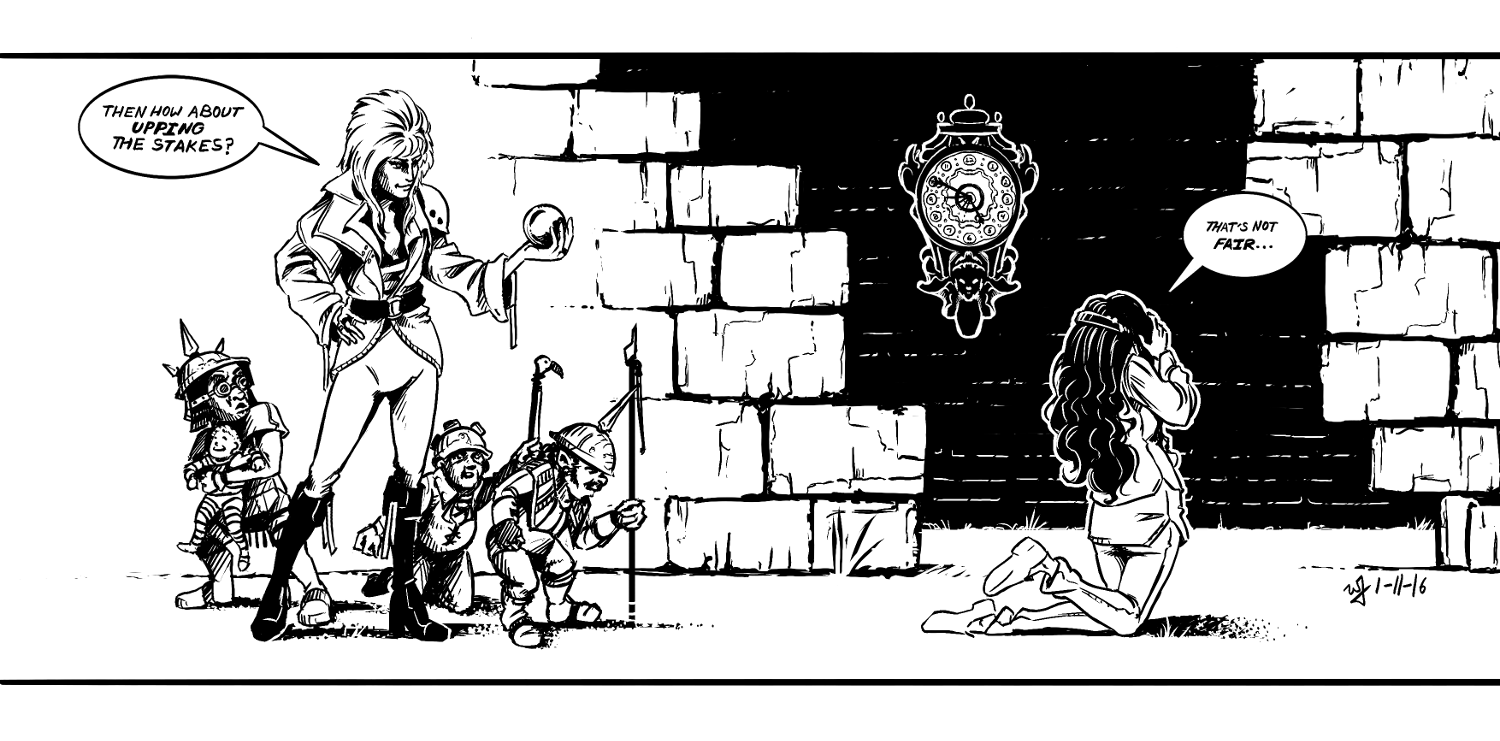
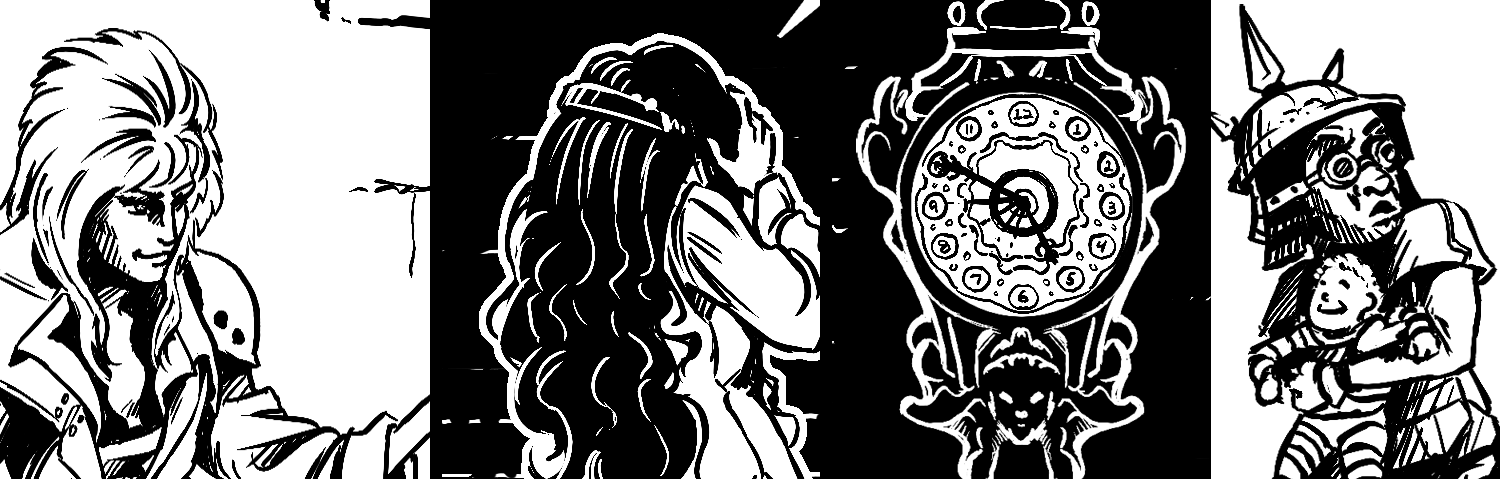
    David Bowie passed away a few months ago, and I have been meaning to post this small piece of fanart on my blog. (If you follow me on Instagram, you may have already seen this).

    its_not_fair_final_web

    Labyrinth is a favorite of mine. Jim Hensen’s films hold quite a bit of nostalgia for me, even though I was not born early enough to enjoy their releases. But many a VHS sat on the the movie shelf that hold allot of good memories for me. One that sticks out especially is the Labyrinth.

    Memorable characters and locations, a simple story line about growing up, with just a little bit of music. It was hard for any young person to not be enamored with it’s content. And unlike the incredible dark tone of Legend (which I appreciate much more, now that I am older), and Dragon Slayer, Labyrinth is much more inviting for a general audience.

    its_not_fair_close_ups

    I didn’t know David Bowie’s music very well, and it seems that many people seem to latch on to that more than this 80’s fantasy film, but the he will always be the Goblin King in my mind. The force that tempts all of us to lay off responsibility for more trivial things.

  • Ink, Gold, and Blood | With Diety – Illustration

    Ink, Gold, and Blood | With Diety – Illustration

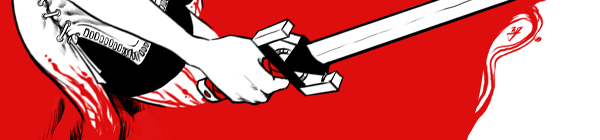
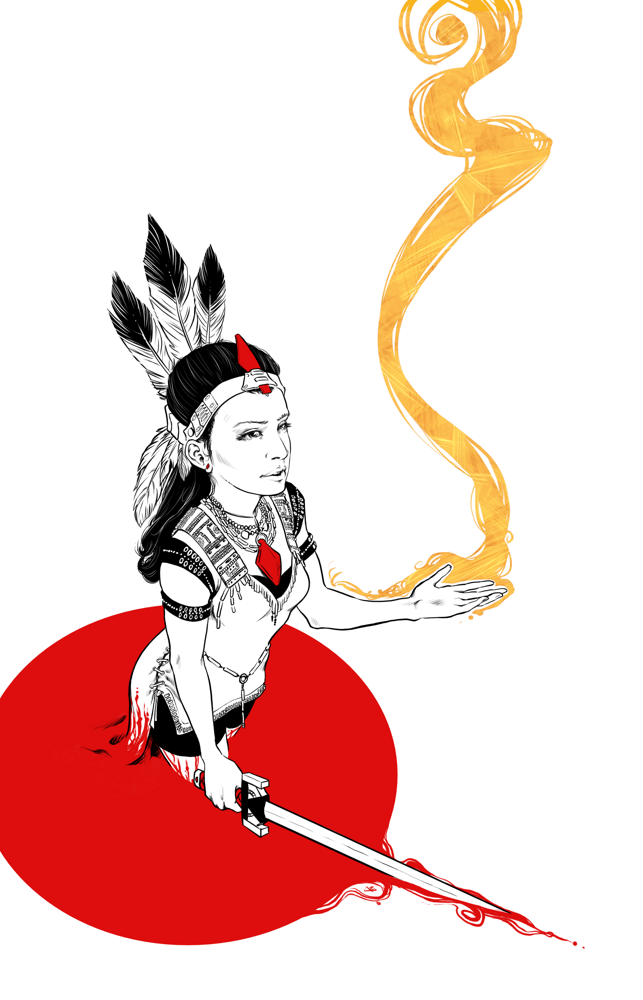
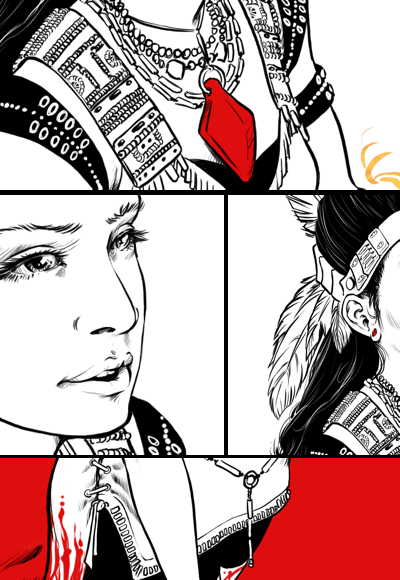
    A quick piece that still shows I am still stuck on this ink with one or two colors “style”. I recently got a Cintiq 24HD and it makes painting so much faster than my Intuos 4 or Cintiq 13HD. I still keep those around, in case I am on the move, but they simply don’t mate the 24HD when it comes to comfort.

    With_Diety_web Because of this new device, I decided to do this piece at double the resolution I usually work with (A4 600dpi), and the amount of detail that I am able to include, along with how natural it feels, is great. I am definitely going to be doing more inking in the future.

    with_diety_close_ups

  • Atari Jaguar | McFur & Friend 3

    Atari Jaguar | McFur & Friend 3

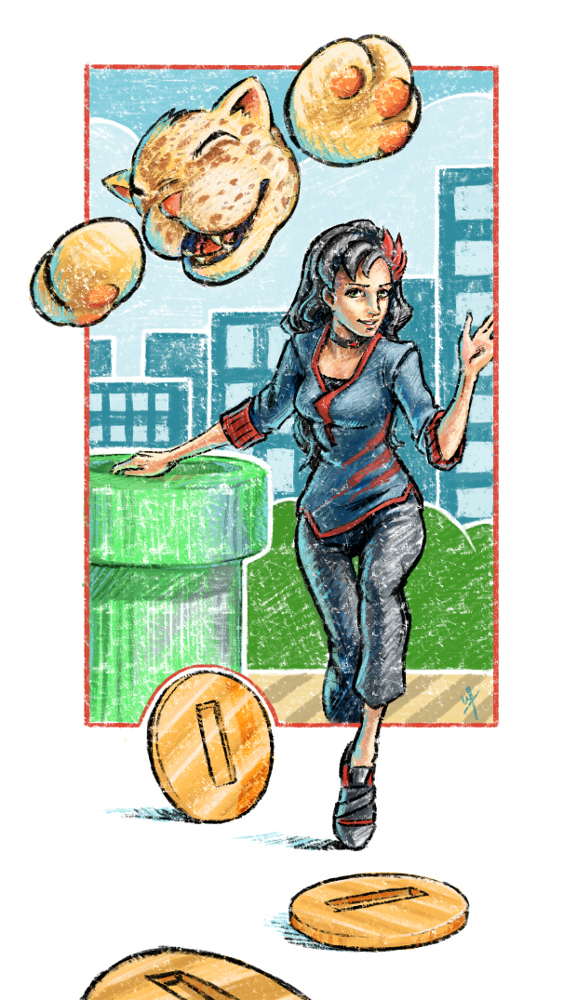
    I haven’t had allot of time after Inktober, and getting my Inktober book together, to draw and paint. But I was able to squeeze in an hour here and there on this illustration for Flappy McFur, BitJag’s Atari Jaguar homebrew game.


    McFur_and_Friend_3_web

    The idea was simple, I wanted to depict Mcfur and Cutter moving forward together, enjoying the journey. The idea of them stepping out of the frame of the game’s world, and into another, I believe helped to convey the message of moving onto new things together. Obviously they are depicted very happy, as they always are, with McFur having his usual free spirit attitude, and cutter having a feminine but adventurous attitude about her. I feel the composition came together well, due to spending time on thumbnails, and most of the pieces fit well.

    Again, I stuck with the crayon/pastel look, as the game is very elementary and happy in nature, and the rough feel of crayons along with the bright saturated colors help bring the feeling of childhood to the piece. Krita has a couple of pastel brush I really like to use with my work, and they work perfectly to get the look I want for Flappy McFur.


    I took some time to review the other drawings I have done for Flappy McFur so fare (McFur & Friend 1, 2, and the box art), and it is interesting to see the evolution of the character design of both Cutter and McFur. It is almost like they have both grown up a bit as they have floated around mind. Subtle facial changes to Cutter, Mcfur’s shape is more worked out as well. I am sure if I ever do more drawings for them in the future, there will be more subtle changes to their designs, but for now, I do like the way they look.